![MaritimeJournal[Seawork]](https://www.maritimejournal.com/wp-content/uploads/2026/09/MaritimeJournalSeawork.svg)



Plans to test floating turbines at Wave Hub
The Energy Technologies Institute (ETI) is looking at using Wave Hub, the world’s largest wave energy test site, off the Cornwall UK coast, to test floating offshore wind turbines.
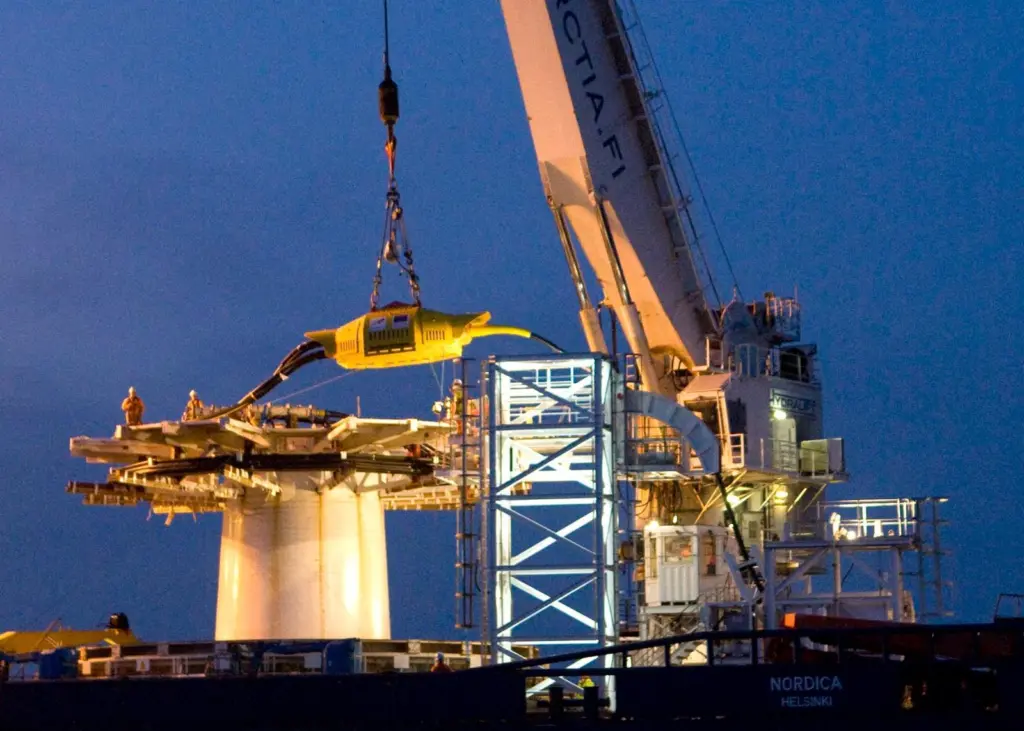
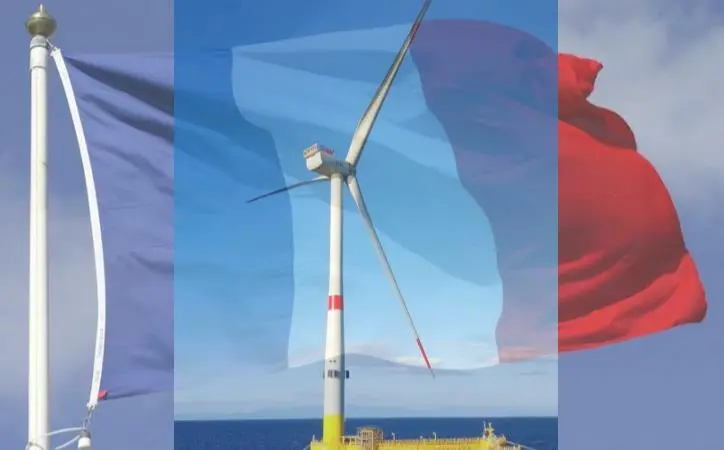
Almost exclusively, European offshore wind farms use fixed substructures in the form of monopiles, and space frame structures. Such arrangements are, however, restricted to water depths of less than approximately 50m, meaning limited options for countries surrounded by deep water but with a desire to develop offshore wind energy. Areas facing this situation include Norway, much of the Mediterranean, and the Atlantic basins. As the offshore wind industry develops, various floating turbine designs are now being explored, ranging from planned projects to actual grid-connected prototypes in countries including Norway, France, Spain, Portugal and Italy.
Publicly owned by the UK Department for Business, Innovation and Skills, Wave Hub is a £30m construction project, partly funded by the European Regional Development Fund Convergence Programme. Deployed in 2010, the facility, 16km off the north Cornwall coast, consists of a grid connected ‘socket’ on the seabed with four separate berths, each with a capacity of 4MW to 5MW. The facility is intended to allow large scale testing of wave energy technologies and two of the berths have been reserved by wave device developers Ocean Energy Ltd of Ireland and Ocean Power Technologies, based in the US and UK.
The test site had to be close to the shore, while at the same time feature high wind speeds and deep water. Access to marine engineering skills and support facilities were also essential requirements and ETI has now commissioned Wave Hub to complete a study to investigate whether the waters around the 8km² site would be suitable for the testing of floating wind turbines. The plan is part of a £25m demonstration project involving the ETI that will see the design, construction and installation of a floating system that will operate in wind speeds of up to 10m/s and in water depths between 60m and 100m. The aim is to generate high levels of electricity, to be maintained without using specially designed vessels and to verify the predicted technical and economic performance. It is planned to have the demonstrator up and running by 2016 and thereafter to operate for at least two years.
Claire Gibson, Wave Hub general manager said, “We have a particular advantage in that the offshore grid infrastructure and onshore substation are already in place, and we also have a team that has experience of managing the design, consent and installation of offshore energy projects. We clearly need to consult with a wide range of groups and other sea users about this opportunity and this forms an important part of the study.”
By Peter Barker
Related Articles
 OTHER NEWS
 FEATURES & VIDEOS
 MARINE CIVILS