![MaritimeJournal[Seawork]](https://www.maritimejournal.com/wp-content/uploads/2026/09/MaritimeJournalSeawork.svg)




Project to deepen understanding of gull behaviour around offshore sites
During October, Denmark- headquartered offshore wind giant DONG Energy and the British Trust for Ornithology (BTO) launched a collaborative initiative to deepen understanding of how the endangered Lesser Black-backed Gull behaves around offshore wind farms.
The principal aim of the project is to investigate how birds from the Walney and Barrow breeding colonies might interact with the Walney Extension and Burbo Bank Extension offshore wind farms and other developments, and to understand differences in the habitat use of birds from protected areas and urban breeding colonies.
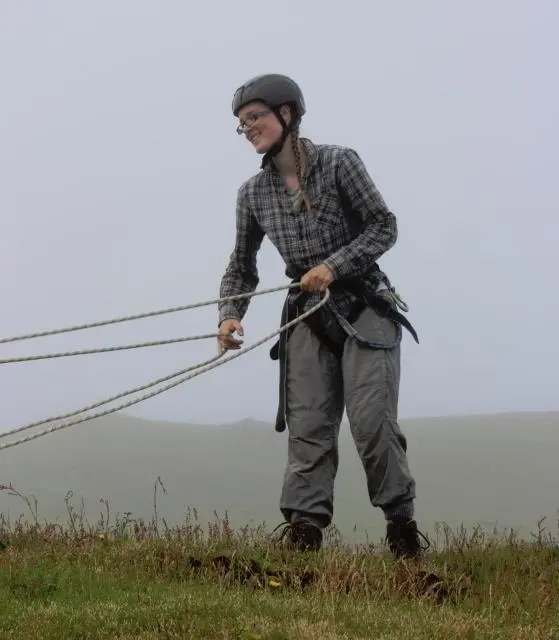
As Emily Scragg, Research Ecologist at BTO, explains, the collaboration was prompted by ongoing concerns that windfarms could have a ‘negative impact’ on bird populations from nearby protected sites, such as Special Protected Areas (SPAs) designated under the EU Birds Directive. SPAs are designated because of their importance for individual species – for example, one of the listed species on the Morecambe Bay SPA designation is the breeding Lesser Black-Backed Gull. This species also has a relatively high vulnerability to collision with turbines – largely because they are large and not particularly manoeuvrable, they can and do forage at sea, and they often fly at around turbine height. They are also in decline, and are Amber listed in the latest Birds of Conservation Concern list for the UK.
“More than half of its UK population, and over 20% of the European population, is found at less than ten sites in the UK. This means that understanding how they interact with wind farms is important in our understanding of the species and its population dynamics,” says Scragg.
“Wind farm developers don’t want to have an impact on breeding birds, and it is in their interest to try and increase the accuracy of collision modelling. Any information we can collect about how birds use wind farm areas, and interact with the turbines, can be used to improve these models,” she adds.
BETTER PLANNING
Another key part of the project is to compare birds nesting in an urban environment to those nesting in a nearby ‘traditional’ gull colony, in an effort to understand if these groups of birds use the marine environment in the same way. According to Scragg, such knowledge about how birds move and utilise the marine environment will facilitate better planning for future offshore renewable energy schemes. In all, the team expects to obtain up to two years of tracking data from around 40 Lesser Black-Backed Gulls – 20 tagged at Walney and 20 in the nearby urban area of Barrow. This data will be examined to look at birds’ movements and interactions with windfarms throughout the year
“We hope to be able to increase our understanding of why and how birds interact with windfarms, and be able to compare how behaviour and habitat choice varies between urban birds and traditional coastal nesting birds,” adds Scragg.
By Andrew Williams

Related Articles
 OFFSHORE RENEWABLES
 OFFSHORE RENEWABLES
 ENVIRONMENT