![MaritimeJournal[Seawork]](https://www.maritimejournal.com/wp-content/uploads/2026/09/MaritimeJournalSeawork.svg)


Action groups urge Spanish government to support Emission Control Area in the Mediterranean
The German organisation, Control Nature and Biodiversity Conservation Union (NABU), together with Ecologists in Action, have carried out measurements of atmospheric emissions from sea traffic in the Straits of Gibraltar and Barcelona, finding that the levels of pollution in both areas are up to 70 times higher than the base level of pollution in most urban areas.
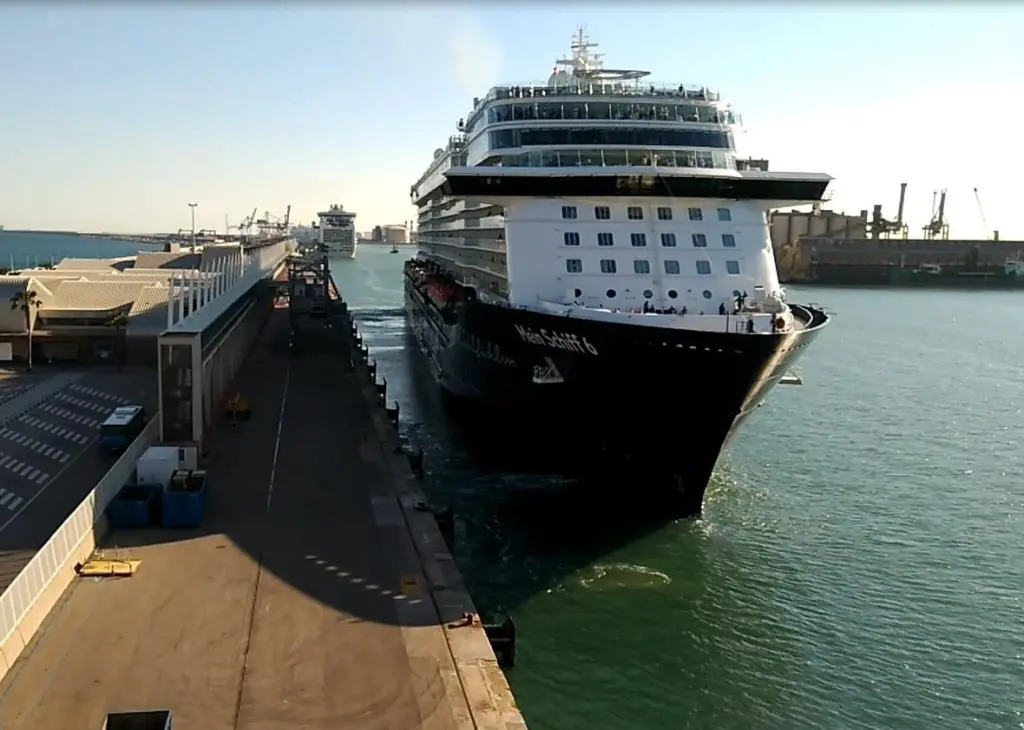
It’s well known that shipping uses fuels containing high levels of sulphur, whose waste gases are respiratory irritants and are thus highly dangerous for human health. At present, maritime transport contributes 2% of all global emissions of carbon dioxide, according to the latest data produced by the EU, and it’s forseen that this figure will increase significantly in the coming years.
In order to try to address the problem of these extreme pollution levels produced by maritime traffic, coastal states in northern Europe have drawn up agreements to designate the North Sea, the Baltic Sea and the English Channel as Emission Control Areas. With this change to the use of cleaner fuels, the regulation ECA (and including sulphur, SECA) has achieved an immediate improvement of up to 50% in air quality since the year 2015, and has produced socio-economic benefits amounting to thousands of millions of euros.
For this reason, Ecologists in Action are urging the Spanish government to join up with France, which has led the drive to create Sulphur Emissions Control Areas, to radically limit the entrance of highly polluting shipping in the Mediterranean Sea. To this end, Ecologists have invited, not just those responsible for air quality at Ministry level, but also leading air quality technicians from Andalusia, Murcia, Valencia, the Balearic Islands and Catalonia, to participate in the International Mediterranean Shipping Conference – Reducing air pollution from ships in the Mediterranean Sea. The conference is organised by France Nature Environnement, the French Environment Ministry and NABU, with the colaboration of the alliance of enviromental NGOs to which Ecologists in Action belongs.
“We can’t accept any excuse that continues to delay a more strict regulation over shipping emissions in southern Europe,” says María Garcia of Ecologists in Action. “The most important navigation routes from Asia cross the Mediterranean, and it is expected that this navigation traffic will increase by some 250% by the year 2050.”
By Jake Frith

Related Articles
 ACCESSORIES & EQUIPMENT
 ENVIRONMENT
 MARINE CONSTRUCTION