![MaritimeJournal[Seawork]](https://www.maritimejournal.com/wp-content/uploads/2026/09/MaritimeJournalSeawork.svg)




Deal to commercialise oil spill technology
A material made from waste cooking oil and sulphur that can soak up oil spills and other pollution will be commercialised following a deal between its South Australian inventors and a Singaporean company.
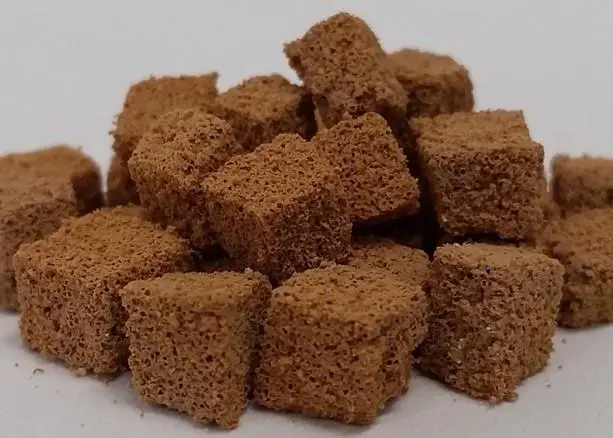
The collaboration between Flinders University and Clean Earth Technologies (CET) will result in a manufacturing facility in South Australia to produce commercial quantities of the absorbent polysulfide.
Flinders University Associate Professor Justin Chalker, who heads up the international team that developed the product, said: “Just making a product from waste, regardless of what the end use, is a viable thing to think about. In this case, we’re converting waste into something that can help clean up the environment.”
Suite of patents
The agreement assigns a suite of patents to CET ahead of production for global markets. The patents cover numerous areas, including a class of novel polymers used for environmental remediation, and a new mercury- and cyanide-free method of precious metal extraction and recovery.
Mr Chalker described the sponge-like polymer as a new class of oil sorbent that is low-cost, scalable and enables the efficient removal and recovery of oil from water.
The product is hydrophobic – meaning that it separates from water and binds well to oil. The polymer absorbs oil much like a sponge, forming a gel that can be scooped out of the water.
Porous polymer cubes can soak up two-three times their weight in oil or diesel and is reusable.
By Rebecca Jeffrey

Related Articles
 ACCESSORIES & EQUIPMENT
 ENVIRONMENT
 MARINE CONSTRUCTION