![MaritimeJournal[Seawork]](https://www.maritimejournal.com/wp-content/uploads/2026/09/MaritimeJournalSeawork.svg)



Reducing CTV emissions in the offshore wind industry
The Carbon Trust’s Offshore Wind Accelerator (OWA) has announced four winners of a competition designed to accelerate the development of technologies that will enable a reduction in emissions and fuel consumption for Crew Transfer Vessels (CTVs) used to operate and maintain offshore wind farms.
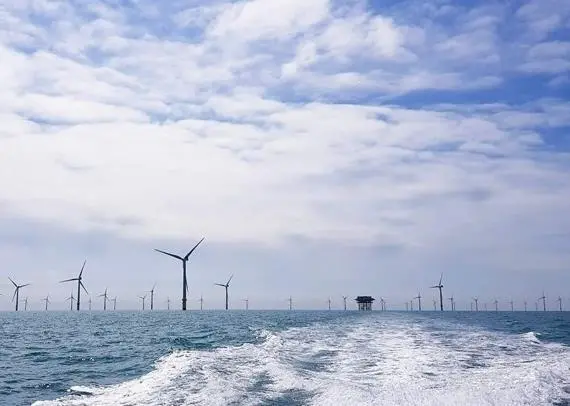
Submissions were received from a range of single applicants and partnerships, representing a wide range of technologies and alternative fuel sources. The winners are: Chartwell Marine and Seaspeed Marine Consulting, CWind, Robert Allan Limited, and Windcat Workboats and CMB Technologies. Each of them will receive advice from the OWA partners to support the commercialisation of their technologies, in addition to a share of £300,000 in funding.
The selected technology concepts demonstrate the potential to reduce fuel consumption and emissions compared to conventional CTVs. They span a range of technology readiness levels: from desktop studies, through to prototype vessel construction.
The winning applications are:
*Chartwell Marine and Seaspeed Marine Consulting:
A desktop study into the development of a 15 metre hybrid diesel/electric outboard CTV.
*CWind Limited:
Supporting technology development for the construction of a prototype hybrid diesel/electric Surface Effect Ship (SES) CTV.
*Robert Allan Limited:
A desktop study for a methanol/electric hybrid CTV.
*Windcat Workboats and CMB Technologies:
Supporting the development of a prototype hydrogen powered CTV which utilises hydrogen-diesel co-combustion.
The competition is being delivered by the Carbon Trust, with support from Black & Veatch, on behalf of the nine OWA industry partners: EnBW, Equinor, innogy, Ørsted, RWE Renewables, ScottishPower Renewables, Shell, SSE, and Vattenfall. The work is expected to conclude at the end of 2020.

Related Articles
 ACCESSORIES & EQUIPMENT
 ENVIRONMENT
 MARINE CONSTRUCTION