![MaritimeJournal[Seawork]](https://www.maritimejournal.com/wp-content/uploads/2026/09/MaritimeJournalSeawork.svg)

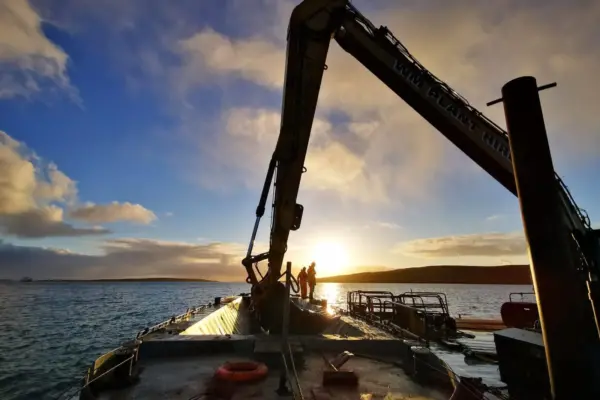
A solid foundation for deepwater wind
Energy companies, civil engineers, shipbuilders and regional development agencies met in London last month to discuss the feasibility of building clean energy wind farms in deep waters offshore of the UK.
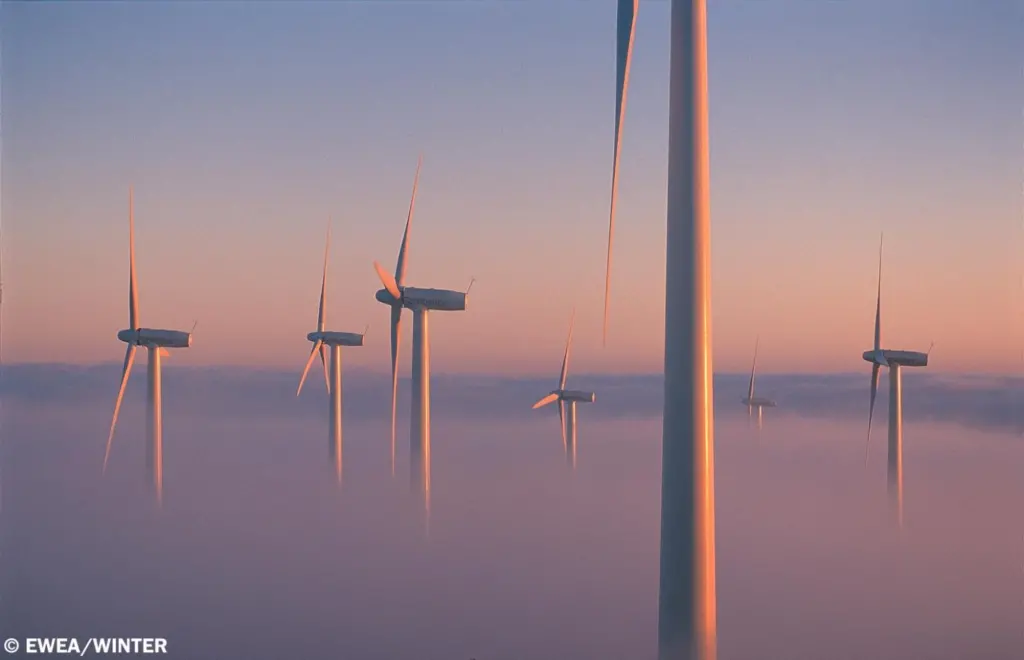
The Concrete Centre has organised an industry conference and discussion forum following a major study led by independent engineering and environmental consultant Gifford and BMT Group, the international design, engineering and risk management consultancy. The study focused on a new fabrication and delivery system for concrete foundations for offshore wind turbines that use gravity as the principal means of stability.
The development team proposes onshore fabrication of the foundations and the use of specially designed submersible barges to pick up the large structures, transport them out to sea and place them in position on the seabed.
A major obstacle to deepwater installation has been the practicality of hanling the large concrete structures, typically weighing 2,000 tons or more, and the availability of vessels to do so. The study has created an innovative solution for transport nd installation using dedicated Transport and Installation Barges (TIBs) designed by Southampton UK based BMT Nigel Gee, towed to site and placed using conventional offshore support vessels. This offers a relatively inexpensive alternative to offshore crane vessels and jack-up platforms.
The present study has developed an outline design of gravity base foundation for turbines of up to 5MW capacity for deployment in water depths of up to 35m, suitable for many UK Round 2 sites.
UK Round 3 development zones indicated by the Crown Estate are generally in even greater water depths, with correspondingly greater wave exposure. It is considered that the gravity base concept and the associated methods of transport and installation developed in this study would require further research and development to be scaled up for these conditions.
Concrete gravity foundations replace the more familiar steel monopiles used for existing wind turbines, reducing construction costs and making installation more feasible in harsh, deep water conditions.
The study was jointly funded by the Department for Business Enterprise and Regulatory Reform and E.ON and the study team also included Hunter Associates, Bierrum International, University of Nottingham, E.ON and DONG Energy.
William Brook-Hart, technical director at Gifford said, ‘Offshore wind is a major component of Government policy for renewable energy and energy security, requiring a significant increase in capacity if the industry is to meet its output targets. As wind farms are located in deeper waters with larger turbines, new construction and installation solutions have to be found.’
Michael Starling, principal consultant at BMT added, ‘In order to meet the UK’s offshore renewable energy targets concrete foundations will need to be produced economically on a production line basis. Our study has therefore focused on the delivery of an integrated approach to the foundations’ construction, transportation and installation at sea.’
Related Articles
 FEATURES & VIDEOS
 MARINE CIVILS
 OTHER NEWS