![MaritimeJournal[Seawork]](https://www.maritimejournal.com/wp-content/uploads/2026/09/MaritimeJournalSeawork.svg)






Bristol Docks open after £12m revamp
The refurbished docks in Bristol were officially opened this summer, following Opus’ work on the scheme to ensure the future effective working of Bristol Docks and to reinforce the city’s flood defences.
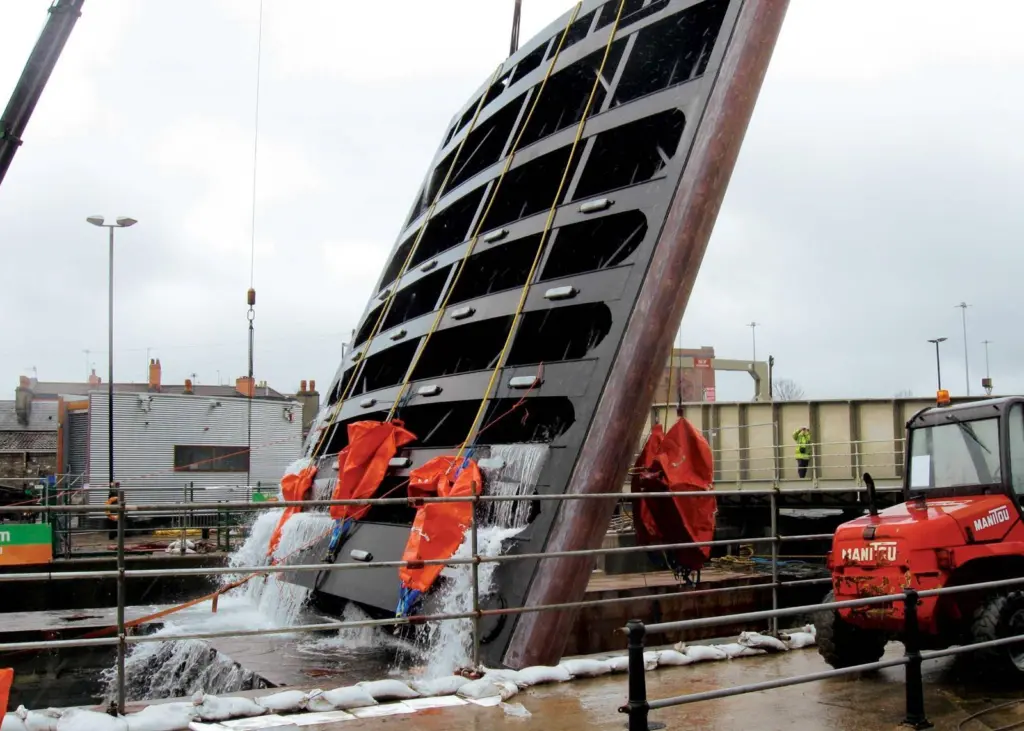
Opus, the civil engineer on the project since 2008, working for BAM Nuttall, undertook the design and fitting of the new lock and flood gates in Junction Lock, together with upgrading the two pairs of lock gates in Entrance Lock.
The new gates operate on a hydraulic system with rams. Opus had to assess the load and determine the best design solution to accommodate these large structures. In addition, Opus undertook the foundation design for the control buildings that operate the ram system.
Opus was appointed by BAM Nuttall, to provide the civil engineering designs for the replacement of the lock gates at Bristol’s Floating Harbour entrance, and for the conversion from water hydraulics to an independent oil hydraulic system for the operation of both the lock gates and the Junction Lock Vehicle Swing Bridge. The work, which was carried out for Bristol City Council and will ensure the future effective working of these docks over the next 100 years as well us ensuring Bristol’s flood defence levels are maintained.
The project consisted of three phases, with Phase One tackling the most urgent work. This involved replacement of the 140 year old Victorian wooden lock gates at Junction Lock (which holds the water in the floating harbour when the entrance lock gates are open to allow shipping in or out of the harbour), upgrading of the Junction Lock vehicle swing bridge, and the change to oil driven hydraulics for both the new lock gates and the swing bridge.
Phase Two works focused on the Entrance Lock and included the conversion from water hydraulics to oil hydraulics for the existing 8nr sluices and 4nr lock gates and installing new back-up floodgates in Junction Lock.
Phase Three included refurbishment and upgrading of the Underfall Yard sluice mechanism and the Netham Lock.
Opus was awarded Phase One and Two of the project, which included civil engineering design, design of the drainage, duct runs and the foundations for the control buildings along with the associated mechanical design and detailing, and the design of the anchor blocks and housing for the hydraulic ram systems which operate the lock gates.
Opus’ technical director and market leader arine, John Berry, said that Opus was delighted to be involved in this important project. “This part of the harbour plays a very important role in the livelihood of many in the community. The ongoing integrity and operation of the lock gates is crucial for ensuring a constant water level in the harbour.
“Detailed analysis is used to find solutions to these problems along with the proven principles of design and construction. For example, in designing the new ram housings for the lock gate operation, we had to design for the ground conditions, the limited space on the quays and for a worst case scenario, such as a vessel striking a closed lock gate. As the ground conditions were found to be very poor, a special solution had to be found for the piling of the ram pits. In doing this we also had to be mindful of the historic culverts that are below the ground.
“The space issue along the quays also brought other concerns. The control buildings had to be of a certain size and located in a given site along the quayside and this clashed with the existing structures. We carried out detailed analysis on what the load paths would be if we used the existing structures to house the control units and used methods to strengthen them as required, thus negating the need for new buildings.”
Related Articles
 FEATURES & VIDEOS
 MARINE CIVILS
 OTHER NEWS