![MaritimeJournal[Seawork]](https://www.maritimejournal.com/wp-content/uploads/2026/09/MaritimeJournalSeawork.svg)



DHI helps maintain Danish fishing harbour
DHI Group in Denmark recently helped local fisherman at Hvide Sande harbour on Denmark’s western coast whose businesses were threatened by sand bars that were reducing the draught in the harbour.
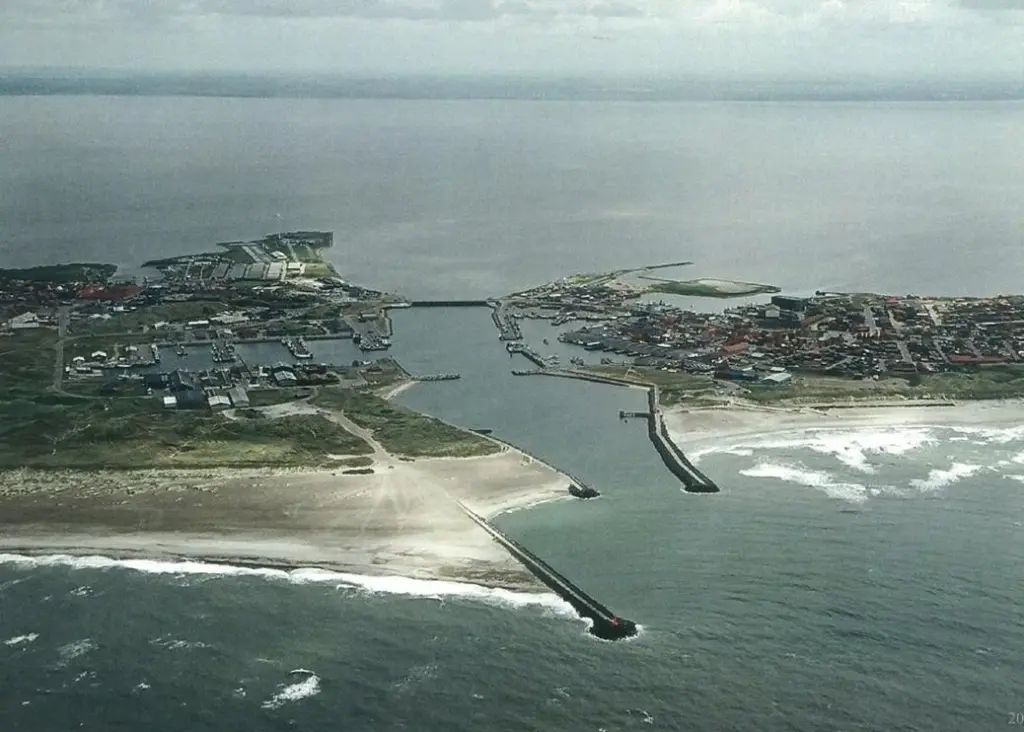
The entrance to the harbour had become too shallow for larger, modern fishing vessels and was regularly obstructed by sediment, sometimes for weeks at a time.
DHI applied modelling tools to produce a new design for the entrance and to reduce the need for dredging in the harbour.
Hvide Sande is a picturesque fishing village on Denmark’s exposed North Sea coast with little more than 3,000 inhabitants and approximately 60 fisheries vessels. Fishing is a major source of income, for the fishermen themselves and the associated processing industry as well as being a major attraction for the tourism sector. However, sandbars had reduced the water depth to around 2.5m in places. Modern fishing vessels require a minimum depth of 6m. Moreover, heavy sedimentation in the harbour’s access channel, especially following storm events, hampered the safe passage of vessels and ships.
The authorities wanted to increase navigation depth in front of the harbour while at the same time reducing sedimentation in the access channel and, using an innovative approach, DHI managed to solve all these problems in one go.
DHI’s concept consists of a combination of new protective breakwaters, embracing the harbour entrance, and capital dredging of the coastline north of the harbour, where the deposited sediment usually originates. The streamlined breakwaters result in an increased flow velocity past the harbour mouth, thereby reducing sediment deposition in that area. Dredging of the coastline in the up-drift area further helps to maintain the required water depth.
The approach builds on a combination of DHI’s advanced morphological modelling tools and a large set of field data: hourly wave, wind and water level measurements, as well as weekly soundings of the harbour access channel, allowed for a thorough calibration and validation of the models. As a result, Hvide Sande Harbour is spared ‘double trouble.’ DHI’s solution has also significantly reduced the need for dredging in the harbour.
The effect has been far ranging. In the new harbour, fish can be landed in all weather conditions and fishermen do not need to find another harbour to land their fish, saving them precious time and money.
The changes to the harbour are due to be completed by the autumn of 2012.
Related Articles
 FEATURES & VIDEOS
 MARINE CIVILS
 OTHER NEWS