![MaritimeJournal[Seawork]](https://www.maritimejournal.com/wp-content/uploads/2026/09/MaritimeJournalSeawork.svg)





Liverpool2 study completed
UK based BMT Group have completed a series of studies to identify and assess the various impacts of larger vessels that will be using the new Seaforth Liverpool2 container terminal.
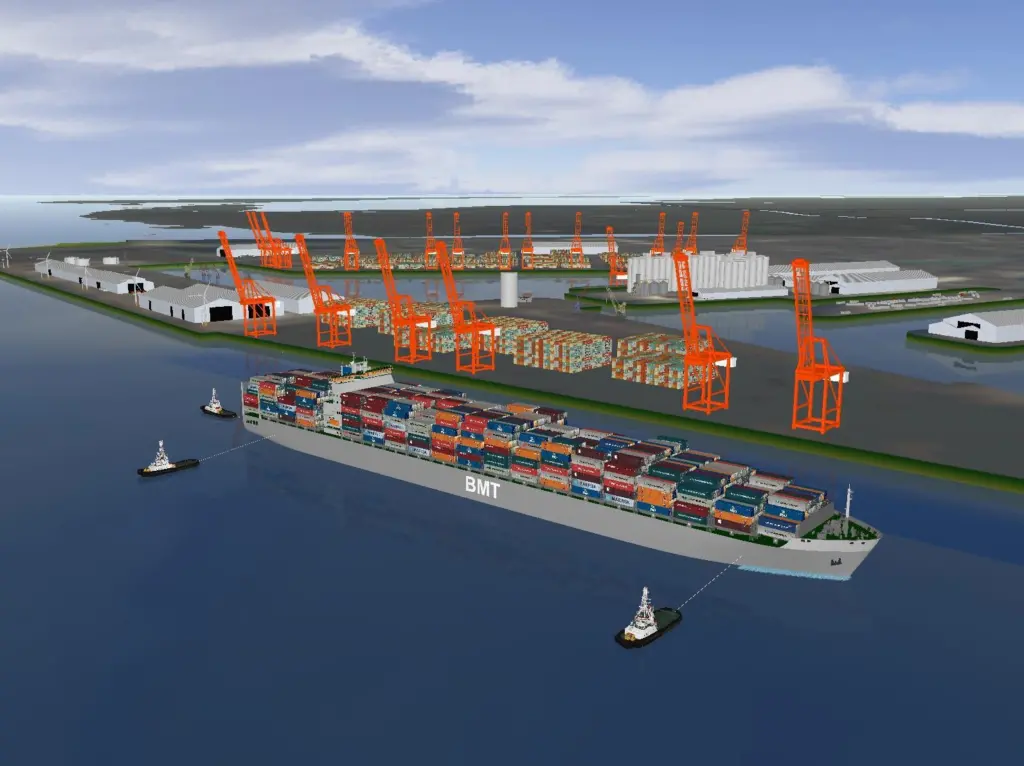
BMT subsidiaries BMT ARGOSS and BMT Isis were commissioned by Peel Ports to carry out a number of specialist studies to identify and assess the impacts of introducing larger container vessels up to 13,500TEU to the proposed development. There is a high tidal variation at Liverpool (10m plus at times) and as the Seaforth terminal is located near the river entrance, unlike the older Liverpool berths located in docks or well upriver, the new development will be subject to more wave action from the Irish Sea. In such circumstances, careful consideration needs to be given to the design of the quay. While it is favourable to make the quay high to avoid wave overtopping at high water, such an arrangement can lead to mooring problems for smaller vessel, particularly at low water. It was therefore vital for Peel Ports to ensure the proposed development could accommodate larger container vessels. The study was able to provide the assurance that although larger vessels would have an impact on other vessel traffic, it could be manageable with the introduction of additional traffic management measures.
The study was completed on a short lead time and included analysis of associated traffic and safety management issues. Manoeuvring simulations and studies into the wave and water level conditions were also carried out. BMT carried out the work remotely using their knowledge of ship behaviour, along with a full range of AIS traffic analysis techniques and coastal engineering expertise, also from statistical analysis of wave buoy data, through to modelling of wave propagation over shallow banks and computation of overtopping rates. They also simulated the movements of the ship at the quay using REMBRANDT DMA (Dynamic Mooring Analysis).
The £300m Liverpool2 container terminal will be able to accommodate two 13,500TEU container vessels alongside a new 854m quay served by eight ship-to-shore gantry cranes. The new facility will provide capability for a further half a million containers, taking its total annual capacity to approximately two million TEUs.
Related Articles
 FEATURES & VIDEOS
 MARINE CIVILS
 OTHER NEWS