![MaritimeJournal[Seawork]](https://www.maritimejournal.com/wp-content/uploads/2026/09/MaritimeJournalSeawork.svg)






New dredging technique used at Gloucester Docks
Important dredging works began at Gloucester Docks in the UK in November, with a new technique being used for the first time to ensure the water is deep enough for large boats.
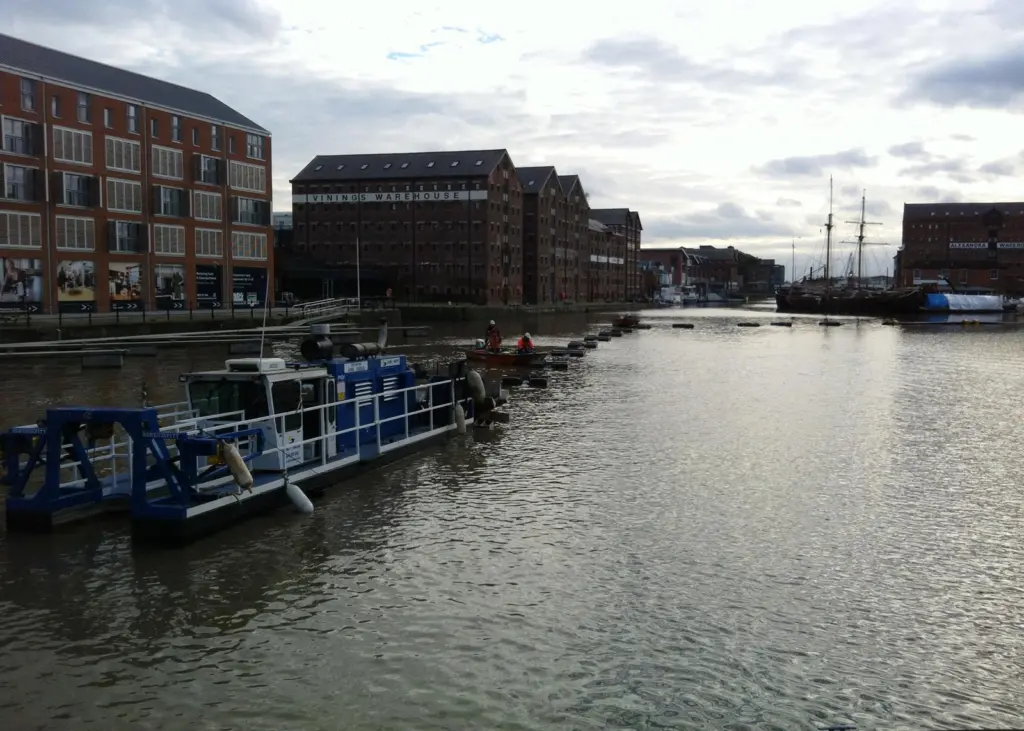
The dredging operation was undertaken to remove sediment build-up on the bottom of the docks.
Dredging is vital to ensure that Gloucester Docks can continue to be used safely by all vessels, particularly those with deeper draughts, such as those that visit during the popular Tall Ships Festival.
The new method used, suction dredging, will remove sediment from the bed and discharge it back to the River Severn through a floating pipeline. In previous years water injection dredging has been used to flush sediment away and, while effective, it gives less control over where silt is dispersed and relies on large transfers of water.
Paul Fox, project manager at the Canal & River Trust said: “Dredging is essential to how the docks can be used for the next 12 months. We expect the new method to improve the efficiency of our work, while ensuring we increase the depth of the water to a suitable level. We know how important a successful dredging operation is to local businesses and people who use the docks on a regular basis. It is particularly important for events like the Tall Ships Festival, which features vessels with deeper draughts that rely on a certain water depths.
The aim is to achieve a minimum depth of 4m in the areas critical for the deeper draught vessels expected at Gloucester Docks for the Tall Ships Festival, which is being held in May 2013. The overall success of the scheme will also take into account the environmental impacts and costs as well as the depths achieved.
Related Articles
 FEATURES & VIDEOS
 MARINE CIVILS
 OTHER NEWS