![MaritimeJournal[Seawork]](https://www.maritimejournal.com/wp-content/uploads/2026/09/MaritimeJournalSeawork.svg)

Progress for all to see at Maasvlakte 2
Positive signals continue to flow from Rotterdam Port Authority’s Maasvlakte 2 port development with over half of the dredged sand required for the project now in place.
The first phase of what is now considered to be the biggest port development project in the world is due to open in 2013. Extending up to 4km into the North Sea, at a height of 5m above NAP, Maasvlakte 2 will be one of the safest locations in the Netherlands.
Construction commenced in September 2008 by the transferring of dredged sand via pipeline to the beach area at Slag Dobbelsteen. By this time Maasvlakte 2 had been 13 years in planning, with completion of the project scheduled for 2033. In the space of little more than a year however, the view from the public information centre (FutureLand) has changed from an uninterrupted sea view, apart from a ripple from the newly won sand at low tide, to there now being little if any view of the sea beyond the 120m plus cu/m of sand producing reclaimed land. Contractor PUMA transferred the sand to the site using a fleet of up to 12 trailing sucgtion hopper dredgers at a time working around the clock.
A number of separate elements to the construction of Maasvlakte 2 are progressing in parallel. Roads have been built on the newly won land with site buildings in place supporting the work of constructing the first quay walls. Sand dredged from the Yangtzehaven is being piped to the Slufterstrand area on behalf of the southern part of the land reclamation. Work is underway on the 4km long hard sea defence around the northern perimeter. Steered drilling has been used to install six pipelines carrying essential services beneath the Yangtzehaven to the industries beyond in preparation for when the basin is cut through in 2012, allowing sea access to Maasvlakte 2. Until then a small gap in the northwest part of the outer sea defence will allow sea access to the area.
The reclaimed sand that makes up the land needs time to settle before further work can begin and to speed up this process additional sand has been deposited on top of what will eventually be the surface. This additional sand will later be removed.
Subcontractor BAVO-MV2 is busy constructing the 1,000m long reinforced concrete quay wall for the port’s first terminal at the rate of 7m a day. Using deep wall technology the wall extends 40m below the quay surface. The Rotterdam World Gateway terminal earmarked for this section is due to open in 2013 and will eventually have a capacity of 4m TEU.
The hard sea defence, designed to withstand a once in 10,000 year storm, comprises a complex mix of material ranging from quarry stone imported 90,000 tons at a time from Norway to large concrete blocks each weighing 40 tons, many of which will be recycled from the existing hard seawall now several kilometres inland.
Positioning of these blocks is being carried out by a newly constructed crane. The only one of its kind in the world, it is especially designed by PUMA for this operation. Blockbuster is caterpillar tracked and uses acoustic cameras to position the 20,000 blocks 50m away, mainly underwater, with an accuracy of 15cm. A 360 ton counter balance maintains the crane’s stability.
Maasvlakte 2 will increase the size of Rotterdam port by 20% and tackling the inevitable increased demands on the area’s infrastructure has been an important requirement. An infrastructure bundle will be created in the port comprising a two track railway line, main and secondary roads, a cycle path, and a pipeline and cable space.
In the longer term the effects on the whole Rotterdam area are being addressed, including the possibility of an additional tunnel beneath the Maas river to the west of the existing Benelux tunnel, with motorway connections to the A4 to the north.
Particular measures will compensate for the inevitable impact on nature and the environment a project on this scale will involve. A sea bed protection area covering 31,250 hectares will compensate for the lost areas together with up to 35 hectares of extra dunes near the Delfland area. Similarly, the recreational beach areas lost will be more than compensated for with the provision of new and larger beach areas, each designated for specific recreational activities.
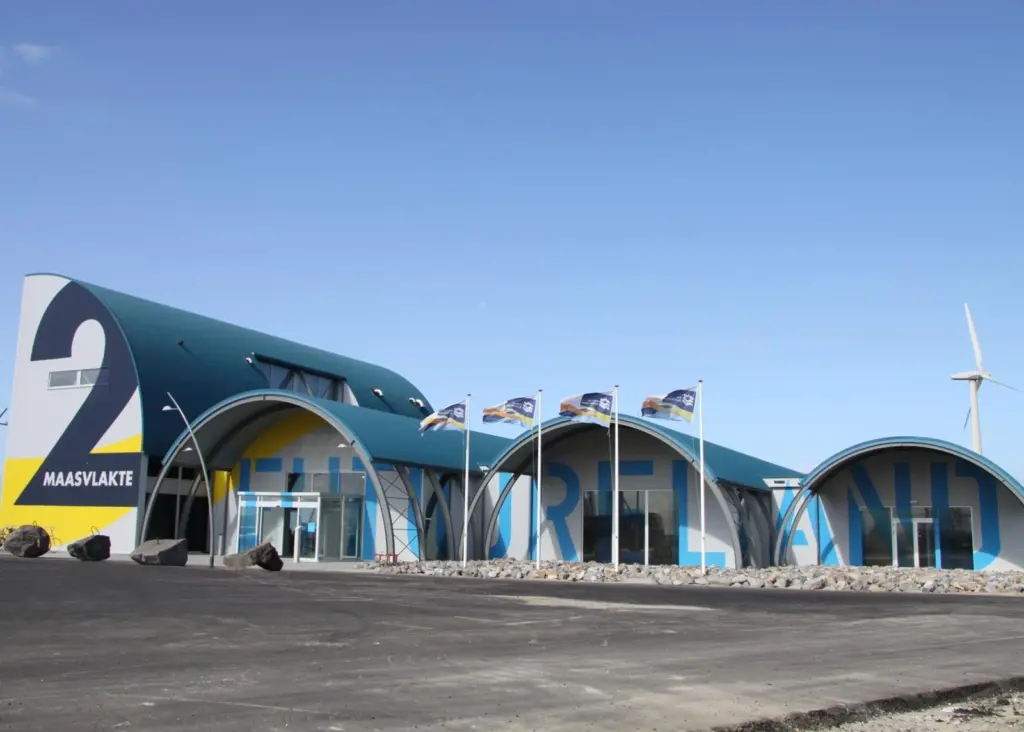
Particular efforts have been made to involve the public in Maasvlakte 2 with the building of FutureLand, the public information centre in the heart of the development. The number of visitors has exceeded RPA’s expectations, attracting interest from a variety of groups including the general public and organised parties from school groups to industry representatives from around the world. Interactive displays, a first floor viewing area and a cafeteria now make FutureLand a popular visitor attraction in Rotterdam.
By Peter Barker
Related Articles
 FEATURES & VIDEOS
 MARINE CIVILS
 OTHER NEWS