![MaritimeJournal[Seawork]](https://www.maritimejournal.com/wp-content/uploads/2026/09/MaritimeJournalSeawork.svg)




Ramsgate has compelling arguments for growth
Thanet District Council’s Harbour Master Rob Brown is certain that Ramsgate is a port whose time has come – again.
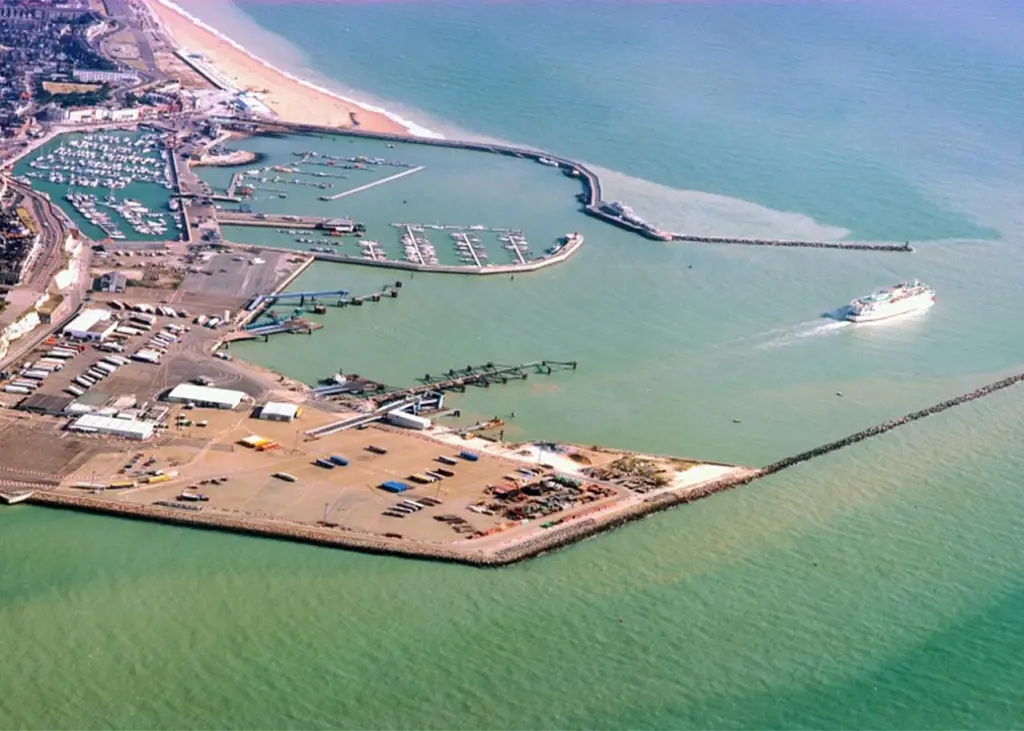
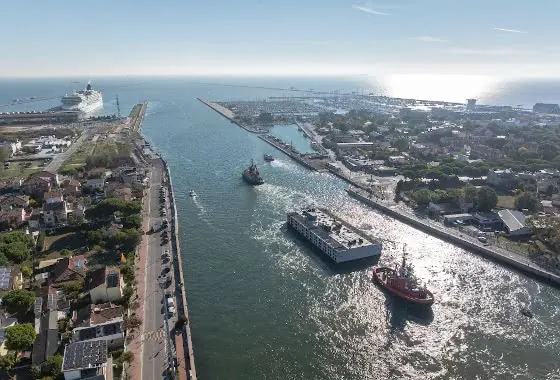
Europe’s economic boom of the 1980s saw the commercial section, Ramsgate New Port, blossom, taking advantage of its position as second closest to the near continent after neighbouring Dover. “In its heyday, this facility took around 11% of the total UK passenger traffic”, points out Mr Brown.
However, since then fortune has not been that kind. Just as it was picking itself up from the downturn, the ferry operation between Ramsgate and Ostend went under. much to the surprise of locals and the port’s frustration, especially since a high-capacity underpass and link road which sweeps past town to the water’s edge had been constructed in the last decade to accommodate rising traffic demand.
You can learn a lot by leaning against a tea counter in the centre of town. One question that I found articulated again and again revolved around the fact that there seemed to be enough cargo and traffic – “So why did the ferry business sink?” While speculation is rife, it does seem that there still may be a business case for a Ro-Ro ferry operation despite the TransEuropa collapse.
Cafe wisdom is backed up by Mr Brown, who outlines a compelling set of arguments in Ramsgate’s favour. Firstly, already in place is the double ramped Ro-Ro berth and two single deck Ro-Ro pontoon berths in the outer harbour, standing empty for the time being. Secondly, the port has space. This means it has the ability to take unaccompanied cargo, an important element in logistics considerations as the drivers can ditch a load and whizz off again, up the new access tunnel and pretty much straight onto the A2-M2 motorway link.
But he also points out that it’s a matter of ‘location, location’, and Mr Brown believes that the new North Sea and Baltic Emissions Control Area (ECA) will have an impact on cargo flows. This is because the cost of the low-sulphur fuel that’s soon to be mandatory around the UK and the associated European coastline will impact port choices.
“Scrubbers are expensive, and simply not a viable option for many vessels and the cost of the ECA compliant fuel, which has to have a sulphur content of less than 0.1%, could easily be over three times what the fuel costs now, he says. “It all means that operators interested in a continental link will be looking for the shortest route possible.”
Enter Ramsgate, with its place on the tip of the UK’s westernmost point, which gives it connections to the continent comparable to Dover, without, as Mr Brown puts it, “the necessity for entering the M20 motorway stack”. It also has good rail links alongside the roads.
Mr Brown also points out that: “Ramsgate could make a continental connection that’s more competitive than Harwich, as their vessels take six hours to get to Holland whereas we can make it across the water to France in two, sweating the capital assets three times as hard for the same fuel burn”.
But it isn’t just ferries, there are other ideas on the boil and the port is looking at a number of schemes that would diversify interests. There’s room to put in a deeper alongside berth and pair it with a project cargo and a travel hoist facility.
“The structure could simply be an overpiled quay, or a suspended one, explains Thanet District Council’s engineering manager Mike Humber. “The difference is that though a bit more costly, the suspended option wouldn’t have to wait for settling and would be able to take heavier loads.”
This would give the port the ability to not only service the local windfarm industry and other lo-lo or heavy lift interests, but also may attract both the maintenance and boat building sector, as there would be room to construct a covered dock hall, making for good, year round working conditions and a controlled environment.
The port is also looking at constructing a breakwater to cut down the wave energy entering the port from the easterly swell, which would calm the water and also help stop some of the silt from drifting in.
“We are expecting to dredge, we’ve got 7.5m depth across much of the harbour but there’s going to be some berth pocket deepening to allow bigger vessels to come in with the tide”, adds Mr Humber.
So, while a little short on cash, the port is long on space and flexibility, and is looking for a trade that could result in a win-win situation, not just for themselves and the marine industry, but for the environment too. Especially, as Mr Brown says, a ‘blue sky future’ could even shape the port as a sea, rail, road and air hub. After all, an airport is just three miles down the road “and a development might even take the strain from other, more crowded facilities in the South”.
By Stevie Knight
Related Articles
 FEATURES & VIDEOS
 MARINE CIVILS
 OTHER NEWS