![MaritimeJournal[Seawork]](https://www.maritimejournal.com/wp-content/uploads/2026/09/MaritimeJournalSeawork.svg)



Rocky road brings relief to Aberaeron
Aberaeron is a pretty Edwardian coastal harbour town on the west coast of mid-Wales that has recently been discovered by tourists. But unless a bid to stem the destructive effects that the Irish Sea is having on its coast succeeds, there may not be that much town left for the tourists to visit.
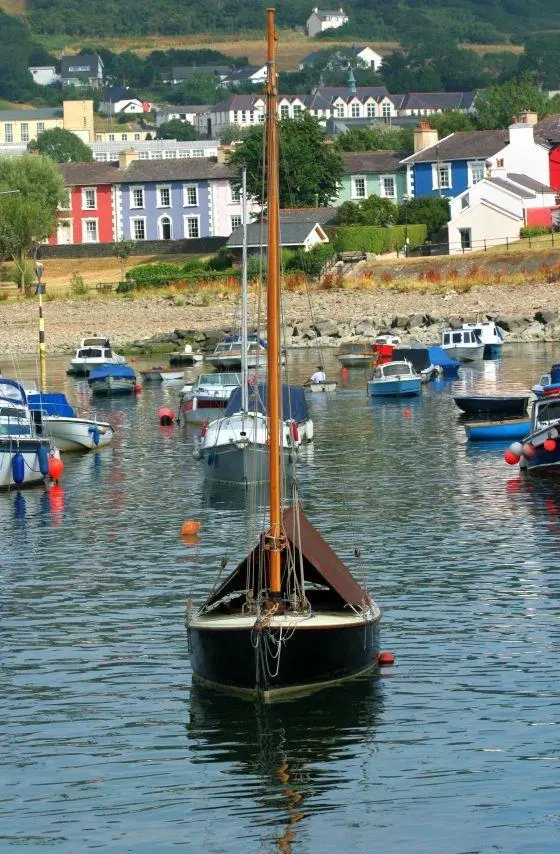
At Aberaeron it is not the simply the height of the waves, but the low lying nature of the land around and behind the existing sea wall and beach protection that is causing concern.
The existing defences had deteriorated badly and there had been significant overtopping of the seawall during storms and high tides, with complete breaches threatened more than once. ‘We noticed that we seemed to be regularly spending £100,000 on patching and repairs’, explained Ceredigion County Council department chief, Richard Edwards.
A scheme delivered by contractor BAM Nuttall is presently seeing deliveries of 79,000 tons of locally sourced carboniferous limestone, plus piling, to protect the town.
Existing wave walls are being heightened and refurbished while the beach is reprofiled. Nine new greenheart timber groynes will project seaward, along with two rock groynes and a 500m continuous revetment, all built using huge six ton chunks of rock. A further steel sheet pile flood wall is also being built as part of the project.
Initial tenders for the scheme were based on the rock for the revetment being delivered by sea but this put the project approximately £2 million over budget. Overland delivery better fit the budget but this in turn meant a staggering 4,000 lorry movements disrupting the town, so a temporary route had to be found.
‘We were able to negotiate an alternative access along the south of the rugby pitch and down to the beach. In the end it probably saved the scheme’, said Ray Jones of BAM Nuttall.
The 250m long haul road has now seen hundreds of lorries delivering 800 to 900 tons of stone to the site each day. This is then transported to the dozers and the 35 ton grab fitted excavators which place the six ton rock armour.
Existing beach cobbles and pebbles are dug away to the required profile and the material stockpiled. This excavated section is then covered top to bottom with a 6m wide strip of geotextile on which the rock armour is placed in two layers, making a gradient of 1 in 2.5. This is the critical part of the process and the grab handler’s skill is key. The huge chunks of stone have to be placed with an ideal three points of contact between each rock to ensure that some wave energy is absorbed by the revetment.
The stored beach material is then used to reprofile the shore at a gradient of 1 in 6. This will be protected by both the rock groynes, which feature the same construction as the rock revetments, and the steel tipped greenheart timber piles and whaler boards.
By Paul Thompson
Related Articles
 FEATURES & VIDEOS
 MARINE CIVILS
 OTHER NEWS