![MaritimeJournal[Seawork]](https://www.maritimejournal.com/wp-content/uploads/2026/09/MaritimeJournalSeawork.svg)



Surfs up at Boscombes artificial reef
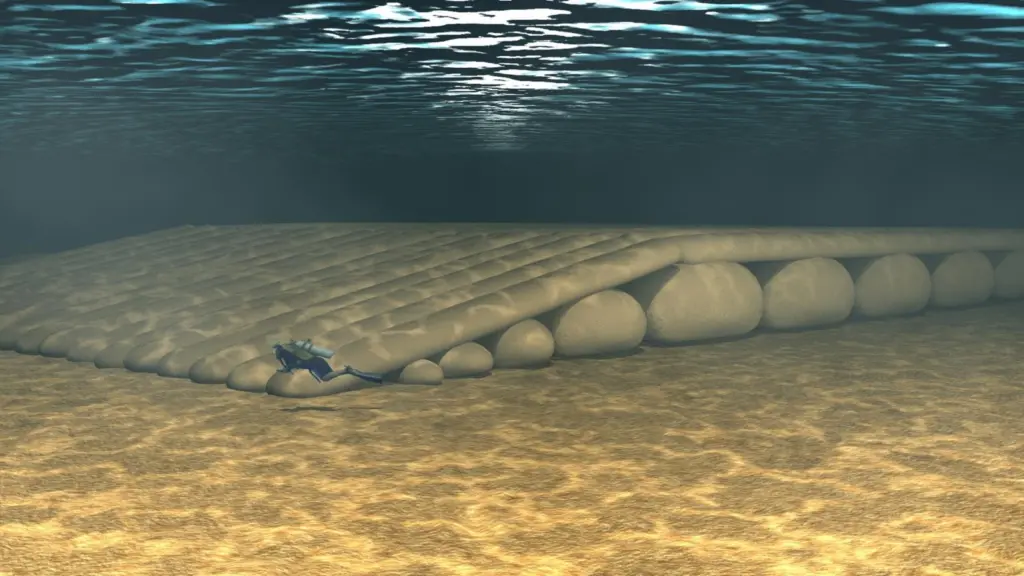
Europe’ s first artificial surf reef is being built in Boscombe, Bournemouth and is set to put Bournemouth firmly on the UK surf map. It will act as a ramp, pushing waves upwards, doubling their size and improving their quality for surfers. As a result, the number of good surfing days will be doubled.
The reef will also enhance other water sports on offer, including kite surfing, windsurfing, wake boarding, kayaking, SCUBA diving, sailing and skim boarding.
The licence to build the reef was granted by the Marine and Fisheries Agency in December 2007. Land based construction started on the reef during the summer with the rolling out of the geo-mat which is the base layer of the reef and prevents it from sinking into the seabed or being moved by the force of the sea. The project was due for completion by the end of the 2008 surf season, but, due to bad weather, is looking at being ready next year.
Specialist construction material for the reef, the ecologically sound geo-textile bags came from Australia, with the webbing base from New Zealand.
The reef is located to the east of Boscombe Pier (about 2.5 kilometres from Bournemouth Pier) and the submerged reef will take up approximately one hectare (the size of a football pitch) which will be 225m from the shoreline. The reef mimics the effects of a natural reef and will be built from large geo-textile bags pumped hard with sand. The sandbags weigh up to 2,500 tons and biggest are up to 70m long, 2m high and 6m wide. Once they are in place nothing will move them.
The Boscombe beach site was prepared by ASR Ltd. A section was cordoned off and the sand refined in preparation to fill the bags. A large mound of sand was piled high on the beach and was then pumped using piping from the beach to the reef construction site which was 260m offshore.
The reef was built in two layers. The bottom layer sitting on the sea bed consists of three sections, on top of which lies the second layer of two sections. The first section was deployed on Boscombe seabed and filled, then the second reef section was laid and filled and so on, until the reef was completed with the fifth section.
The bottom layer elements consist of three individual sections: a geo-mat to minimise the structure sinking into the sea, overlain by a huge web of specially sewn material that looks like large seat belts, on top of which huge geo-textile empty bags were attached.
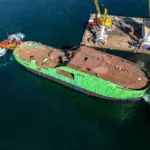
These were tied together to create the first section, which was then been folded into a concertina and placed on a barge, ready for deployment on the seabed. When the weather was good enough for deployment (perfectly calm weather conditions are essential) the barge transported sections to the site.
Prior to placing of the first set of bags, 11 temporary anchors were set around the perimeter of the site. They were used for locating and securing the five reef sections elements when they were filled. Each reef element was placed on a barge, transported to the site, lowered, and the shore end of the reef attached to a set of anchors by divers. The barge was then slowly winched along the reef site allowing the section to gradually unfold and peel off into the water. The section was then pulled down onto the seabed with winches and secured in place on the anchors ready for filling.
The top layer consists of two larger sets of bags secured to locating webbing without the geo-mat layer, as they were sitting firmly on top of existing sand bags. When the filling phase was completed, divers removed the location straps attached to the anchors, and the contractor removed the temporary anchors.
It is likely that marine life will thrive on the reef and there will be no damaging effects to the beach. Bournemouth Borough Council is working closely to monitor marine life. Experts predict the reef itself is likely to become a busy habitat over time, with marine creatures colonising its surfaces and taking shelter within it, developing into a haven for wildlife that would not otherwise exist on a flat seabed.
Although the reason for building this reef is for regeneration and leisure, expert opinion says that it may also help with coastal defences. Other reefs built for both coastal protection and watersports have provided good protection on the beaches because the wave energy drops before the waves reach the shore.
Related Articles
 FEATURES & VIDEOS
 MARINE CIVILS
 OTHER NEWS