![MaritimeJournal[Seawork]](https://www.maritimejournal.com/wp-content/uploads/2026/09/MaritimeJournalSeawork.svg)





Work starts on Europe’s largest coastal reserve
The UK’s Environment Secretary Owen Paterson has officially launched what is said to be Europe’s most ambitious manmade coastal nature project.
It will guarantee a place for tens of thousands of migratory birds, and combat the threats from climate change and coastal flooding.
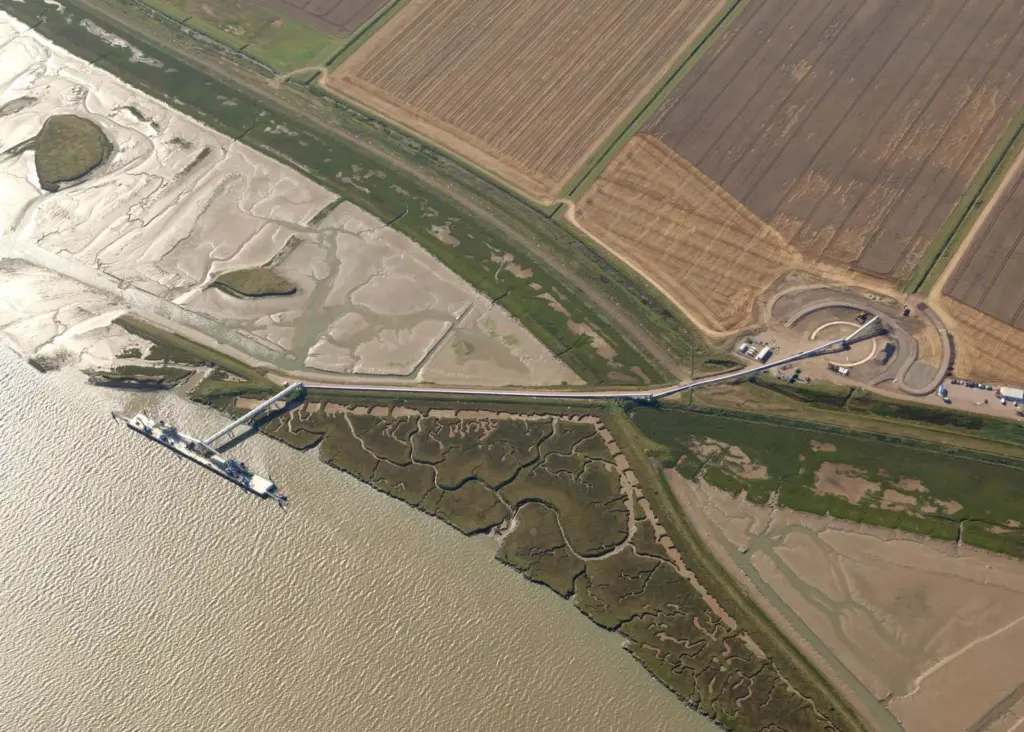
Wallasea Island in the Thames Estuary will be transformed from levee protected farmland into a thriving wetland, twice the size of the City of London and teeming with bird and marine life. The landmark project, never before attempted on this scale in Europe, has been made possible through a unique partnership between the RSPB and Crossrail.
Crossrail will deliver 4.5m tons of clean earth from the construction of major new rail tunnels under London to help build the nature reserve at Wallasea. The earth will be used to create higher and lower ground to restore the wetland landscape of mudflats, saltmarsh and lagoons last seen 400 years ago.
The loss of coastal habitat over the past 400 years has been dramatic. Without projects like Wallasea Island, rising sea levels are threatening to see another 1,000 hectares lost in the next decade. Wallasea Island will provide 670 hectares of secure habitat for wildlife to thrive well into the future and the RSPB predicts a massive increase in the number of birds once the project is completed.
About eight miles of coastal walks and cycle routes will also be created as part of the project, which means that the nature reserve will also become a wonderful place for people to explore and enjoy.
Crossrail has constructed a new jetty and an excavated material handling facility at Wallasea Island. At its peak 10,000 tons of material will be unloaded from ships per day.
Crossrail will deliver more than 2,000 shiploads of excavated material to Wallasea Island. The earth will be transported from Crossrail’s western tunnels via freight trains from west London to Northfleet in Kent where it will be loaded onto ships. Excavated material will also be loaded onto ships directly from the eastern tunnelling site at Limmo, near Canning Town station in east London, with further material shipped from a storage site on the River Thames in Barking. The government has set a combined target for the recreation of saltmarshes and mudflats, of 3,600 hectares (8,895 acres) by 2015. The Wallasea Island Wild Coast Project will deliver 670 hectares of marshland.
The Essex estuaries are in the top five most important coastal wetlands in the country and are protected by national and European law.
Related Articles
 FEATURES & VIDEOS
 MARINE CIVILS
 OTHER NEWS