![MaritimeJournal[Seawork]](https://www.maritimejournal.com/wp-content/uploads/2026/09/MaritimeJournalSeawork.svg)

Bold zero emissions plans for Vigo Bay
The Green Bay Project, which launched recently, is the first step towards a zero emissions future for the Bay of Vigo, Spain.
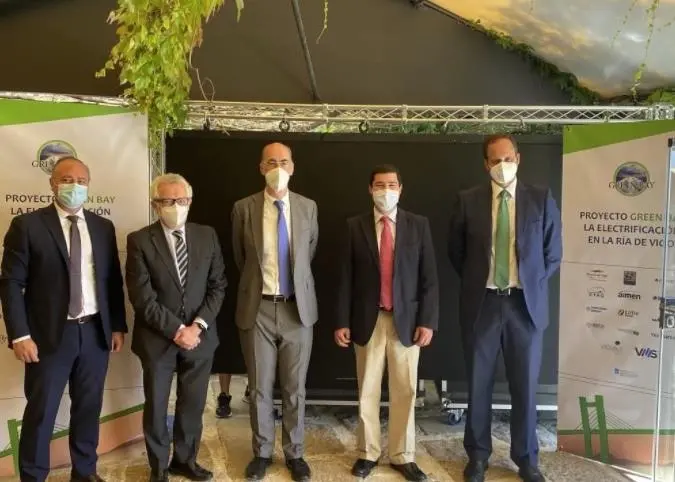
This private initiative, driven by Aister Shipyard, in collaboration with the Galician Shipbuilding Cluster Association (Aclunaga), the Galician Automotive Technology Centre (CTAG) and the Port Authority of Vigo, has launched this ambitious plan that seeks to electrify shipping in the Vigo estuary and create an industrial ecosystem that provides technologies and components to local shipyards.
The objective is to eliminate CO2 emissions from commercial activity in the waters of the Vigo estuary, whether from port activities, passenger traffic or aquaculture vessels. Once this model has been developed, Aister wants to lead the environmental transition in other European coastal areas.
For this project, synergies will be established between the shipbuilding industry of northwest Spain, and the Galician automotive industry, which is more advanced in the field of batteries and vehicle autonomy.
In addition to the electrification of vessels and the supply of components, Green Bay will also focus on the installation of battery recharging points in port.
ELECTRIC OR HYBRID?
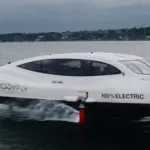
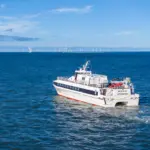
To get the ball rolling, Aister has focused on navigation in the Vigo area’s Inland waters, identifying the vessels where it is most feasible to apply this technology. Fish farming or short trip ferries would be candidates for full electrification, due to their planned and recurrent routes. Vessels such as tugboats, pilot boats and other workboats, could incorporate hybrid propulsion, as they require greater power and autonomy at specific times.
The work of Green Bay goes beyond the coast, aiming to integrate with electric public transport in the city of Vigo, to achieve an origin-destination experience free of polluting emissions.
At the project launch at the Rectoral de Cobres Hotel, an idyllic place in the heart of the Vigo estuary Francisco Pita, Aister’s technical director outlined the main barriers to entry in the use of electric propulsion technology and contingency measures to address them. A possible gap in battery range in the middle of the estuary, a rare phenomenon, could be alleviated with emergency batteries or a small auxiliary group that would allow the electric propulsion engines to be driven. Another barrier is the high investment in batteries. Among the possible options is battery leasing, so that the shipowner does not assume the risk. The operator would only pay per use, and the moment the battery’s performance drops, it could be replaced. Aister’s technical director pointed out that the aim is not to have batteries that last 10 years, because in 5 years this technology will have improved.
FUTURE FUELS
Hydrogen was the subject of a chapter of its own. Pita pointed out that a hydrogen ship would actually have electric propulsion. The ship would maintain batteries to store the energy produced by the fuel cell and a hydrogen tank would be added. The main benefit of this gas is that it weighs 10 times less than diesel fuel, creating new construction possibilities. If this technology becomes established, the design of the ship will have to take into account that the battery room can easily be converted into a hydrogen storage room.
Eduardo Rivero, laboratory manager at CTAG, explained that the automotive sector is making progress in price competitiveness, although it is working on challenges such as the materials used for batteries, which are “scarce” and where “the supply chain can break”.
CLASSIFICATION
Victor Solano, New Construction Client Manager at Lloyd’s Register, explained that the vessels within the Green Bay project would comply with the Merchant Navy regulations classified as inland waters, in addition to having to apply IMO rules. Solano differentiated between two class levels: working vessels (pilots, fish farming boats, tugs) and passenger vessels, which have different regulations for both machinery and passengers. The Lloyd’s Register representative reviewed the services offered by the classification society, including error, safety and reliability simulations.
By Jake Frith