![MaritimeJournal[Seawork]](https://www.maritimejournal.com/wp-content/uploads/2026/09/MaritimeJournalSeawork.svg)




Cat to the rescue in Hamburg
Caterpillar Marine Power Systems (CMPS) had a substantial presence at SMM in Hamburg last month, reporting an order book which continues at record levels and presenting integrated solutions for ship propulsion, on board electricity, product support, customer service, ship finance and insurance.
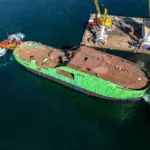
One of Caterpillar’s latest workboat successes, reported at the show, is the new mid-size Search And Rescue (SAR) vessel
SK 30
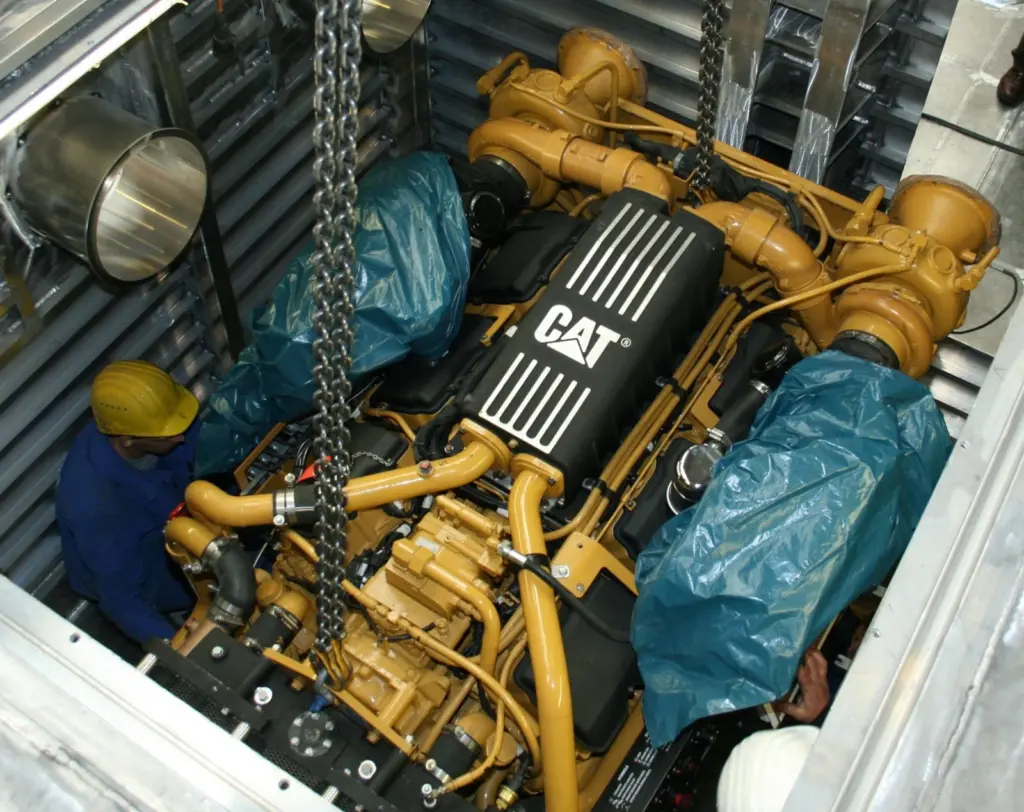
ordered by the Deutsche Gesellschaft zur Rettung Schiffbrüchiger (DGzRS) and powered by a Cat C32 marine engine supplied by CMPS’ German dealer Zeppelin Power Systems (ZPS).
The SK 30 is 19.90m long, with a moulded breadth of 4.75m, a moulded depth of 2.70m and a design draught of 1.30m on a displacement of 38 tons.
The German maritime search and rescue service (DGzRS) was founded in 1865 and still works as an independently operating body. Currently, 20 rescue cruisers and 41 lifeboats of 7m to 46m length are in service out of 54 stations on the North Sea and the Baltic. Together, the rescue cruisers log more then 70,000 nautical miles per year on missions or patrols.
To best meet the specific requirements of different rescue districts, the DGzRS has developed a new rescue cruiser capable of closing the gap between its 10m lifeboats and its smallest 23m cruisers. While maintaining the extremely seaworthy hull, which has been tried and tested over decades, this future type of boat also features the latest developments in ship and engine building, as well as in electrical engineering and electronics. The first two units of the new class, ordered from the German Fassmer shipyard, Berne/Motzen near Bremen, are scheduled for commissioning at the end of this year and early in 2009.
The specifications for newbuildings involved on missions in shallow areas and close to shore pose particular technical challenges because this type of rescue cruiser must be capable of providing the same high degree of safety as all other DGzRS units under extremely adverse weather conditions on the open sea. Particular attention is paid to the structural strength of the hull, while keeping the design lightweight. Drawing just 1.3 m, this new class of craft can be deployed in areas where larger rescue cruisers have to rely on their tenders.
Other characteristics of this boat type are ergonomically designed on-board workstations to provide medical first aid and hydraulic auxiliary propulsion for rescue and towage operation. DGzRS rescue units are seen as highly weather resilient and are among the most modern and efficient SAR units in the world. Like its predecessors, the new rescue cruiser is a welded construction of saltwater-proof light alloy, built according to the tried and tested grid frame system and characterised by excellent seaworthiness and self-righting capabilities. Being relatively lightweight, an equivalent engine power enables high speeds and quick manoeuvring.
A single V12, 32 litres Cat C32 marine engine rated 1,232 kW at 2,300 rpm provides a service speed of 22 knots. Caterpillars proprietary electronic engine control balances power supply, fuel consumption and exhaust emissions at any given load. The Cat main engine is almost free of ancillary units, thus engine power is almost exclusively available for the propeller. This innovative propulsion concept further improves vessel reliability and manoeuvring capabilities.