![MaritimeJournal[Seawork]](https://www.maritimejournal.com/wp-content/uploads/2026/09/MaritimeJournalSeawork.svg)





Clean Design Engine Production Skyrockets
Some 40% of the Rolls-Royce offshore vessel engines sold last year met the classification society Clean Design requirements, compared to 5% just two years ago. All the engines exceed the International Maritime Organisation (IMO) standards for NOx emissions by 20%.
Vice president offshore engines, Halvard Hauso has worked out the reduction of NOx emissions from all the Clean Design engines delivered or on order from Rolls-Royce. ‘The reduction will be about 4.6 million tons a year, he said. ‘This just about equals the yearly emissions from 500,000 cars (EURO3).
When the classification society DNV introduced the Clean Design requirements in 2005, Rolls-Royce had for some time been working on a project to reduce emissions of NOx. ‘Subsequently, we could sell Clean Design engines from day one’, said Hauso.
He expects that by 2009 about 90% of the offshore engines sold will meet the demands of the Clean Design requirements. ‘By then I am certain that IMO will reduce the level of NOx allowed to be emitted by a vessel, and most probably they will make the Clean Design limitations the next international standard’, he added.
Rolls-Royce delivers engines that meet the requirements for Clean Design vessels without the need for additional space consuming clean-up systems. The biggest challenge for the engine designers is to continue to reduce NOx emissions without increasing the use of fuel, and subsequently the CO2 emissions.
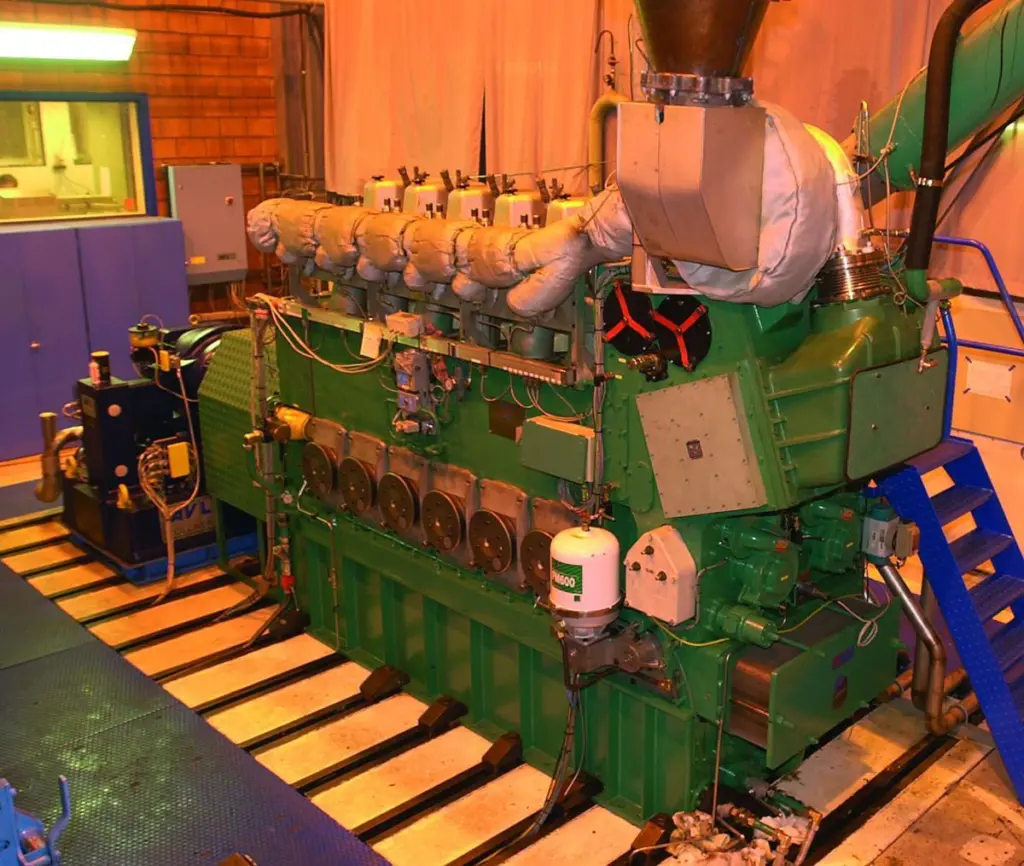
The Bergen B32:40 engine is the Clean Design engine type currently available. This year Bergen C25:33 engines meeting the same environmental standards will be included in the production schedule at the Rolls-Royce engine factory in Bergen, Norway.