![MaritimeJournal[Seawork]](https://www.maritimejournal.com/wp-content/uploads/2026/09/MaritimeJournalSeawork.svg)





Creating energy from waste engine heat
The engine rooms of two newbuild Van Oord dredgers have been fitted with waste heat recycling modules based on Organic Rankine Cycle technology.
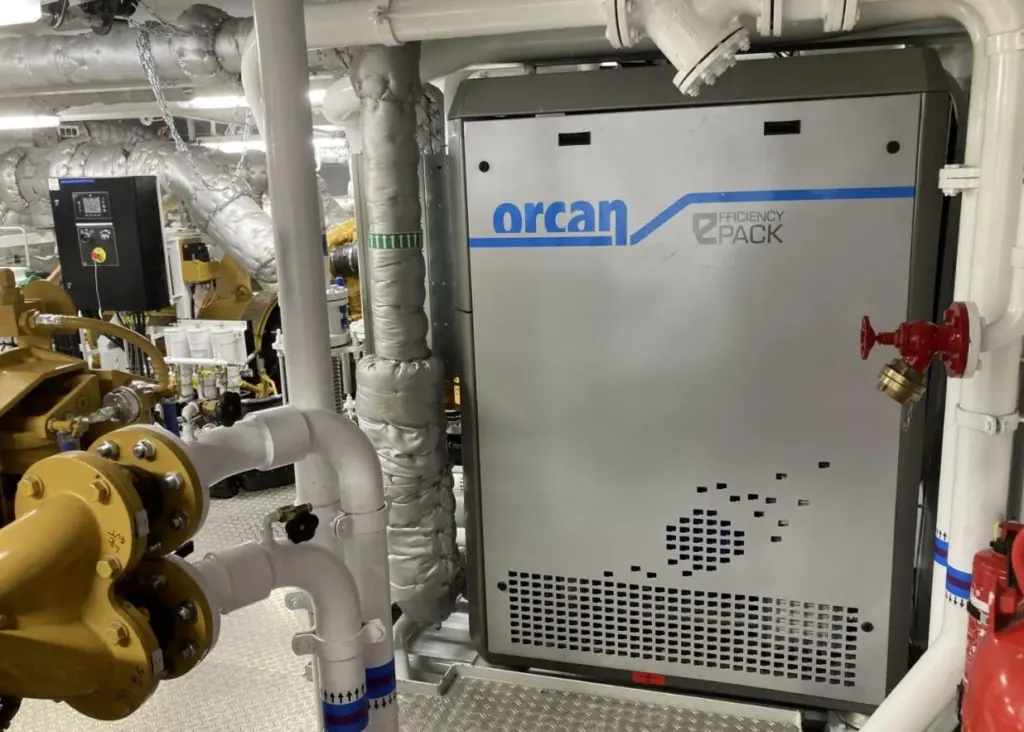
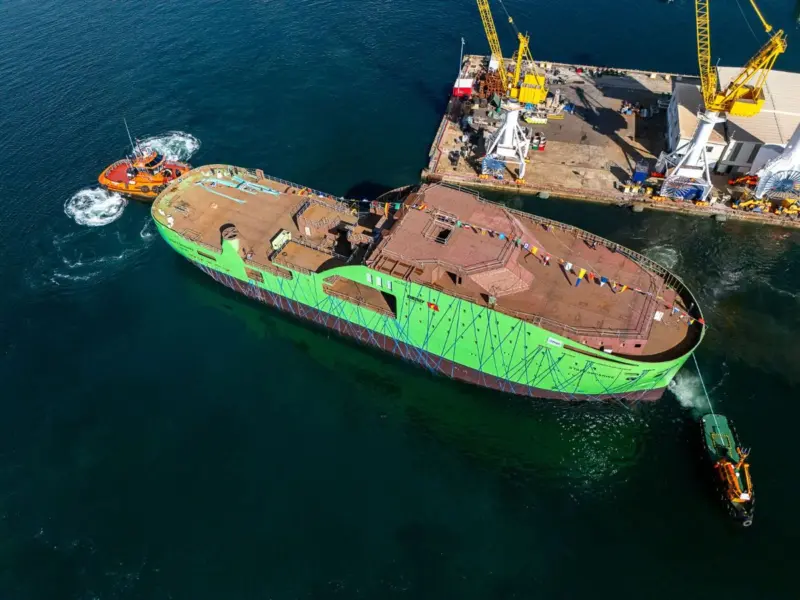
Marine contractor Van Oord has now chosen to install efficiency PACKs, from cleantech company Orcan Energy on two of its new hybrid water injection dredgers. The launch ceremony of the vessels took place in Rotterdam at the end of June.
In the design of Van Oord’s latest dredgers Maas and Mersey, built by the Dutch shipyard Kooiman Marine Group, special attention was paid to energy efficiency. The Orcan maritime energy efficiency solution, which has already been used several times by the Munich-based company, potentially lowers the overall fuel consumption of the ships by 4 to 5 percent – depending on the engine power and the amount of waste heat available. During a year of intensive and frequent deployment of the vessel, the CO2 emissions can be reduced by close to 200 tons per ship. The company thereby achieves a considerable improvement of the vessels’ life-cycle assessment.
For Van Oord, the Maas and Mersey represent the new generation of hybrid water injection vessels. This new vessel type is versatile and has water injection dredging, mass flowing and power jetting systems. Thanks to the manoeuvrability and limited draught, the vessels are used for maintenance dredging in shallow harbours.
Orcan Energy has redesigned its efficiency PACK specifically for the marine industry. The design is adapted to the special requirements on board: the efficiency PACK is space-saving as well as compact and robust, to withstand the strong vibrations as well as shock loads at sea. The components used in the construction of the efficiency PACK are specially selected for the high ambient temperatures in engine rooms.
The efficiency PACKs utilize the waste heat of the engine jacket cooling water and exhaust gases by extracting the heat. A heat exchanger transfers this to the ORC circuit. There, the refrigerant – a non-toxic, non-flammable hydrocarbon – evaporates and is fed as superheated vapor to the expansion machine. Here, the high-pressure refrigerant is expanded, driving the expansion machine. This rotational energy is then used to drive a generator that produces electricity, which in turn results in fuel savings.
By Jake Frith