![MaritimeJournal[Seawork]](https://www.maritimejournal.com/wp-content/uploads/2026/09/MaritimeJournalSeawork.svg)




Fuel cell vessel moves towards sea trials
rtsilä has been assigned overall responsibility for systems integration in the pioneering FellowSHIP project, a joint industry research and development project which aims to develop and demonstrate hybrid fuel cell powerpacks suitable for marine use. FellowSHIP is being project managed by Det Norske Veritas.
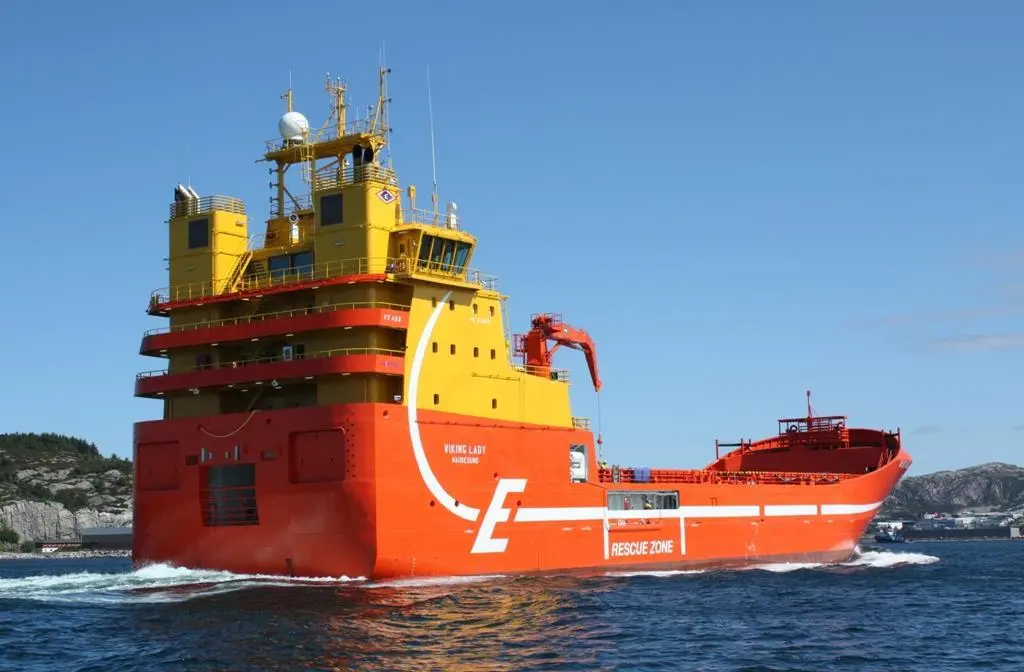
Wärtsilä’s specially designed equipment is being used to integrate and create synergies between leading marine technology and the latest fuel cell technology
.
The equipment has been installed onboard the platform supply vessel
Viking Lady
for extensive sea tests
.
The innovative solution is seen as being an important contributor in the development of environmentally sustainable
<a href="http://http//www
.
maritimejournal
.
com/site_search?mode=results&queries_search_term_query=marine+propulsion+systems&category=53491&x=32&y=9″ target=”_blank”>marine propulsion systems
.
The power pack will be used as an auxililiary power source on the Viking Lady, which is owned by Eidesvik Offshore, Norway
.
The ship has been designed by Wärtsilä Ship Design, and its main engines and power drives have also been supplied by Wärtsilä
.
Wärtsilä’s electrical & automation business unit in Norway has custom developed the power electronics needed to connect the fuel cell to the ship’s electrical network
.
Wärtsilä thus has the important role of being the systems integrator for the FellowSHIP project
.
Wärtsilä’s electro & automation business unit specializes in designing and developing technologies related to electrical distribution, controls and power converter applications
.
In May, the 320 kW fuel cell, produced by MTU Onsite Energy GmbH, a member of the German Tognum Group, arrived at Stord in Norway, where it has been integrated together with Wärtsilä’s technology and tested
.
During this land testing all operational modes, shut down conditions, and dynamical behaviour have been tested and verified in accordance with the specifications
.
The fuel cell technology is designed to increase efficiency and leads to a considerable reduction in emissions
.
Fuel cell technology of this power size has never before been installed in merchant vessels and the highly innovative project is unique on a world scale
.
Wärtsilä has been involved in fuel cell technology since the mid-1990s and specializes in systems integration
.
‘Developing better and more environmentally friendly technologies for the marine industry and offshore market is a very important focus area for Wärtsilä, which invests heavily in research and development aimed at reducing emissions and improving fuel efficiency
.
Being the systems integrator on what might potentially be the world’s most environmentally friendly ship, is very exciting for us, said project manager and director of R&D at Wärtsilä Ship Power Technology, Ingve Sørfonn
.
‘The vision for the FellowSHIP project is to develop a technology that makes a positive contribution to the environment, and which can be used in marine constructions
.
We have great expectations for the tests that will now be carried out at sea
.
’
The partners in the FellowSHIP project include Wärtsilä, Eidesvik, Det Norske Veritas and MTU Onsite Energy GmbH
.
The project is supported by the Norwegian Research Council, Innovation Norway, and the German Federal Ministry of Economics and Technology
.