![MaritimeJournal[Seawork]](https://www.maritimejournal.com/wp-content/uploads/2026/09/MaritimeJournalSeawork.svg)



Hybrid power makes appearance at Seawork
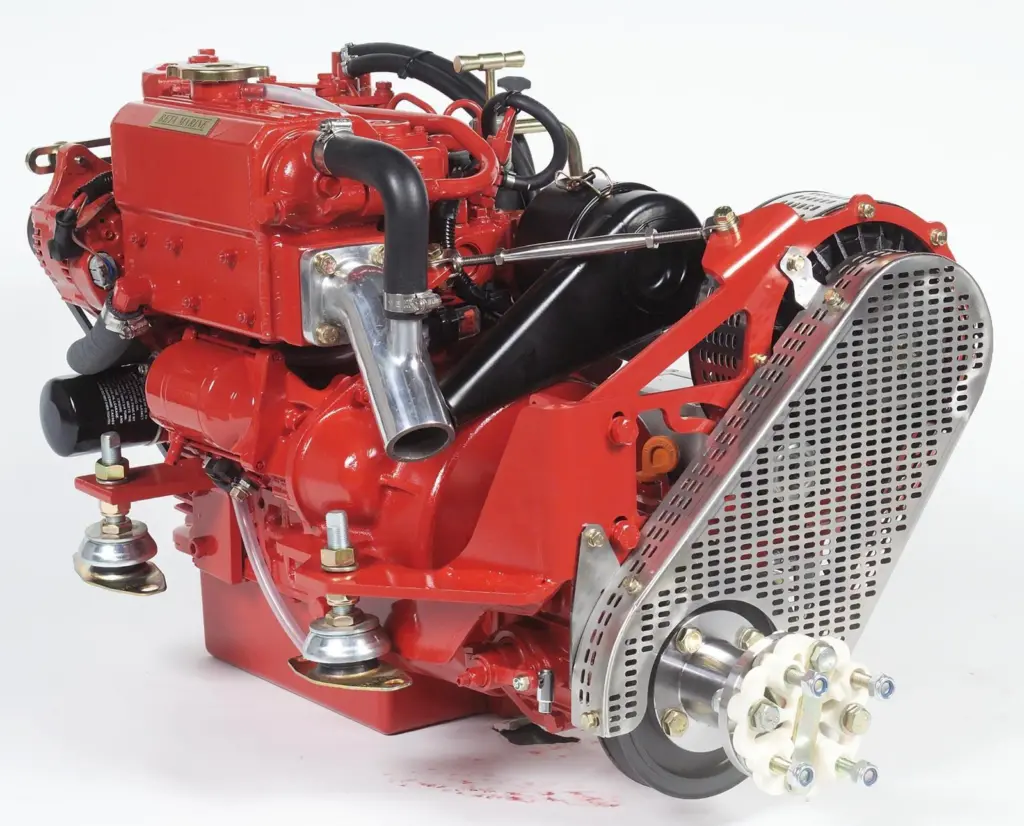
Hybrids are a largely untapped technology particularly suited to the workboat market, Graeme Hawksley of Hybrid Marine tells MJ. To back it up he will be exhibiting a hybrid system at SeaWork on the Beta Marine stand.
He says it must be realised that electric propulsion isn’t great at moving a boat fast. The power equation is a cubic function of speed, so the drive required to push a displacement boat at 20 knots is eight times greater than the power to drive it at 10 knots and about 64 times greater than that to drive it at 5 knots.
But, as Mr Hawksley goes on to say, ‘An electric drive can provide moderate speed cruising and enhanced slow speed manoeuvring in tight situations’. This two tier power arrangement is, he thinks, particularly attractive for a lot of workboats since many operators, while wanting to get out on site quickly, then spend a lot of hours just using their engines to either move around slowly or keep station.
This, says Mr Hawksley, is not an efficient (or kind) use of the engine, since it is turning over at low revs with very little load. A hybrid system, on the other hand, can even this out by asking the engine for higher power, the extra energy being stored in the battery bank. It also cuts out the diesel completely when it can.
‘For mid to low power use, Mr Hawksley explained, ‘where hybrids have the most to offer in efficiency improvements, the electric motor can provide clean quiet propulsion. When the batteries run down the engine is restarted to provide propulsion and recharge the batteries. Software handles the change-over.’
There’s another point. If an operator has a high demand for onboard electrical power, the hybrid can also provide this in a very compact space. Some vessels, for example, need a reasonable amount of electrical power to run their equipment. So, workboats needing installations like welding equipment, diving compressors or observation platforms would benefit.
There are many different hybrid configurations. Mr Hawksley is not a fan of the serial versions (which interrupt the mechanical drive chain, transmitting power electrically), at least for smaller craft as he says it lowers reliability and increases costs, and is less effective if most of the power draw is for propulsion rather than onboard power.
Mr Hawksley further explained that even on so-called parallel systems (where the electrical system runs alongside the diesel) there are design implications about where you input the electric power. ‘If you knit it in between the engine and the gearbox, a failure means the whole propulsion system may be put out of action. Further, this layout results in accessibility problems and you may well have to take the engine out if a hybrid component breaks down.’
Despite the design issues yet to be addressed, hybrids would seem to be the way of the future, especially since the developments in lithium ion batteries. These are lighter and take up much less space than their lead-acid counterparts, even if they are a little on the expensive side at the moment.