![MaritimeJournal[Seawork]](https://www.maritimejournal.com/wp-content/uploads/2026/09/MaritimeJournalSeawork.svg)

INTERVIEW: Volvo Penta head of Marine Business talks to Maritime Journal
The maritime industry is witnessing – and having to make changes in – an unprecedented era of change. In our latest podcast, new Volvo Penta Marine Business Unit boss Hanna Ljungqvist talks to Maritime Journal about the company’s approach.
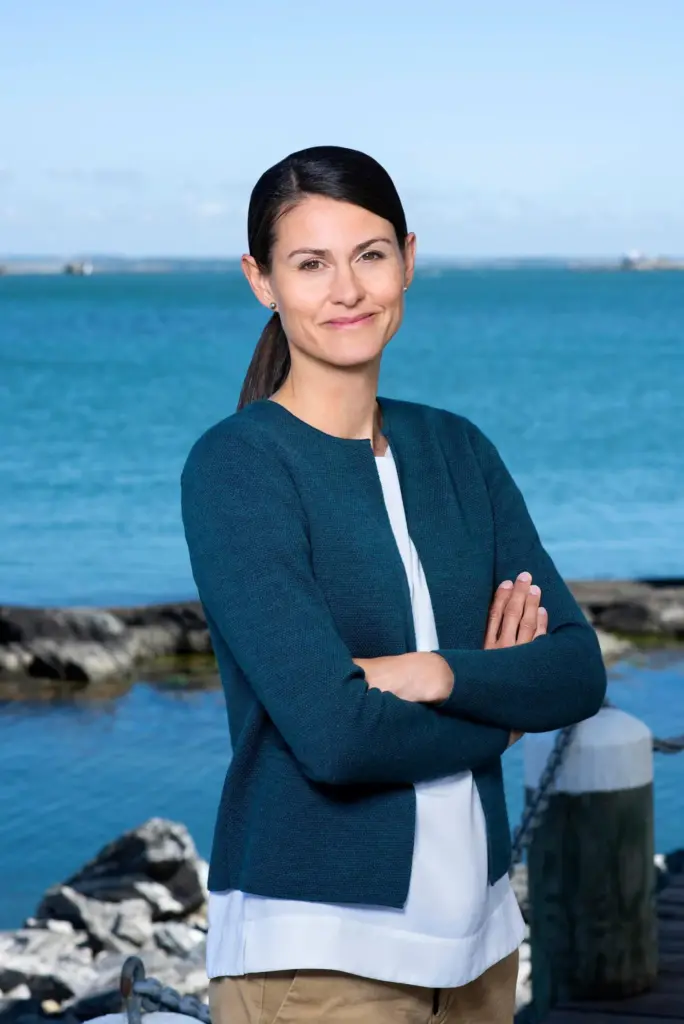
When Hanna Ljungqvist returned to Volvo Penta as head of its Marine Business Unit, she stepped into a sector facing one of the most complex periods in its history. Decarbonisation targets, emerging autonomy, electrification, changing fuel economics and shifting offshore markets are all arriving at once – and not always in a neat or predictable order.
In a wide-ranging interview with Maritime Journal editor Debbie Mason, Ljungqvist outlines how Volvo Penta is navigating that complexity, drawing on lessons from her years leading Volvo Trucks operations in India and Indonesia, while remaining firmly grounded in the realities of marine operations.
“There’s a lot of change across the board,” she says. “New technologies, sustainability pressure, AI coming into the picture. We will continue to see a high pace of change – but we are confident we can deal with it.”
The business case equation
The business case ‘equation’ is a recurring theme throughout the discussion and sits at the heart of Volvo Penta’s strategy: the balance between technology, economics and operational reality.
“This is about where it makes sense,” she says. “Having the technical solution is part of making it happen. But operators also need uptime, total cost of ownership to match, and fuel and infrastructure availability.”
Her time in heavy-duty transport sharpened that perspective.
“If you operate a mine in Indonesia or India, you want uptime. You need predictable costs. That is very similar to the needs of a marine commercial operator.”
The marine industry’s reputation for caution, she suggests, is not conservatism for its own sake. “Moving something in the water simply consumes much more energy than on the road,” she says. “So the equation is different – and more complex.”
This is why Volvo Penta is selective about where it pushes new technologies first. “Electrification is not taking off at the pace everyone thought a few years ago,” Ljungqvist says. “That’s true in marine and in automotive. The equation doesn’t always work yet.”
Alternative fuels and diesel
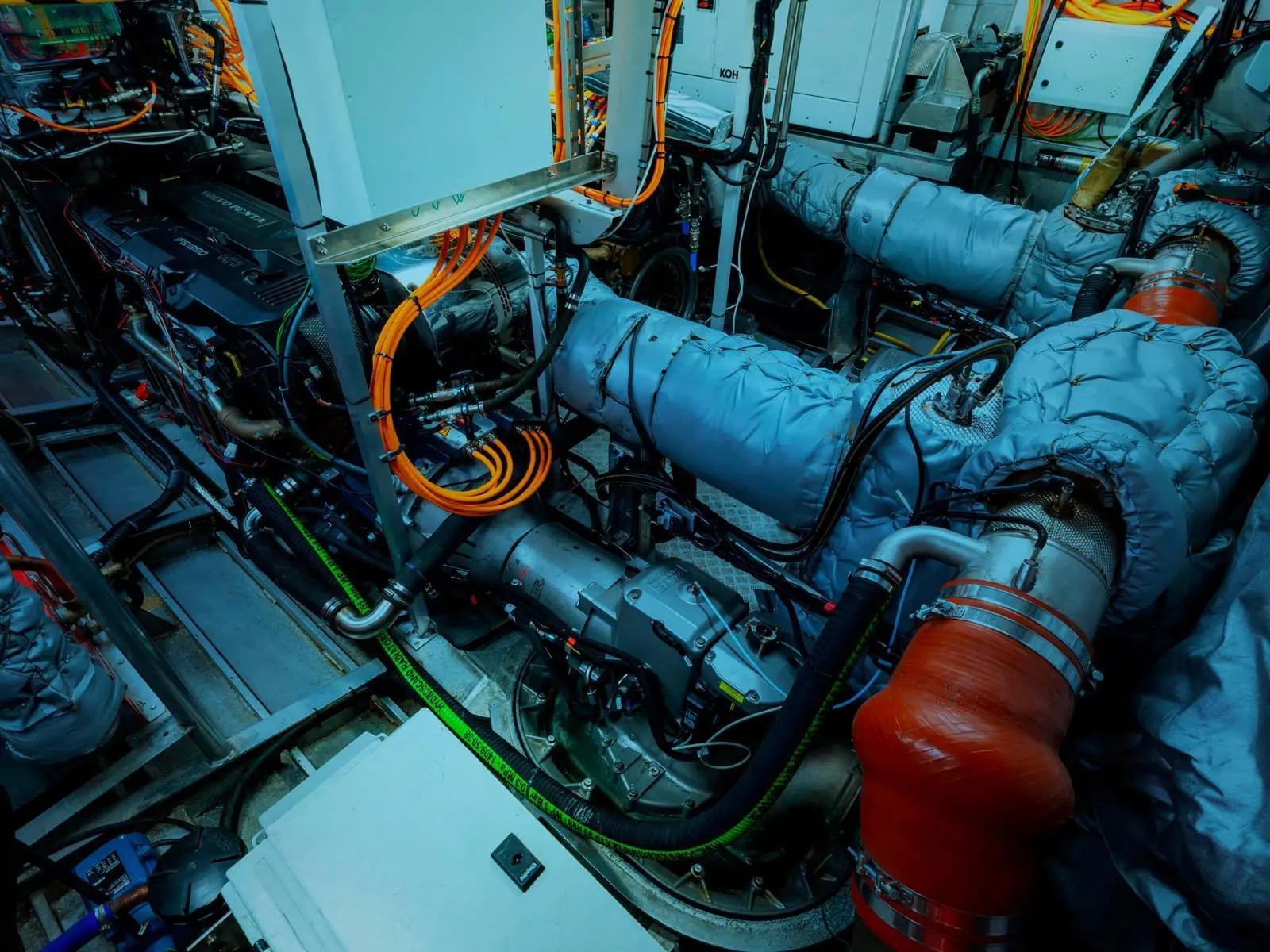
Despite the accelerating conversation around zero-emissions propulsion, Ljungqvist is clear that diesel – or more precisely, internal combustion – is not disappearing any time soon.
“Diesel will be there for the foreseeable future,” she says. “I would actually put it as combustion. Internal combustion engines will likely be there for a very long time moving ahead.”
What is changing, she says, is the nature of the fuel itself. Sustainable alternatives are increasingly viable, even if availability remains uneven.
“Already today we have HVO,” she says. “In terms of sustainability, HVO is an excellent fuel for the marine industry.”
Crucially for operators, HVO does not require wholesale changes to engines or infrastructure. “The engines are already certified,” she says. “You can mix it. One day you could fill up with traditional diesel, the next day with HVO, and our engines will work perfectly.”
“Fossil diesel will be there for a long time, especially in certain parts of the world. But we will also see electric and diesel-electric hybrid solutions becoming suitable for some applications.”
The deciding factor, she says, is not ideology but practicality.
“It comes back to the equation – infrastructure, availability, fuel cost. When all of these make sense, we will see uptake, but it will happen at different paces depending on region and application.”
How automotive is leading
While marine faces unique challenges, Ljungqvist believes it can still learn from automotive and commercial transport – particularly in sustainability and digitalisation.
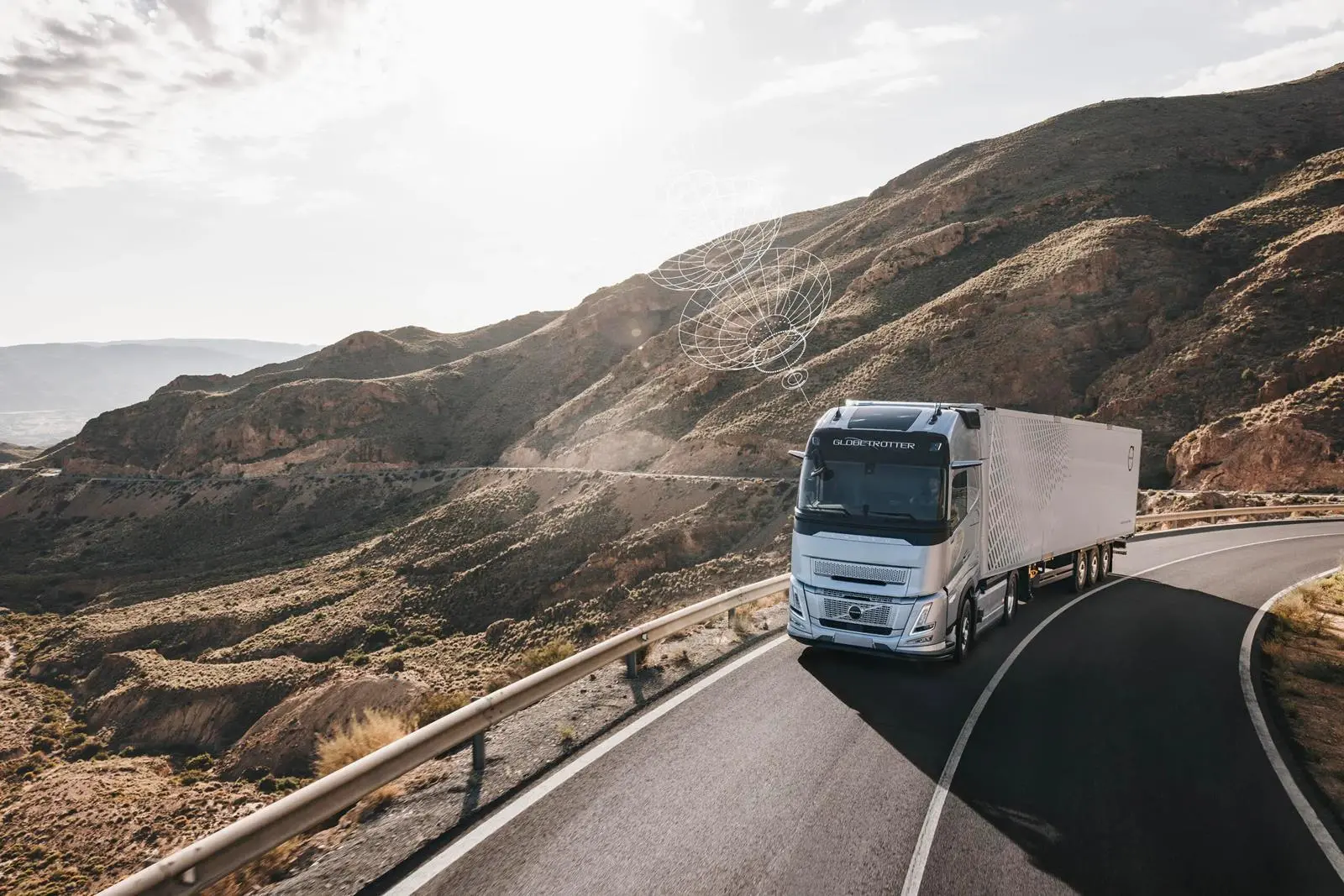
“The commercial transport industry is ahead of marine in sustainability,” she says. “Volvo Trucks has a very wide spectrum of fully electric vehicles, and in Europe the uptake has started.”
At the same time, that industry is grappling with many of the same barriers.
“Infrastructure, higher investment costs, and uncertainty around which fuels will be supported – those challenges are shared.”
Where automotive is clearly ahead, she argues, is in data utilisation.
“In the mining industry, very large fleets are operated using connected data to optimise uptime,” she says. “Marine commercial fleets are much smaller, but there are good learnings in how automotive leverages data.”
Those lessons are now feeding into Volvo Penta’s marine roadmap, particularly in remote diagnostics and lifecycle optimisation – areas that become even more critical as propulsion systems grow more complex.
Customer service
If technology is one side of the equation, customer service is the other, and Ljungqvist is unequivocal about its importance.
“This is extremely important,” she says. “Our customers expect us to be there throughout the lifecycle.”
Having previously led Volvo Penta’s global marine service and parts business, she views service as a core part of the product, and with the group’s wide reach, service is always possible.
“Yes, we sell the engine,” she says. “But then we need to support customers in their uptime. That’s vital for their business. We are continuously working on enhancing competence, making sure dealers are in the right locations, and using the Volvo Group’s global footprint to ensure availability where commercial fleets operate.”
“Global diagnostics is something we support step by step. It helps dealers help customers and improves uptime throughout the lifecycle.”
As hybrid and electric systems become more common, she adds, integration support becomes even more critical.
“Our ambition is to deliver as much of the system as possible ourselves, to simplify integration and increase reliability.
Autonomous and remote trends
Autonomy, remote operation and offshore wind increasingly overlap – particularly in workboats, ports and crew transfer vessels (CTVs). Volvo Penta, Ljungqvist says, has been preparing for this convergence for years.
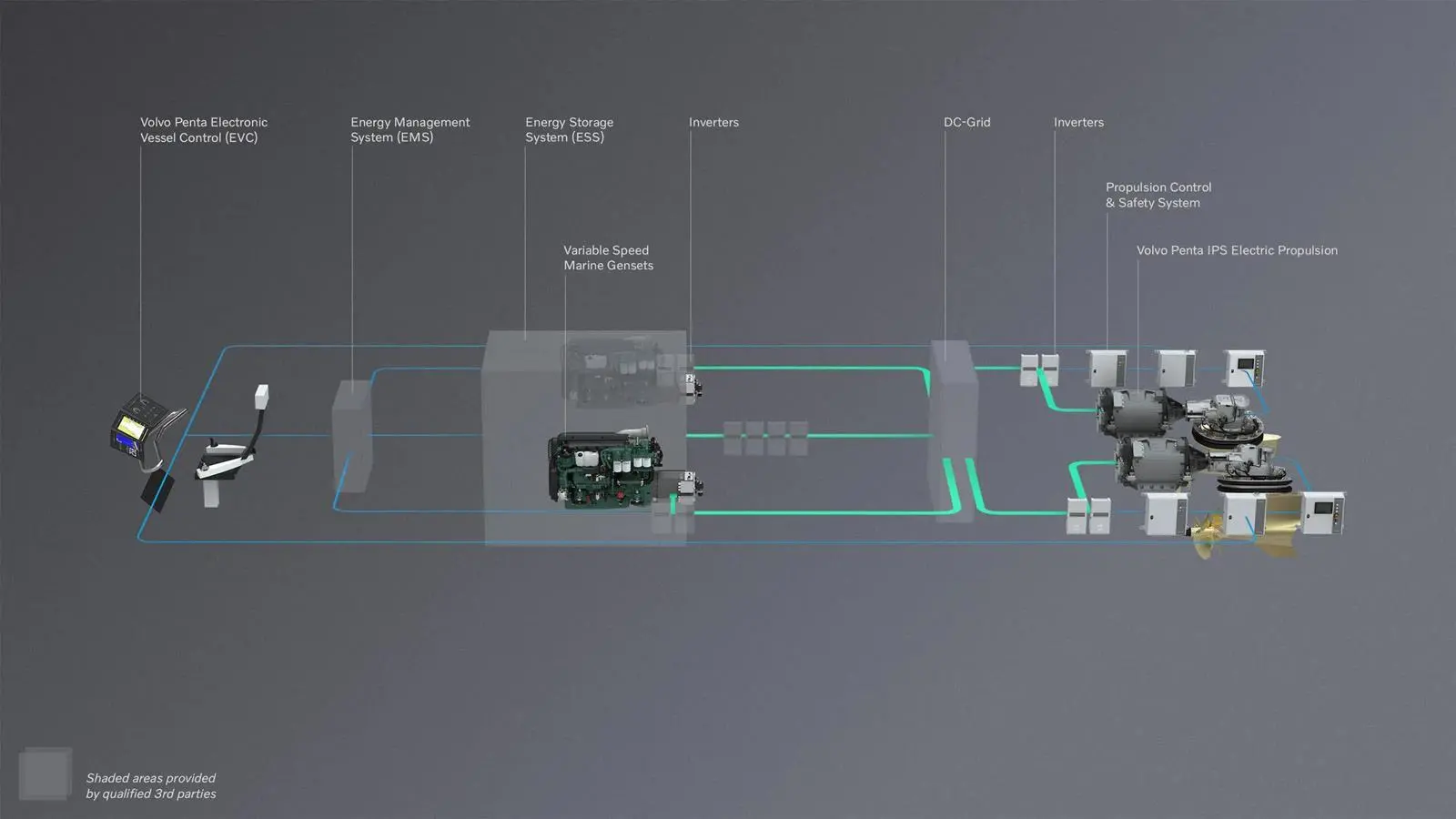
“We have prepared our drivelines with clear interfaces for remote helm and remote control,” she says. “Autonomous systems from different suppliers can integrate with our systems in a simple way. We have electronic steering, joystick driving, assisted docking and dynamic positioning. We’ve been leading the industry in those systems for a long time and intend to continue.”
Integration remains one of the biggest pain points for operators and yards.
“This is one of the most difficult parts of building a marine commercial vessel and that’s why we work with standardised interfaces, specialist suppliers and highly skilled marine commercial dealers.”
The pace of offshore wind, Ljungqvist admits, has been slowing down but she sees take-up opportunities in other areas of the globe.
“We see offshore wind starting to take off in Japan and Korea. Globally, we will continue to see growth, even if the pace is slower for a few years,” she says.
CTVs are among the applications best suited to hybrid and electric propulsion – and likely to showcase Volvo Penta’s next developments. While Ljungqvist stops short of formal announcements, she confirms that hybrid and electric offers are ‘very much in focus’, with more industrialised solutions expected soon.
For an industry being reshaped on multiple fronts, her message is pragmatic rather than ideological.
“We will continue to innovate,” she says. “But always with reliability, integration and business sense at the centre.”
And if the hints in this interview are anything to go by, the coming months may offer clear signs of how Volvo Penta plans to use its business case equation in practice.