![MaritimeJournal[Seawork]](https://www.maritimejournal.com/wp-content/uploads/2026/09/MaritimeJournalSeawork.svg)



To be or not to be hybrid
Hybrid systems are beginning to find a foothold, and at last month’s Seawork they showed a rising profile as they stand to benefit any application where theres a lot of idling, or an engine operating with moderate to low loads.
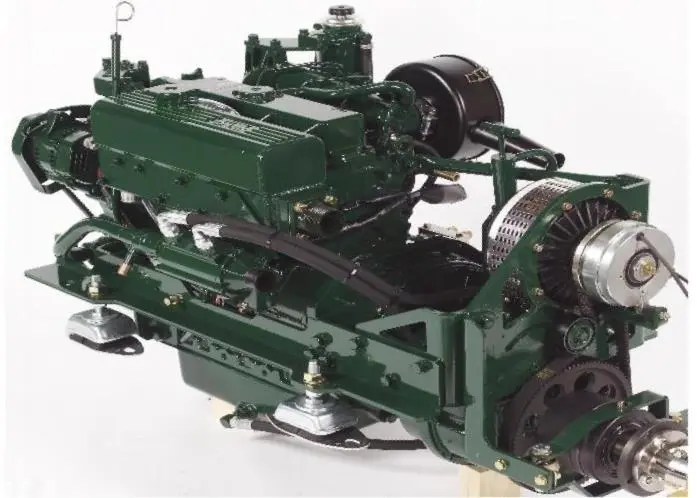
To give a better, more efficient use of diesel power, a Beta 43 engine has been given a 10kW hybrid adaptation for Avon Boats by Hybrid Marine. The craft is a classic launch with a canopy on top which is being used as a tourist boat at Stratford-upon-Avon.
It’s a good application of the technology because the passengers appreciate the peace and quiet that electric drive gives, while the engine is simply switched back to main propulsion (which also charges the batteries) when navigating fast flowing stretches of the river. And, as the boats do spend a lot of time under electric power, the batteries can also be recharged overnight at their home base if necessary.
Parallel hybrids, said Graeme Hawksley of Hybrid-Marine, are more efficient than series hybrid drives in this kind of application. Workboats require a fairly broad spectrum of power, and being able to switch quickly backward and forward between electric drive and the full power of the diesel provides a very flexible system.
“Parallel hybrids are a cost effective solution providing efficiency improvements in engine operation and considerable amounts of electrical energy, continued Mr Hawksley. “Where there is a budget for a propulsion engine and a separate generator, a parallel hybrid can actually reduce a vessel’s build complexity and cost and go on to provide fuel savings during the life of the vessel.
“Lastly,” the engine can still work even if the hybrid is offline, and the hybrid will give you power even if the engine fails. You therefore have a high level of redundancy providing a very reliable propulsion solution.”
Mr Hawksley is convinced that parallel hybrids have a wide range of applications, especially as much of a workboat’s time, after powering to a particular site, is spent low speed trolling. With the hybrid, there is the added bonus of being able to run powerful onboard electrical loads such as welding equipment or diving compressors, or the geotechnical investigation applications required of survey boats, off the battery, which will recharge itself from the hybrid during normal passage under power.