![MaritimeJournal[Seawork]](https://www.maritimejournal.com/wp-content/uploads/2026/09/MaritimeJournalSeawork.svg)

Two-stroke outboards still available at Seawork
Smaller workboats, patrol craft and rescue boats, amongst others, regularly opt for outboard power as their preferred propulsion source and certainly there can be many advantages for craft under 10m to be fitted with single, twin or even triple outboard engines.
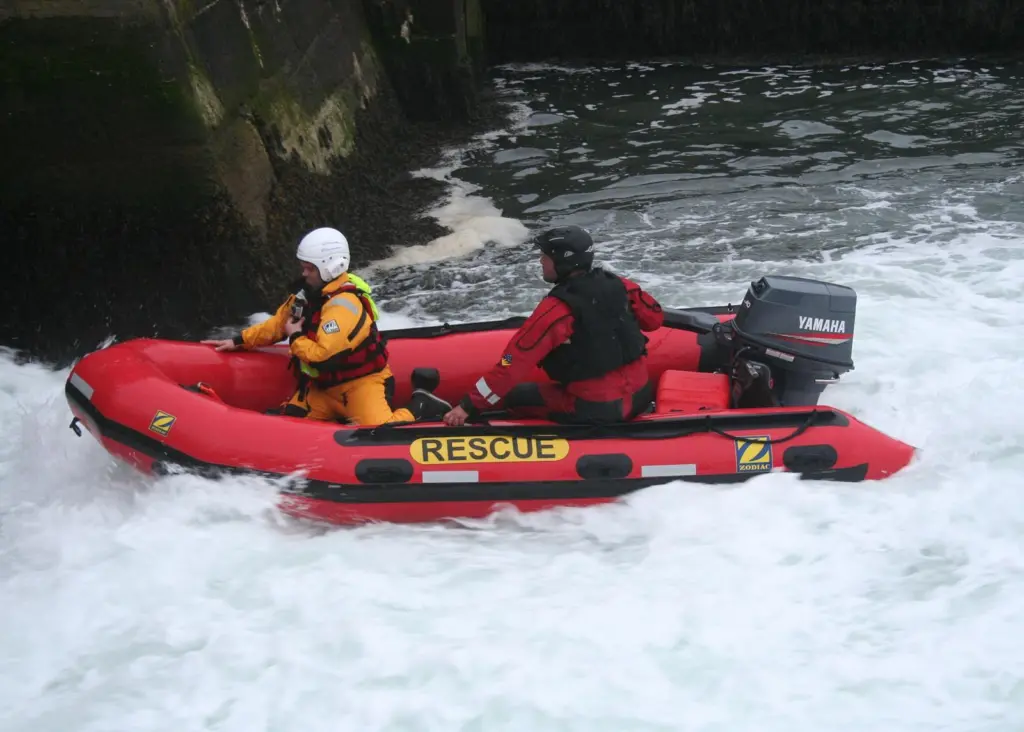
Most commercial operators of these types of vessel are fully aware that their craft are not required to meet the regulations and specifications laid down in the RCD (Recreational Craft Directive) which is applicable only to leisure boats. Yet when it comes to choosing the most suitable outboard engine for their operations many professionals only consider those outboard engines that are currently promoted by the outboard engine manufacturers to the leisure market.
The RCD regulations applicable within the EU for leisure craft build specification were updated in April 2006 to include tough new Noise and Emission levels and they subsequently required four-stroke outboard engines and two-stoke outboards to meet stricter levels in 2008 and 2007 respectively. These new lower emission levels effectively meant that two-stroke outboard engines which were fitted with carburettors, popular for their light weight, low cost and simplicity, were effectively ‘banned’ within the EU as of 1/1/2007 for all new leisure craft built after this date, as they were unable to meet the new regulations. Therefore, in time, most outboard manufacturers focussed their efforts on promoting and marketing their four-stroke outboard models within the EU area.
However production of two-stroke outboard engines by manufacturers such as Yamaha, the world’s largest outboard manufacturer, continued as normal for all countries outside the EU where the RCD regulations do not apply. In the UK, like many other EU countries, it was widely assumed that the manufacture of two-stroke outboards had stopped and this myth was accepted by many commercial and professional users, whereas in actual fact commercial vessel specification was never governed by the RCD regulations and users could quite legitimately and legally fit two-stroke engines if they wished.
Seawork is therefore unique in the UK as an event where manufacturers exhibit both two-stroke and four-stroke outboard engines and are happy to recommend the most suitable outboard for every individual application, whichever type it might be. Clearly there is still a market for two-strokes within the commercial marine industry and in fact UK distributors of these engines continue to improve the options available.
Seawork 2013 for example sees new specialised solutions like the 40hp two-stroke displayed on Yamaha’s Stand A99 which debuts a jet-drive lower unit instead of the standard propeller and gearbox, for specialised applications where the craft is used in shallow or debris strewn water.