![MaritimeJournal[Seawork]](https://www.maritimejournal.com/wp-content/uploads/2026/09/MaritimeJournalSeawork.svg)


Cygnus in the thick of it at Seawork
Steel marine structures, from pipelines to pilings and ships to dams, all need to have their integrity checked regularly.
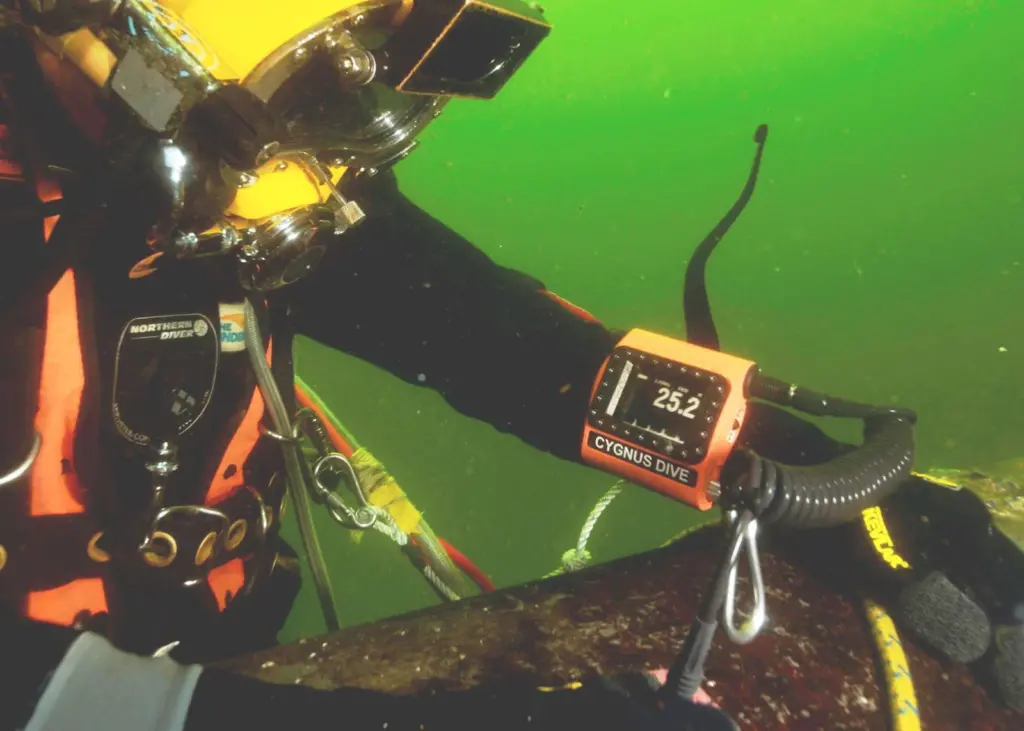
So three years ago, Seawork exhibitor Cygnus Instruments set about designing an alternative model to their tried and trusted, 25 year old thickness gauge. The new thickness gauge benefits from a number of well thought out advances on the older systems, including a colour TFT display with colours that could be changed depending on water type and visibility.
Graham Haines of Cygnus told MJ that the main difference between this and more traditional models is that it has an A-Scan display. “This shows, along with a simple digital readout, a graphic of the returning echoes from within the material under test. All this comes together to give a much fuller picture, so that fractures and delamination, for example, can be spotted more easily.” He also pointed out that the industry is “getting more and more interested” in this particular kind of graphic representation.
The underwater unit can be used as a standalone data-logging device with capacity for 5,000 readouts, and when the instrument is in logging mode (easily achieved by pushing the probe against the surface for around a second), the A-scan display is stored beside each of the digital measurements. If there’s any doubt back on land, the A-scans can be interrogated to give further information.
There is also a number of options to make the thickness gauge more flexible than the older versions, which needed both hands. The new instrument can be wrist or forearm mounted and configured to right or left handed use as the probe cable has an output either side.
The gauge can also be simply linked to a belt, with the readout being remotely read, either by a display attached to a diver’s helmet just above the eye-line, or through an umbilical link to the surface team and analysed by the company’s ‘Divelink’ software package.
Related Articles
 SEAWORK
 SEAWORK NEWS
 SEAWORK