![MaritimeJournal[Seawork]](https://www.maritimejournal.com/wp-content/uploads/2026/09/MaritimeJournalSeawork.svg)



See C-Fury’s easy rider at Seawork
There is a new kid on the Seawork block which is ideal for patrol and FRC applications. It can get wherever you need to go fast or wait on standby while still being comfortable, and is not too heavy on the fuel bills.
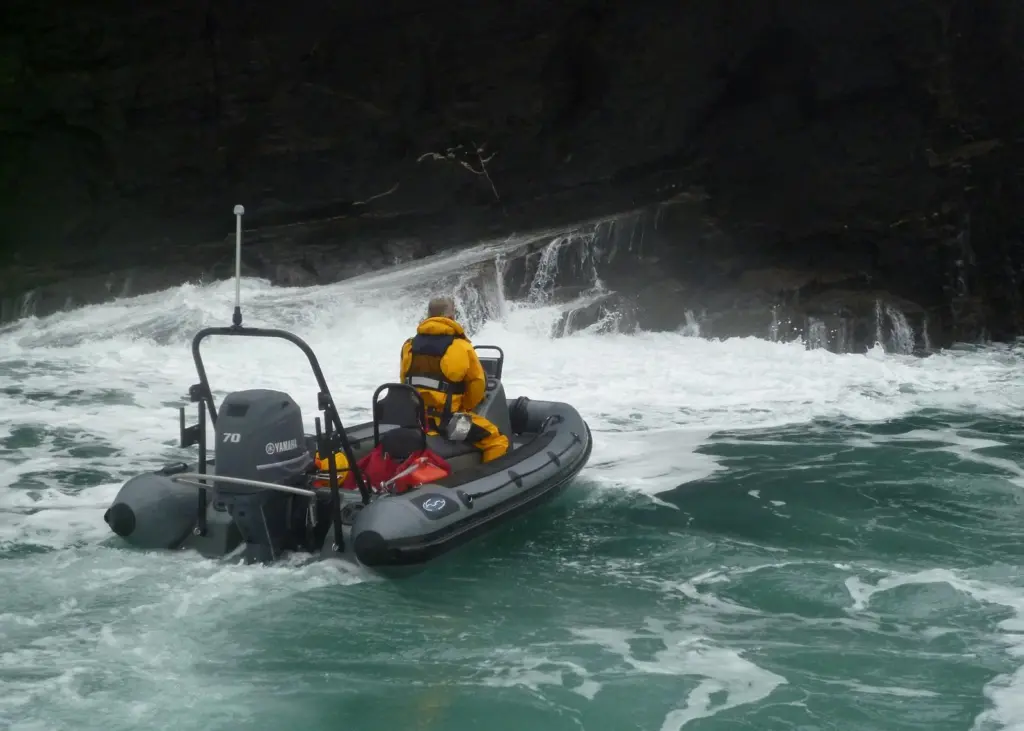
The new C-Fury Patrol is a compact RIB with a cat-style hydrofoil hull and measures only 4m LOA. However, what might not be expected with something of this size is that key elements to the design have given it extra stability at rest or speed combined with excellent seakeeping and directional stability (tracking) in disturbed water.
The Patrol is very manoeuvrable and quick to respond to its controls, but it also manages to be extremely soft riding compared to other RIBs of its size, with attention paid to whole body shock and vibration levels. C-Fury Ltd MD Simon Mcloughlin told MJ that it manages this by the fact that its hull has a wide stance and bigger than usual tunnels for its size, so while it’s sitting in normal displacement mode the boat remains very stable, but when it’s running fast, the high performance hull is helped by the air cushioning created by the airflow through the tunnels and further assisted by the hydrofoil that is flush with the keels.
This increased efficiency means that the boat is designed for 40 hp to 70 hp engines. In fact, it has been trialled through a 250 mile trip in choppy water around Cornwall in November and up to 20 miles offshore, and managed an average of 8.5 miles to the gallon at an average 20 knot cruising speed.
Mr Mcloughlin said that the boat is basically a good, flexible development because it combines the low consumption and stability needed for patrol or harbour craft, “as they spend a lot of time either idling or not moving particularly quickly, and only occasionally used in real anger to get somewhere rapidly”. He added that when required the boat can show a very nice turn of speed, managing over 35 knots with the 70 hp engine.
The very first time the C-Fury Patrol will be seen in a commercial show will be at Seawork 2012, and this craft will have some special features. Mr Mcloughlin explained that these evolved because some customers were undertaking a lot of work at night and constantly concerned with hitting debris or unmarked buoys. As the LED units are mounted inside the tunnels, there is no background scatter from the boat thus they are very easy to use at night. However, Mr Mcloughlin says that this, along with the addition of other onboard systems, gives the craft much more flexibility than the average RIB.
Related Articles
 SEAWORK
 SEAWORK NEWS
 SEAWORK