![MaritimeJournal[Seawork]](https://www.maritimejournal.com/wp-content/uploads/2026/09/MaritimeJournalSeawork.svg)




30 years of MJ – 50 years of commercial RIBs
The Rigid Inflatable Boat (RIB) celebrated its 50th birthday a couple of years ago but when ‘Maritime Journal’ started up 30 years ago the RIB was only to be found in specialist areas of the workboat and military sectors.
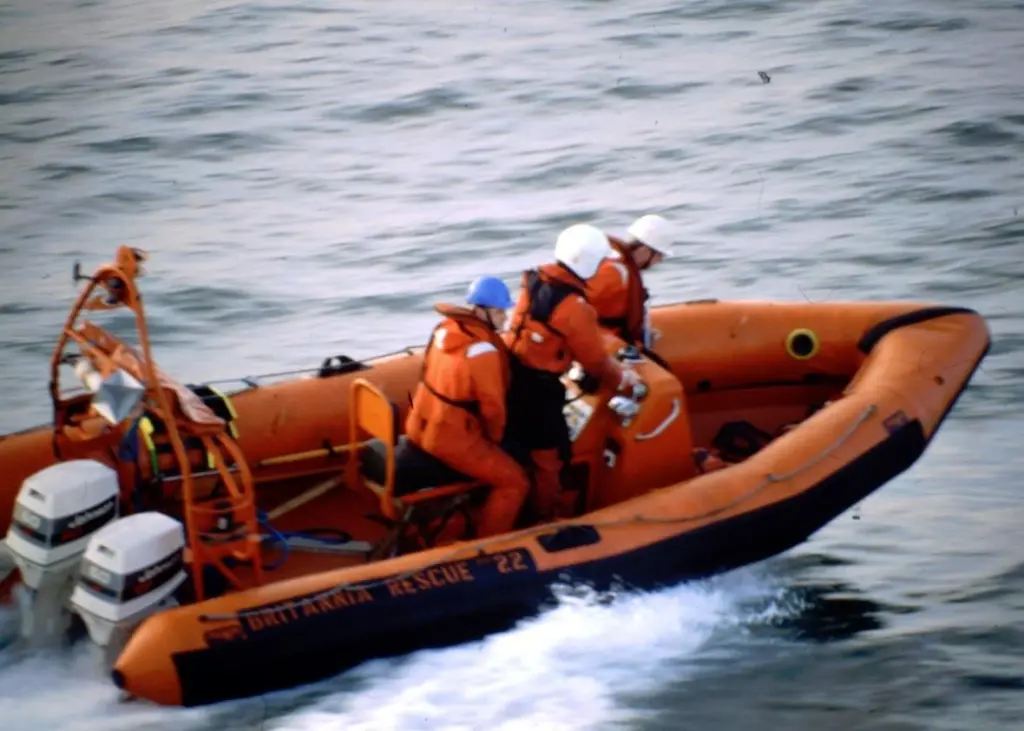
They started off life as a rescue boat used by the RNLI and were widely used as rescue boats in the North Sea oil patch and to meet some military requirements. The past 30 years has have seen an explosion in the use of RIBs and now they are a boat of choice in nearly every sector of the workboat world.
30 years ago RIBs were still largely a British development with names such as Delta, Avon, Humber, Halmatic and David Still Marine all producing boats for the workboat and military sectors. Today the RIB market is fully international with RIB builders in nearly every part of the World. Avon, Delta and Humber still remain amongst the British builders and new additions such as Ribcraft, MST and Scorpion have expanded the British participation but builders in Scandinavia and Holland now meet a large part of the demand for RIBs in the workboat sector.
The past 30 years have seen four distinct developments in RIB design that have helped to widen the market for these ubiquitous craft. The first of these has been the increase in size. I remember writing about RIBs over 30 years ago predicting that they would never be used in sizes over about 8 metres long. How wrong can you be! Today there are RIBs regularly being built in 12 to 15 metre sizes and workboat RIBs up to 20 metres in length have been built. I am still of the opinion that there is not a huge benefit in using a RIB in larger sizes where the tube has little influence on the performance except to add weight and cost and to act as a fender when going alongside.
The largest RIB ever built was a massive 25 metre built in Italy but that was a leisure RIB and might be described as the first RIB superyacht. It was probably the only RIB with three bathrooms!
The second significant development was the advent of small powerful diesel engines. It was these mainly automotive derived diesels that made the diesel RIB a viable proposition and diesel is the power of choice in both the commercial sector and for the military. These compact diesels allow twin engines to be installed in RIBs as small as 8 metres and single engine diesel RIBs as small as 5 metres are now viable.
A significant change that will expand the use of diesel power in RIBs is the advent of powerful diesel outboards and these will have a significant impact on the commercial RIB market. Diesel fuel is readily available even in remote areas and it is a safer fuel so having diesel outboards such as the Oxe 200hp diesel could open up new RIB markets such as in fish farming.
The third factor affecting RIBs has been the introduction of shock mitigation seating. 30 years ago the limiting factor in RIB performance tended to be what the boat could stand when operating in rough seas. Now that has changed and with improvements in RIB design, construction and materials it is now the crew that is the limiting factor in rough sea performance.
The final factor in developing RIB design has been the addition of wheelhouses to what was previously the open RIB concept. An enclosed wheelhouse offers good protection for the crew so that they can undertake extensive patrol duties in adverse conditions and regulations are demanding this level of crew protection for some RIB operations.
What is amazing about the development of RIBs over the past 30 years is the wide spectrum of duties that RIBs now perform. Probably one of the toughest market sectors for the RIB to crack was the conservative pilot boat. Pilot boats have traditionally been hard hull designs based either on a slow traditional displacement hull or more likely on a seaworthy semi-displacement fast hull.
The RIB concept offered so much for pilot boat use that it eventually overcame the reluctance to change. The big advantage was of course the fendering offered by the tube when going alongside but there was also the stability of the boat at slower speeds when alongside. Finally there was pilot safety so that in the event of a pilot falling during transfers the space below the tube might offer some protection before rescue could be affected. Today RIBs are making inroads into this conservative market sector but there is still some way to go.
The discussion about RIB tubes continues. The RIB started with an inflatable tube because this type of tube would deform under wave impact and give the boat a degree of variable geometry which would improve the seaworthiness. This benefit has now largely been ignored by RIB builders and designers because tubes are now inflated to 5psi or more which makes the tube bounce rather than absorb wave impact, giving a rougher ride and increasing the need for sprung seating.
It is much the same with the foam filled tubes. Filling the tube with foam allows its shape to be tailored to suit but there is very little resilience in the tube, just enough for it to act as a fender. However the benefit for the operator is seen in the more rugged and perhaps durable design.
For passenger RIBs such as thrill ride boats the authorities love the RIB because of its added stability and reserve buoyancy. The stability is also a benefit for rescue work and this is where the RIB started its now long history. Almost every rescue boat in use today is based on a RIB design and now RIBs are being used as the basis for all-weather lifeboat designs. Even the conservative RNLI has its first RIB lifeboat and there will be more to come. After 50 years the RIB has come of age and Maritime Journal has tracked its interesting journey for the past 30 years.
By Dag Pike
(Editor’s Note: Long before becoming a marine journalist, and two decades before Maritime Journal was started, Dag was responsible for lifeboat selection and development for the RNLI, playing an instrumental role in the development of the first rigid inflatable boats and fighting the uphill battle in convincing the many nay-sayers that this then new and untested technology had huge merits in sea-keeping, speed and consequently Search and Rescue capability. Many consider him to be the ‘Father of the RIB’)