![MaritimeJournal[Seawork]](https://www.maritimejournal.com/wp-content/uploads/2026/09/MaritimeJournalSeawork.svg)



Hamburg firefighter is biggest ever
The keel has been laid in north Germany for what officials say will be “a ship of superlatives” and the biggest specialist fire-fighting vessel in the history of the Port of Hamburg.
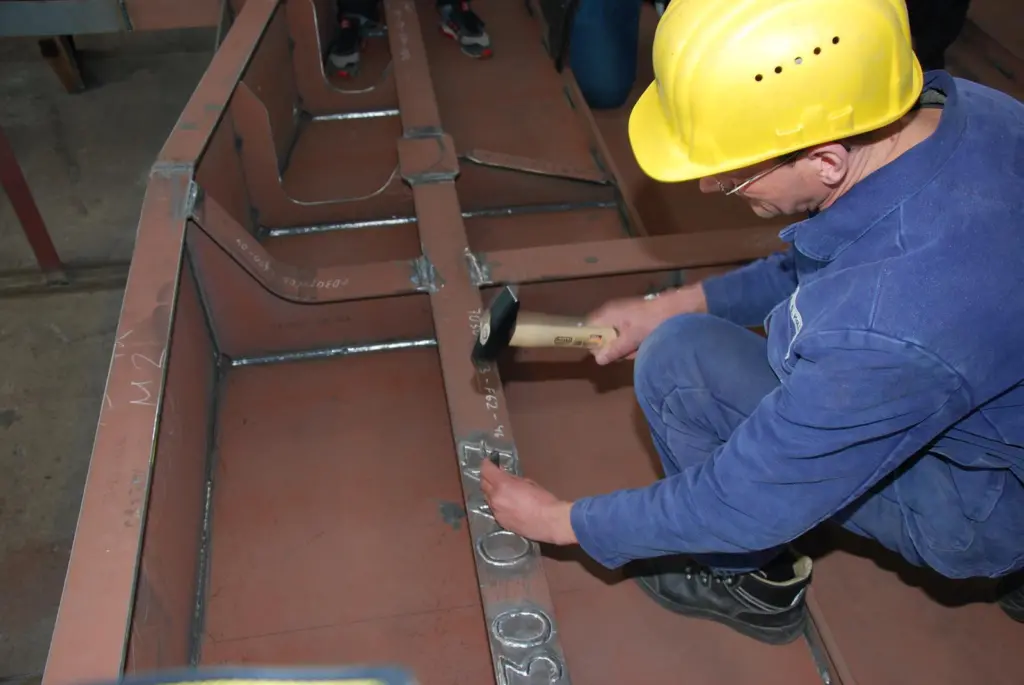
The €16 million newbuilding is now taking shape at Fassmer Werft on the Weser near Bremen and already a few things have changed in its design since it was ordered last year by the Hamburg Port Authority (HPA).
One main change is that it will be bigger, at 43.5m, than the initially planned 40m boat and thus more than twice as big as the three fire-fighting boats currently in service in Europe’s third biggest universal seaport.
Also revealed at the keel-laying in late April was that the newbuilding – LB 40 – will be called Branddirektor Westphal when it is completed and named in April or May next year. It will be 10m wide, draw 2.8m, and packed with the latest in fire-fighting equipment . With a crew of 2-4 it will accommodate a crew of 2-4 and 32 fire fighters when needed. Eco-friendly propulsion, HPA told Maritime Journal, comprises two 500kW main Caterpillar engines providing 12 knots, two rudder propellers and two bow thrusters from Schottel and DP.
Hamburg Fire Service spokesman Christian Butz told Maritime Journal the new boat’s three powerful water/foam cannon will have a pumping capacity of 7,200 m3 an hour and be capable of projecting 120,000 litres of water a minute a distance of 180m and to a height of 110m – three to four times the capacity of the port’s existing boats. That will be a big help among Hamburg’s giant callers which include multi-storied container ships, tankers and bulkers. The new boat will, port officials said, be “an important step towards keeping the Port of Hamburg safe in future”.
LB 40 will be a specialist firefighter . But it will not sit idle between fires. It will also be used for bridge safety inspections and probably other jobs as well.
However, two further Type LB 30 fire-fighting boats planned for service in 2019 will be multi functional. Up to 30m long and 8m wide drawing 1.5m that duo will together cost €14 million. “We want to get the most out of these ships” said HPA official Karsten Schönewald and noted this was the basis for their financing. “By using synergies we won’t have to have as many ships as we would have had if they operated individually”, he declared.
That is the principle on which the HPA operates its current varied fleet of specialist, yet multi-purpose, port boats. Recent new additions to that fleet have main functions such as icebreaking or dredging, but can be used for a wide range of other jobs.
By Tom Todd