![MaritimeJournal[Seawork]](https://www.maritimejournal.com/wp-content/uploads/2026/09/MaritimeJournalSeawork.svg)


Don’t write off diesel yet, says Canadian tug designer Robert Allan Ltd
 Part of our special report
Tugs, Towing and Salvage – Tackling New Challenges · September 2026
All 7 features
Part of our special report
Tugs, Towing and Salvage – Tackling New Challenges · September 2026
All 7 features
For almost a century, Canadian naval architect Robert Allan Ltd has shaped tug design around the world. Today, as the industry wrestles with which fuel route to navigate, the Vancouver designer is taking a pragmatic view: every fuel has its place, but there is nothing quite like diesel… yet. Director of Business Development & Marketing Jim Hyslop talks to Maritime Journal editor Debbie Mason.

A century of shaping the world’s tugs
Few naval architecture firms have influenced the global tug industry quite like Robert Allan Ltd.
From the development of escort tug concepts to the evolution of modern azimuth stern drive (ASD) vessels, the Vancouver company has spent almost 100 years refining the harbour tug.
Its designs have become the foundation for fleets operated by companies including Svitzer, Boluda, SAAM Towage, Kotug and many of the world’s largest port operators, while Turkish builders such as Sanmar, Uzmar and Med Marine have delivered hundreds of Robert Allan-designed vessels to customers worldwide.
Despite approaching its centenary, the company remains unusual in another respect. Rather than becoming part of a multinational engineering group, founder Robert G. Allan transferred ownership of the business in 2008 to 10 senior employees, ensuring that the company retained both its independence and its engineering-led culture.
One of those employee-owners was Jim Hyslop, who joined the company more than three decades ago as a graduate naval architect and today serves as Director of Business Development & Marketing.
“The engineering and naval architecture, the quality that comes out of this office, is something that we’re very proud of. The designs are really well thought through,” he told Maritime Journal.
“And when you have shipyards like Sanmar and Uzmar that are building them, and we’re working for clients like Svitzer and Boluda and SAAM, they all have input into the whole process. It’s a very it’s a very collaborative thing, building a boat.
“We’re very proud of what we do and how we do it. I spend a lot of my time liaising with clients and working with them to determine what their needs are. Sometimes they think they might know what they want and sometimes they do, but sometimes they need a little guidance.”
Which fuel path?
If there is one subject dominating conversations with tug owners today, it’s propulsion.
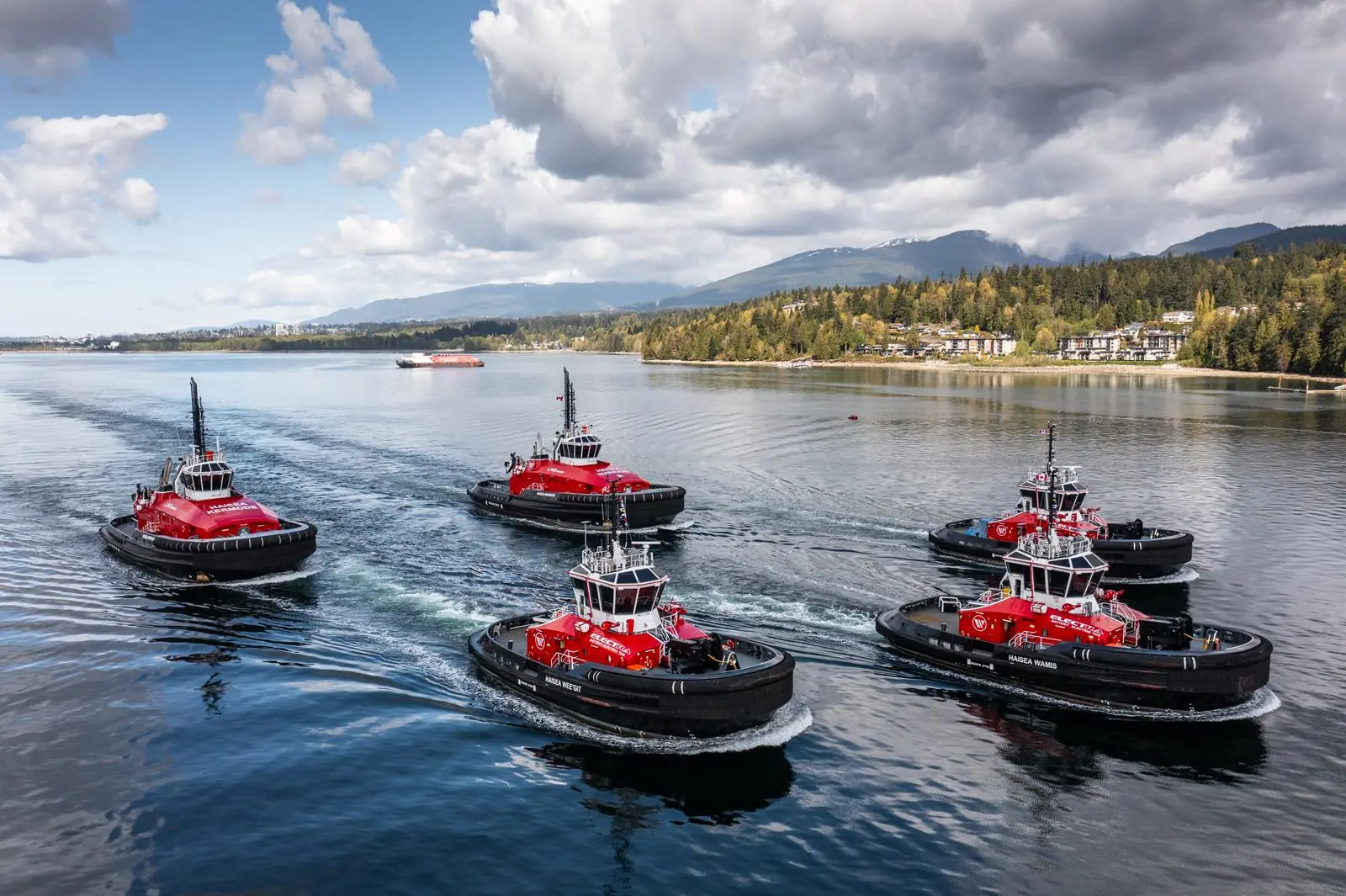
Battery-electric, methanol, hydrogen, ammonia and hybrid systems have all emerged as possible pathways towards lower emissions.
Robert Allan Ltd is cautious about declaring a winner, although batteries must be up there, with the company delivering its first battery-electric hybrid tug nearly two decades ago, in 2008.
“It’s not that new technology really, at least the hybrid side of things,” Hyslop says. “And we know batteries are going to get better. The energy density has dramatically improved and it’s going to continue to improve.
“Since then there have been huge advances in battery technology and the chemical make-up, the battery management system, the control systems – there have been huge gains in efficiency, simplicity, reliability and most importantly, energy density.
“We also know that the fuel density of methanol or LNG is not going to get better.”
But of course it’s not just dependent on the fuel, it’s whether the fuel is available or the port has the charging infrastructure, and this is still the main hurdle, Hyslop says.
If a port has cheap. abundant renewable electricity, battery-electric propulsion may prove to be the best option. Where methanol supply is readily available, methanol may become the logical one. Elsewhere, diesel may remain the only practical solution for many years.
“There are a lot of commercial decisions that operators have to make before they order a new tug,” Hyslop says. “The limiting factor in a lot of cases is that the ports, the docking locations, all of that sort of stuff, just don’t have not only the charging infrastructure itself, but the ability to provide a lot of clean power to recharge a tugboat.
“The battery pack in a tugboat is something in the order of between, say, 50 and 100 electric cars. So you can imagine if you want to charge 50 or 100 electric cars all at once, all at the same time, and charge them quickly, that’s a lot of power.”
It also doesn’t make sense, Hyslop says, to build a tug that operates on batteries if you have to use the genset for any significant amount of time.
“The best way to do it is always to have the whole operation done on battery, and so if we’re looking at a certain port, a certain operating profile, we will size the battery pack to do the whole job with battery only with the genset only there for emergencies. It’s a backup.
“If something unusual happens, and something unusual could, maybe there’s some windy weather and the tug has to expend a little more energy, then it can fire up the generator and continue doing its job.”
Black gold
Hyslop admits that at least 95% of Robert Allan-designed tugs are still diesel tugs.
Part of the reason is the lack of alternative infrastructure rather than engine technology – charging a harbour tug is a very different proposition from charging an electric car.
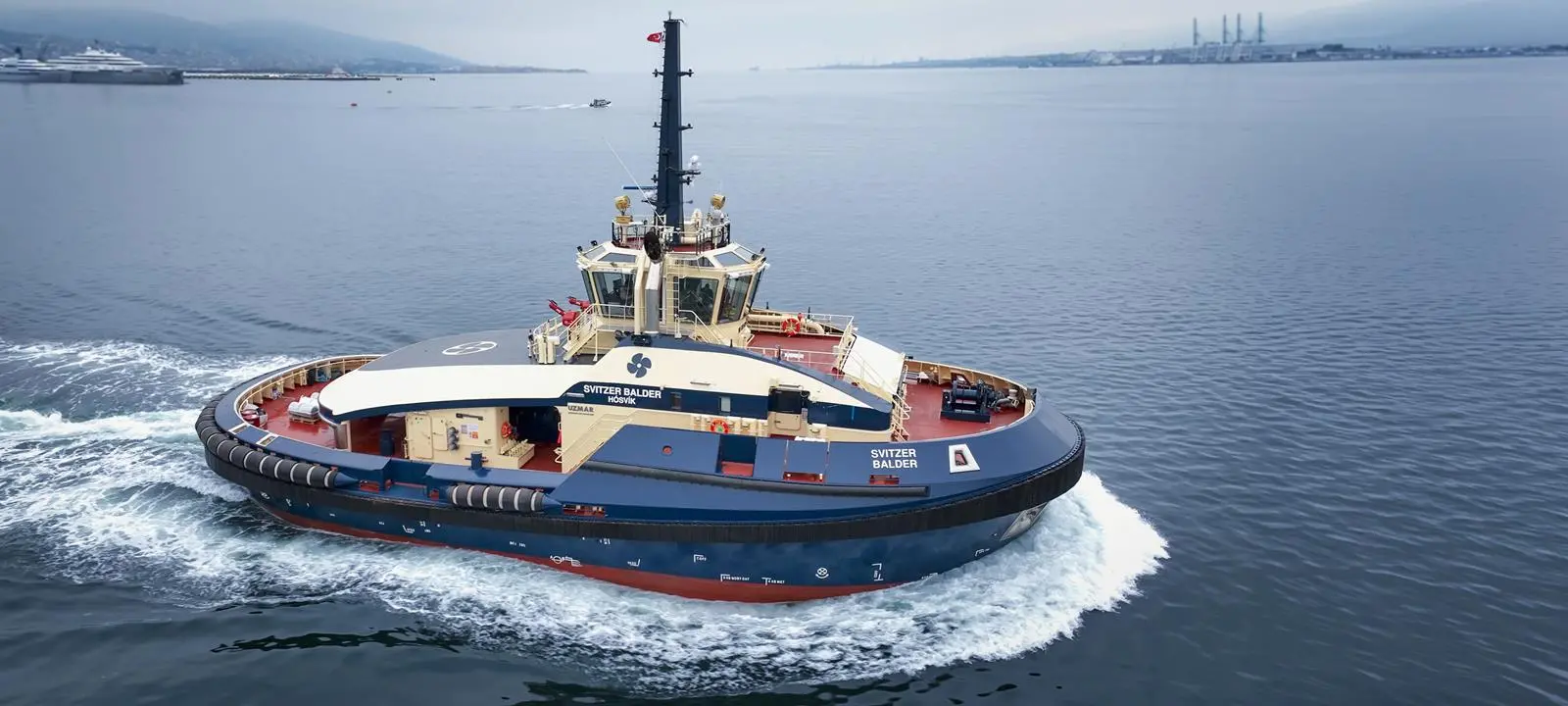
“The battery pack in a tugboat is somewhere between 50 and 100 electric cars,” Hyslop says. “If you want to charge 50 or 100 electric cars all at once, all at the same time, and charge them quickly, that’s a lot of electricity.”
Ports therefore need not only charging equipment but substantial grid capacity, something many smaller terminals simply do not possess.
The same principle applies to alternative fuels.
“If you’re considering methanol, do you have a good source of methanol? If you’re considering LNG, do you have a good source of that? That all plays into it,” Hyslop says.
Battery-electric tugs themselves are also designed differently from what many assume.
Consequently, Robert Allan Ltd sees electrification as highly effective where operational profiles are predictable and charging opportunities are available: but even then, diesel retains one overwhelming advantage, and that’s its energy density.
A conventional harbour tug can operate for extended periods with proven fuel systems that exist in virtually every commercial port.
And while the power from an electric engine is as good as an internal combustion engine, it doesn’t have anywhere near the endurance.
“When we design a boat, it’s going to be the equivalent of a diesel boat in terms of power,” Hyslop says. “The downside of electric is that generally that level of power doesn’t last as long.
“Diesel probably still is the most cost-effective fuel, unless you have expensive diesel and cheap electricity. But the majority of the vessels, the tugs that we design and build these days are still diesel – I don’t know what percentage, but 95% or something like that.”
Engineering for the next generation
Robert Allan Ltd is certainly not standing still.
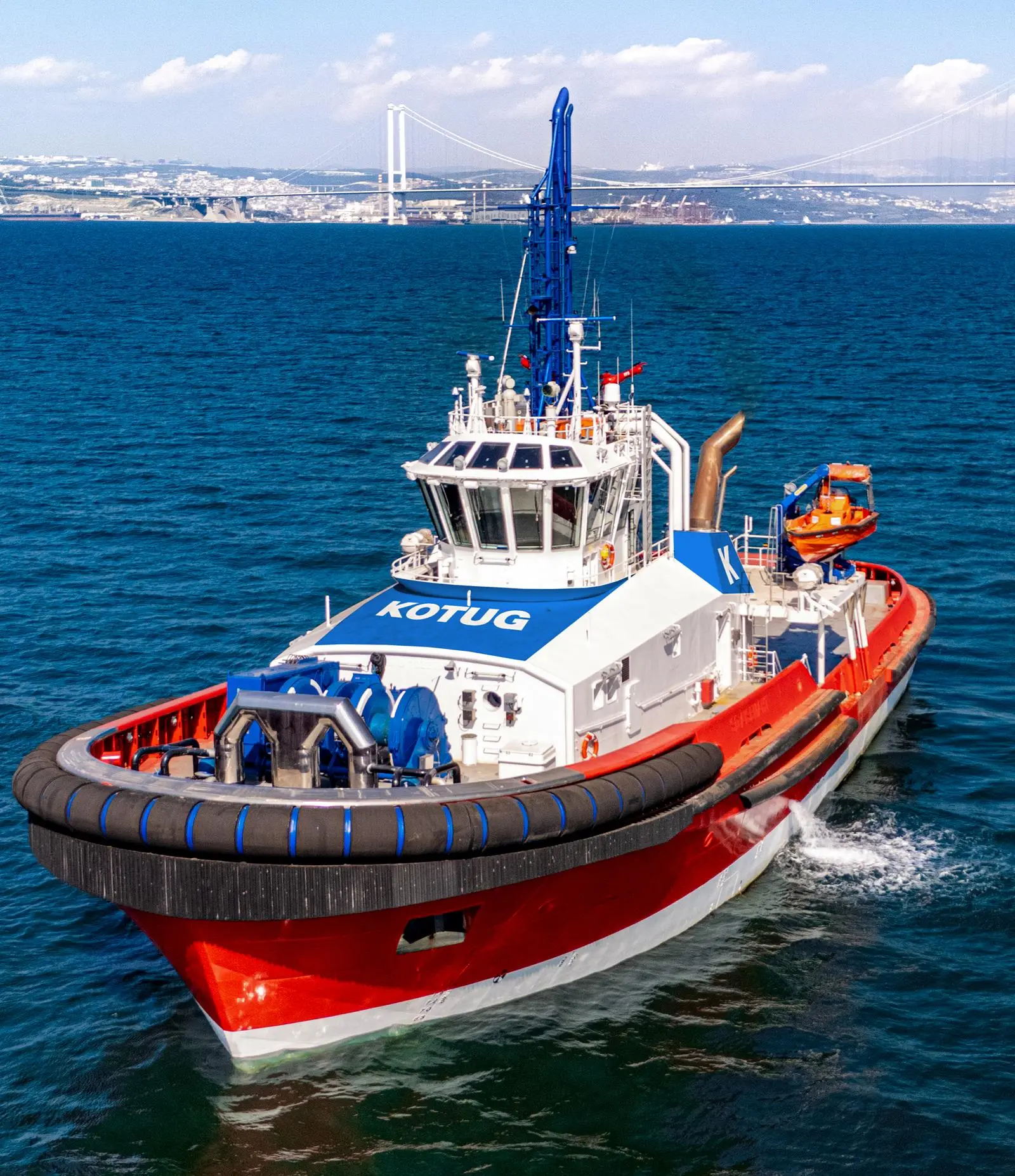
The company already has methanol-powered tug designs destined for Svitzer in Gothenburg and Kotug in Vancouver. Electric tug programmes continue to expand, while internal research is exploring future propulsion technologies that have yet to be announced publicly.
Another area receiving growing attention is underwater radiated noise.
Rather than focusing solely on emissions, Robert Allan Ltd is investigating how tug design can reduce impacts on marine mammals, particularly whales.
“We’re doing a lot of research into underwater noise,” Hyslop says. “People are becoming more aware that we’re reducing our entire environmental footprint – not just what we’re putting into the air, but what we’re putting into the water too.”
Electrification offers advantages here as well.
“Electric tugs are, at certain power levels, very quiet,” he says, although once propeller cavitation becomes dominant, propeller noise overtakes machinery noise regardless of propulsion system.
The company is not betting exclusively on batteries, nor is it convinced that methanol or hydrogen will dominate.
Instead, it is preparing for a far more complex future in which multiple propulsion technologies coexist, each selected according to local infrastructure, duty cycle, regulation and economics.
That conclusion may not be as eye-catching as predictions of an all-electric future, but it carries particular weight coming from a company whose designs have helped define modern harbour towage.
Nearly 100 years after Robert Allan Ltd first opened its drawing office, its guiding principle appears unchanged. The best tug is not the one powered by the newest fuel, it is the one that performs its intended job more safely, more efficiently and more economically than any alternative.
For now, that means diesel remains the propulsion system every challenger still has to beat.
This interview was published in our latest Special Report, which will come out in full at the end of August.