![MaritimeJournal[Seawork]](https://www.maritimejournal.com/wp-content/uploads/2026/09/MaritimeJournalSeawork.svg)






Autonomous USVs revolutionise offshore wind
Robosys Automation is spearheading Project ORACLES, a new initiative to overhaul the environmental consenting process for offshore wind farms (OWF) using advanced marine robotics and autonomous systems.
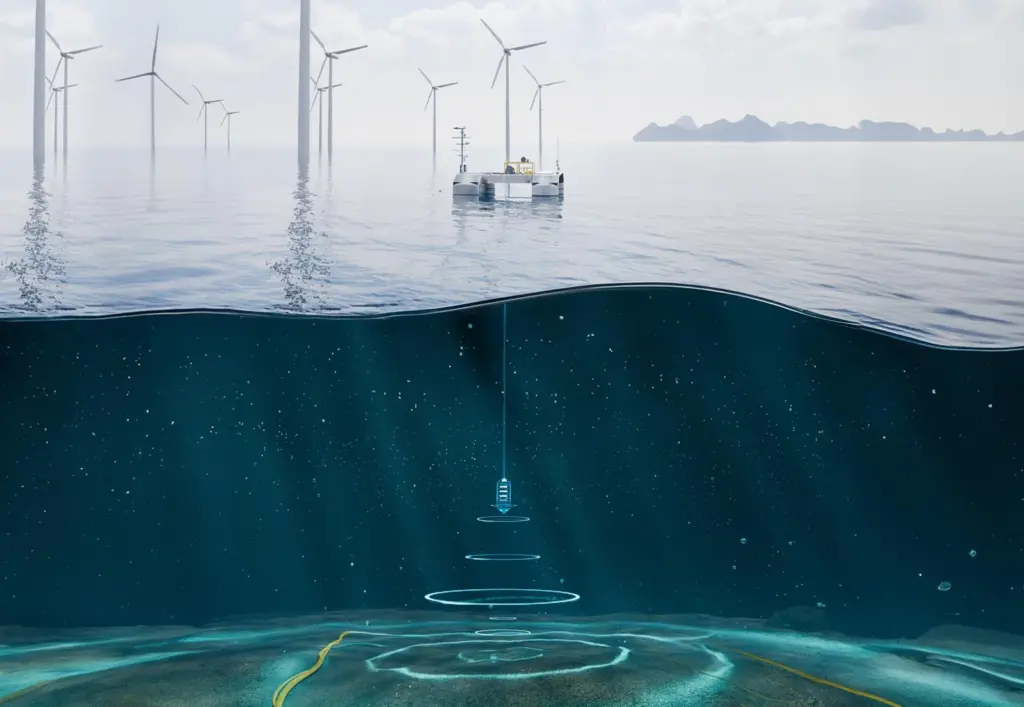
The project is backed by the UKRI’s Innovate UK Launchpad programme as part of the UK government’s Levelling Up strategy.
Project ORACLES brings together a consortium comprising Robosys, ACUAOcean, MSEIS, Plymouth Marine Laboratory and the Offshore Renewable Energy Catapult to speed up the traditionally slow, manual data collection process that hinders OWF approvals.
“This ambitious project will revolutionise the environmental consenting process for offshore wind farms in the Celtic Sea and across the UK,” said Nigel Lee, project lead and chief strategy officer at Robosys Automation.
“These technological innovations will reduce the need for crewed survey missions and accelerate data delivery, enabling a faster, more cost-effective consenting process.”
The 14-month research initiative will use ACUAOcean’s Pioneer unmanned survey vessel equipped with sensors including eDNA, ADCP and acoustics, to gather real-time environmental data on marine life, water quality and ocean conditions.
Robosys will develop new capabilities to operate multiple USVs from a single Remote Operations Centre using its VOYAGER AI system.
As well as improved data accuracy and reduced CO2 emissions, Project ORACLES is expected to support high-skilled jobs, drive economic growth in the south west, and enhance the UK’s leadership in marine autonomy and clean maritime technology.
“The project’s outcomes will also foster the growth of regional businesses, open new markets and showcase UK marine innovation on a global stage,” said Lee.
Related Articles
 OTHER NEWS
 MARINE CIVILS
 MARINE CIVILS