![MaritimeJournal[Seawork]](https://www.maritimejournal.com/wp-content/uploads/2026/09/MaritimeJournalSeawork.svg)



From sky to sea: A holistic security solution
 Part of our special report
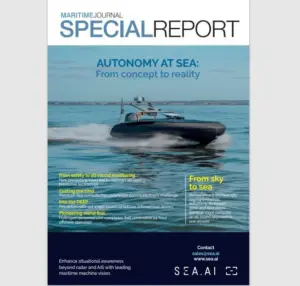
Autonomy at Sea · January 2026
All 10 features
Part of our special report
Autonomy at Sea · January 2026
All 10 features
Traditional maritime security has always relied on crewed patrols and fixed surveillance. As threats grow and operations become more complex, operators and governments are adopting remote and autonomous technologies to improve awareness across the maritime domain, says Jannik Sauer, Chief Technology Officer, Subsea Europe Services / FLANQ.
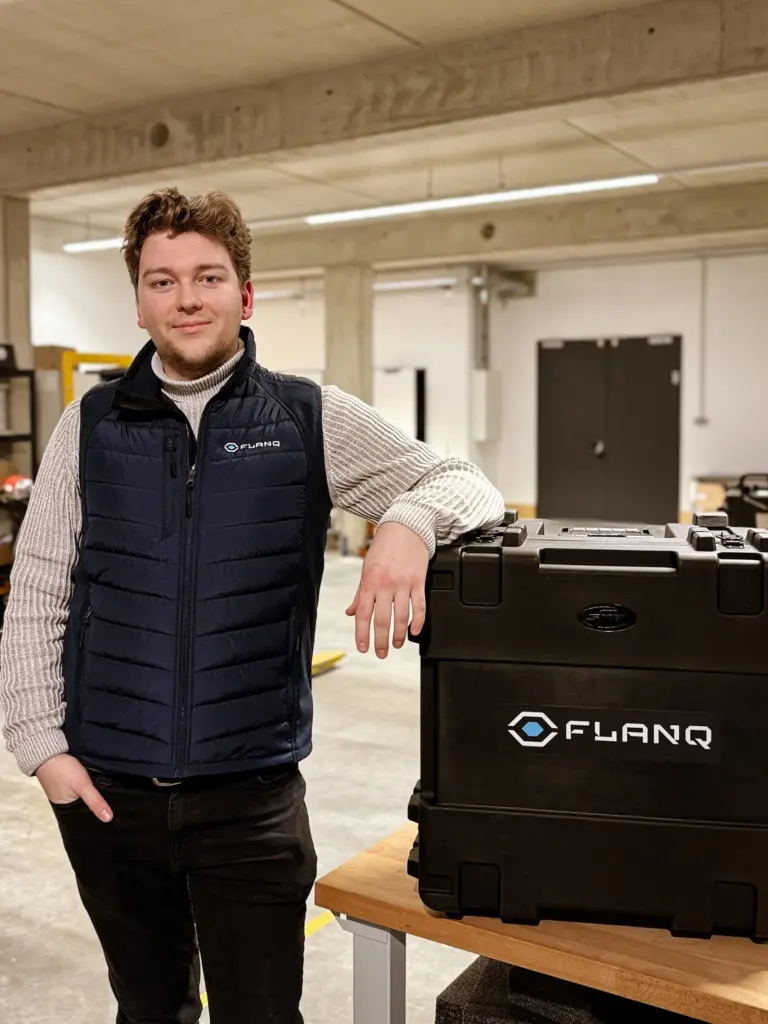
Uncrewed Surface Vessels (USVs) are leading this shift. Cheaper to purchase and cheaper to operate than conventional patrol boats, they excel as platforms for underwater sensors and as launch stations for Uncrewed Aerial Vehicles (UAVs), linking subsea, surface and aerial surveillance in one, unified ecosystem.
A new security landscape
The sabotage of the Nord Stream gas pipelines in 2022 demonstrated that commercial assets were now potential targets for bad actors.
The perpetrators were never publicly identified, but the incident demonstrated that large-scale attacks on maritime energy infrastructure are not only possible but highly disruptive. The attack caused extensive environmental damage, disrupted energy supply and revealed that critical underwater assets are difficult to protect using conventional means.
In the United Kingdom and across Europe, maritime security strategies have evolved to address this reality.
The UK’s unveiling of Atlantic Bastion, a comprehensive strategy combining autonomous vessels, AI-enabled detection networks and traditional naval and air platforms, has signalled a growing recognition at the highest levels that unmanned and sensor-driven systems are no longer niche assets but foundational to future maritime defence and security.
The operators of maritime facilities have similarly acknowledged the challenges protecting their own facilities.
The foundation for integrated operations
USVs have become one of the most promising tools of a new, more dynamic, security model.
USVs, working solo or as a collaborative fleet, can patrol and monitor extensive areas for long periods with no need to send personnel to sea. But it’s not all about the vessel. In fact, it’s the integration of sensors, positioning and other critical systems that truly defines operational performance at sea. When fully integrated with advanced sensor payloads and unified to underwater and aerial systems, the USV becomes the foundation to provide continuous awareness of activity below, on, and above the water. This layered approach offers the kind of persistent surveillance that static sensors and periodic patrols cannot achieve.
The value of uncrewed systems has already been demonstrated in practice.
Exercises such as NATO’s REPMUS and Dynamic Messenger series have shown that USVs are capable of performing complex surveillance and mine-countermeasure missions alongside traditional naval assets.
They can detect, classify and track potential threats while sharing edge-processed data in real time with command centres ashore. The combination of autonomous navigation, intelligent decision-making and networked communication is turning these compact, easy-to-deploy platforms into true force multipliers for maritime security operations.
From commercial autonomy to defence innovation
Subsea Europe Services (SES), headquartered in Rostock, northern Germany, began working with commercial, off-the-shelf uncrewed vessels in 2022.
Initially focused on survey and offshore energy support missions, the company quickly recognised that the same technology could enhance maritime security.
In 2023, the firm participated in the annual Baltops exercise, integrating its Autonomous Surveyor vessel into mine countermeasure operations alongside NATO partners. The results were clear: the autonomous workflow achieved during the exercise was significantly more efficient and resource-saving than traditional methods.
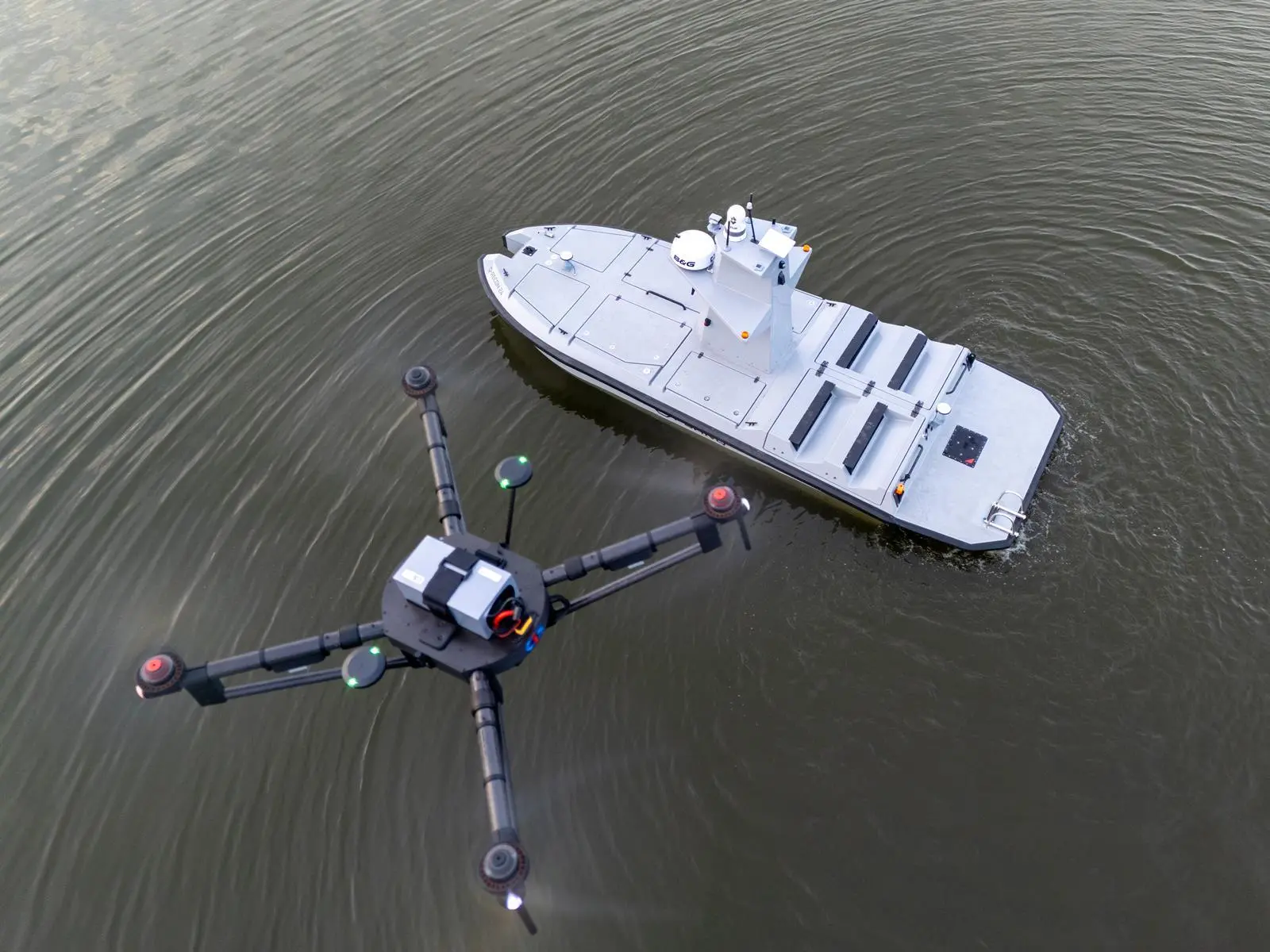
This experience demonstrated that advanced autonomy and intelligent sensor integration could have far-reaching applications beyond commercial survey work.
The insight gained from these operations led to the creation of FLANQ, a business unit of SES, dedicated to using these proven marine technologies into mission-ready security solutions. FLANQ was established to address the growing need in Europe for affordable marine autonomous systems capable of protecting ports, harbours and offshore assets without relying on crewed vessels. Its approach focuses on reconfigurable, modular platforms designed to adapt rapidly to new tasks or threats through an approach to payload integration it calls ‘plug-and-sail’.
Building a reconfigurable platform
Maritime security requirements can vary widely from one day to the next.
A port authority might need to track small craft entering a restricted zone, while a wind farm operator may want to monitor for underwater intrusions near turbine foundations.
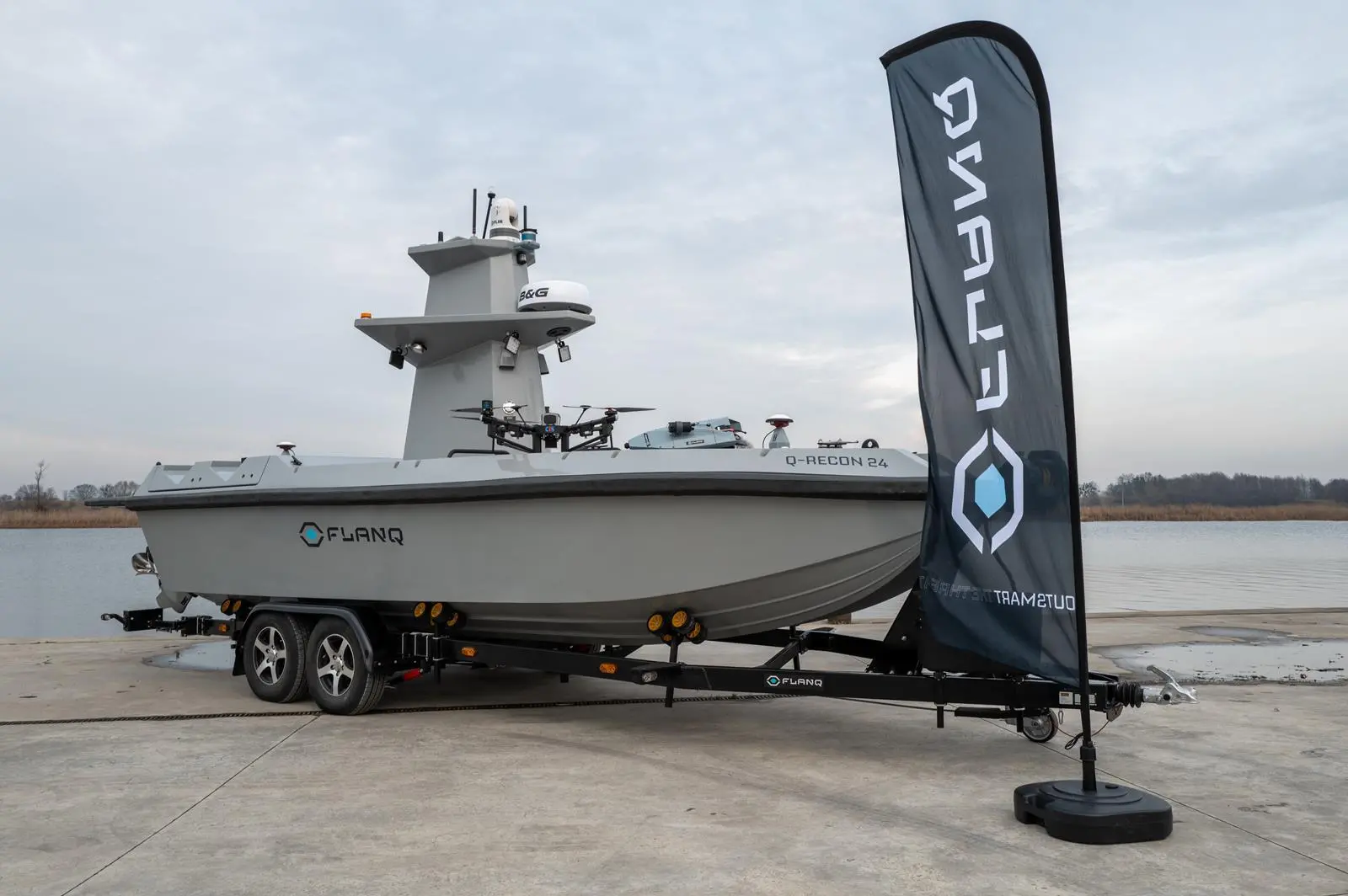
FLANQ’s modular vessel architecture was designed with this operational diversity in mind. Each platform can be quickly reconfigured to accommodate different sensor payloads and mission profiles. The company’s ‘Q-Spine’ hardware backbone forms a standardised interface that allows equipment to be swapped easily, enabling a single vessel to perform surveillance one day and subsea inspection the next.
This flexibility extends to scale and deployment. The Q-Class USV family can range from compact, man-portable models to larger vessels more than 10 metres in length, allowing operators to match platform size to mission demands. Each is designed for rapid mobilisation and ease of transport, including containerised logistics for fast global deployment.
While the hull gets you to the mission, the integration completes the mission. As such, FLANQ’s USVs come equipped with a broad range of sensors, from radar and electro-optical cameras to acoustic systems such as the R3Vox Voxometer, which provides detailed, real-time hydrospatial imagery of underwater environments.
By combining these capabilities, the same platform can detect surface threats, monitor the environment below, and even support scientific or maintenance missions when security demands are low.
Integrating the air domain
The 2025 edition of NATO’s REPMUS exercise, held in Portugal, provided a public demonstration of the next step in uncrewed maritime security.
During the event, FLANQ’s team, working with its strategic partner CiS, integrated an ORKA drone system on the deck of a 4-metre USV.
Together they achieved fully autonomous take-off and landing of the UAV from the moving USV, marking a major milestone in multi-domain operations.
The demonstration showed how a single surface platform can extend its surveillance reach into the air, offering operators a complete picture of activity from the seabed to the sky. The exercise also reinforced the growing importance of standardised communication between uncrewed systems operated by different nations, a goal actively pursued by NATO and its partners.
A holistic approach to maritime protection
The logic behind this integrated approach is straightforward. Uncrewed systems can provide persistent coverage at a fraction of the cost of crewed patrols. They can be deployed around the clock and operate in conditions that would otherwise require significant manpower or risk to personnel. When linked with underwater vehicles such as AUVs or static systems such as diver detection sonar and complemented by UAVs overhead, USVs create a continuous security envelope around critical assets. They can observe, classify and transmit data in real time to control centres on shore, where analysts can assess potential threats and coordinate appropriate responses.
For operators of ports, harbours, waterside-power plants, offshore wind farms and other critical national infrastructure, this model offers an efficient way to strengthen protection without expanding headcount or budgets.
It also allows for flexible use of assets. The same uncrewed surface vessel that performs night-time security patrols can be redeployed for survey or inspection work during daylight hours, providing additional value from existing equipment.
In large offshore projects where operational costs are closely monitored, this kind of dual-use capability can deliver substantial savings over the lifetime of the asset, not forgetting the significant reduction in risk to personnel and the environmental impact.
Looking ahead
As the global energy transition accelerates, the number of offshore installations is expected to grow dramatically, while ports and harbours continue to be the backbone of local, regional and global trade.
For both government and industry, the focus is shifting from reactive to proactive security. Uncrewed platforms represent the most practical way to achieve this goal, whether offshore or near shore. They offer continuous situational awareness, rapid detection and scalable response, while reducing risk to human personnel.
Recent projects have already demonstrated how quickly these systems can move from concept to reality.
In late 2025, FLANQ delivered a Q-Recon 24 USV to a European navy just 100 days after contract signature, underlining how modern design, additive manufacturing (3D-printing) and modular engineering can accelerate deployment.
It is a glimpse of what European defence and civil protection procurement could become when innovation and urgency align.
Uncrewed, multi-domain security is a reality and the multi-layer approach is already optimising operations. By combining USVs with aerial drones and underwater vehicles, operators can achieve an unprecedented level of awareness and resilience across their assets.
The approach is a practical process to safeguarding the infrastructure that keeps our economies, our energy and our communications running every day.
Related Articles
 OTHER NEWS
 MARINE CIVILS
 MARINE CIVILS