![MaritimeJournal[Seawork]](https://www.maritimejournal.com/wp-content/uploads/2026/09/MaritimeJournalSeawork.svg)



Shipwrecks provide safe haven for sea life
A study carried out by the university of Plymouth has found that shipwrecks are sustaining and protecting marine life, particularly in areas that are still trawled by fishermen.
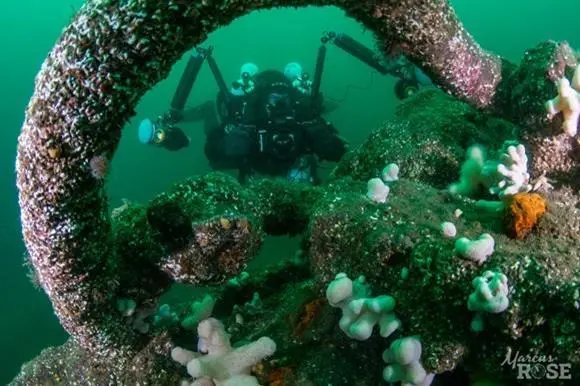
While many areas of the seabed have been damaged by bottom trawlers, because fishermen tend to avoid areas known to contain shipwrecks, marine life has found refuge there.
The research found that the average density of marine life in areas still open to trawling was 240% greater within wreck sites than in sites actively used for bottom-towed fishing, the study said.
In parts of the seabed within a 50 metre radius of the wrecks, the difference was even greater, with the density of marine life 340% greater than in the control sites.
The study, Shipwrecks act as de facto marine protected areas in areas of heavy fishing pressure, is believed to be the first to demonstrate the importance of shipwrecks for the ecology of the seabed.
“The industrial use of bottom-towed fishing gear has been commonplace since the 1800s, and has significantly altered marine communities and ecosystem services,” said Jennie Hickman, the study’s lead author.
“Outside of legal protection, only areas inaccessible to trawlers are offered any protection, which is why shipwreck sites are rarely subject to trawling pressure.
“As many have been in situ for more than 100 years, they offer a baseline of ecological potential when trawling pressure is reduced or removed.”
Five shipwreck areas were measured, all believed to contain wrecks that sank in the late 19th and early 20th centuries. They sit between 17 and 47 metres beneath the ocean surface stop it.
“It has long been thought that shipwrecks could be playing an important role in providing sanctuary for marine species,” said Joe Richards, Scotland project manager for Blue Marine Foundation, which also carried out the study.
“This research provides an insight into what might be possible if bottom-towed fishing activity is reduced. This feeds into our wider understanding of shipwrecks’ potential to contribute to ecosystem recovery and enhancement, given the sheer number found on the sea bed.”
“There is still much to be done to reach the goal of having 30% of the ocean protected by 2030, but if we are to get close to that we need detailed evidence about what makes our oceans so special and any existing initiatives that are working well,” said Emma Sheehan, associate professor of Marine Ecology and senior author.
“This study builds on our existing work in that regard and highlights an impact of past human activity, which is actually having a positive impact on the seabed today. It is unquestionably something that should be factored into future marine management plans.”
The study was published in the Marine Ecology journal.
Related Articles
 OTHER NEWS
 MARINE CIVILS
 MARINE CIVILS