![MaritimeJournal[Seawork]](https://www.maritimejournal.com/wp-content/uploads/2026/09/MaritimeJournalSeawork.svg)






Subsea data ops partnership launches
Subnero and HydroSurv have teamed up to transform long-term ocean monitoring by reducing reliance on crewed recovery vessels and enabling continuous seabed-to-shore data delivery.
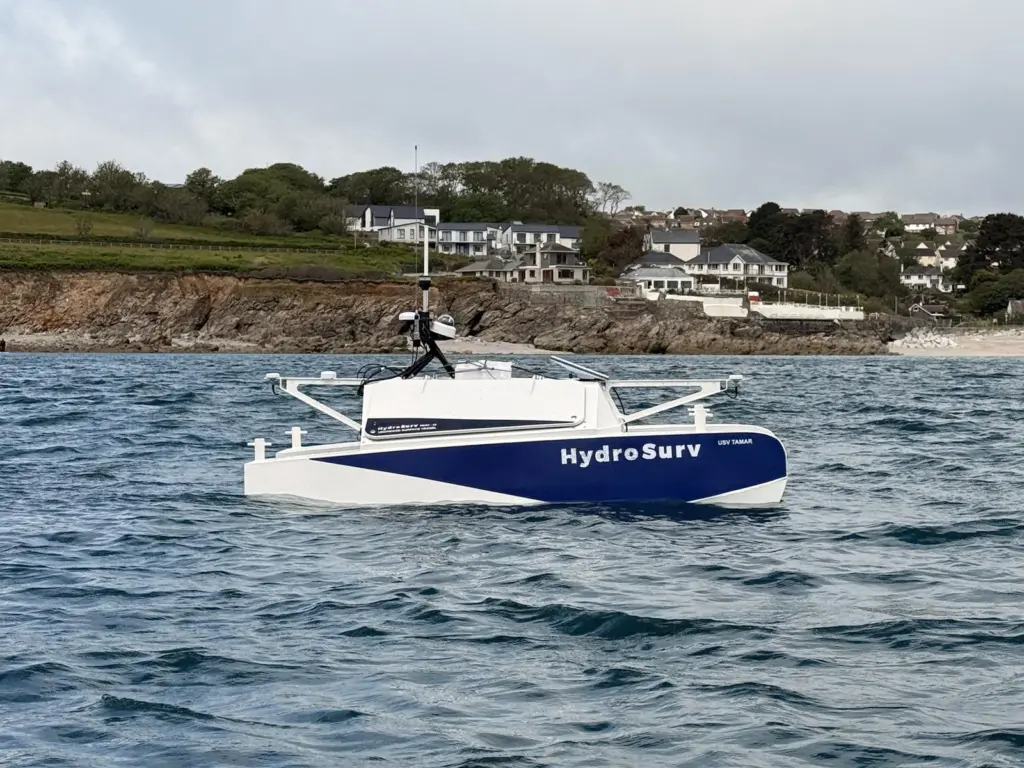
The collaboration integrates HydroSurv’s autonomous unmanned surface vessel (USV) fleet with Subnero’s subsea communications and data platform, creating what the companies describe as an end-to-end system for recurring autonomous data harvests across offshore environments.
HydroSurv said its role is to provide ‘long endurance, low emission autonomous USVs built for recurring missions with minimal shore support’, adding that each vessel is designed to operate with modular payloads including Subnero Acoustic Smart Modems and environmental sensor suites.
Subnero, meanwhile, provides what it calls ‘an autonomous subsea data operations platform that connects seabed sensors to user endpoints worldwide’, using acoustic modems, edge processing and software-defined networking across satellite, cellular and terrestrial links.
The combined system supports a wide range of applications, including offshore wind site characterisation, subsea cable and pipeline intrusion detection, oil and gas asset monitoring, aquaculture and fisheries tracking, passive acoustic monitoring, and blue carbon and coastal habitat studies.
According to the companies, the operational model replaces traditional vessel-heavy survey cycles with autonomous missions. Seabed landers equipped with customer-selected sensors are deployed for long-term monitoring, after which a HydroSurv USV autonomously transits to site on schedule or demand. The vessel then retrieves processed data via Subnero’s acoustic network before transmitting it to cloud or operations centres.
HydroSurv described the shift as enabling ‘recurring autonomous data harvests that reduce reliance on crewed recovery vessels, lowering day rates, fuel use and operational cost while improving data availability’.
Subnero added that its system ensures ‘the right information lands in the customer’s environment, ready for analytics, models and decision-making’.
Both companies highlight improvements in safety, emissions reduction and scalability, stating the approach delivers ‘stronger HSE performance, decarbonised operations and scalable underwater networks’.
The integrated solution is already being deployed in a seagrass habitat monitoring programme, where seabed landers are collecting multi-month datasets. The companies say this real-world deployment is helping refine sensor configurations, mission profiles and operational workflows for wider commercial rollout.
Related Articles
 OTHER NEWS
 MARINE CIVILS
 MARINE CIVILS