![MaritimeJournal[Seawork]](https://www.maritimejournal.com/wp-content/uploads/2026/09/MaritimeJournalSeawork.svg)

Subsea human habitat on cusp of deployment
UK ocean engineering company DEEP is on the verge of deploying the first subsea human habitat for 40 years.

Director of Business Development Mike Taylor talks to Maritime Journal about the four-person habitat that could be used for a host of applications, from ocean research to military and space training to tourism.
Vanguard can accommodate four persons for days at a time, and it will imminently become home to underwater researchers Tennessee Reef in the Florida Keys.
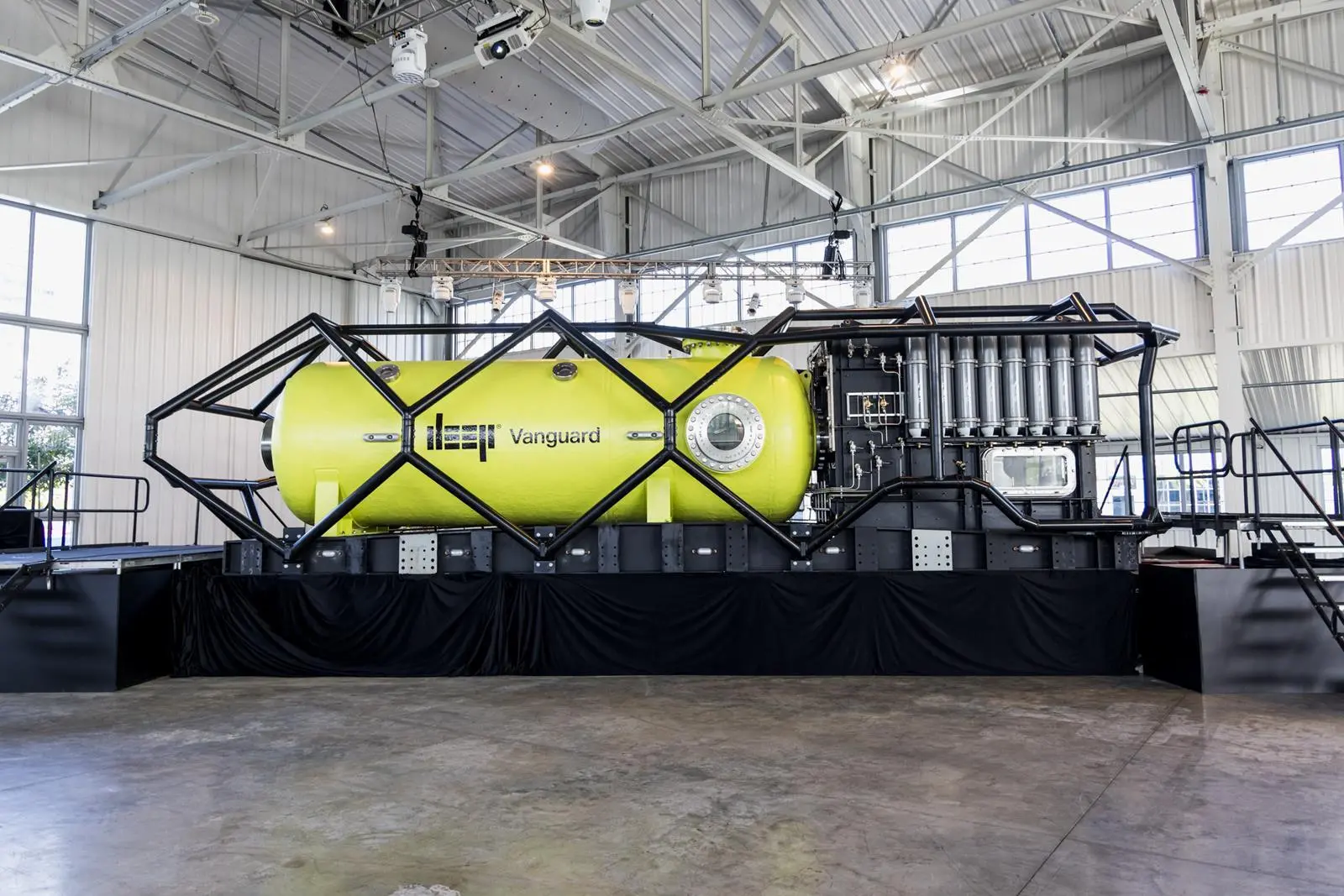
At roughly the size of a 40-foot shipping container, the habitat will sit on the seafloor at a depth of around 18 metres, with its moon pool entry hatch at 14 metres. Future iterations could even target the mesophotic zone – 0 to 200 metres below sea level.
“If you understand how a diving bell works, a habitat is a larger, more comfortable, more capable diving bell,” says Taylor. “As you know, a diving bell enables saturation diving because it allows the diver to enter an open or closed bell system at the right pressure, do their work, return to the surface under the same pressure as they were working at at depth, and sleep and work at the same pressure on the vessel or whatever they’re working on topside.
“That’s good, it works, it’s tried and tested, particularly in the commercial diving world, but to enable that type of diving requires a very expensive surface dive support vessel. A habitat does exactly the same thing as a diving bell without constantly having to transfer up and down.
“The transfer under pressure is the highest risk part of saturation diving. What a habitat like Vanguard does is eliminate that transfer entirely.”
Vessel as a platform
Having been founded just five years ago, DEEP has had to work at breakneck speed to get to this point, but get to this point it has.
DEEP describes Vanguard as a ‘platform’ rather than a vessel because it is intended to enable sustained human activity underwater, from science and diver training to technology testing and potentially even tourism.
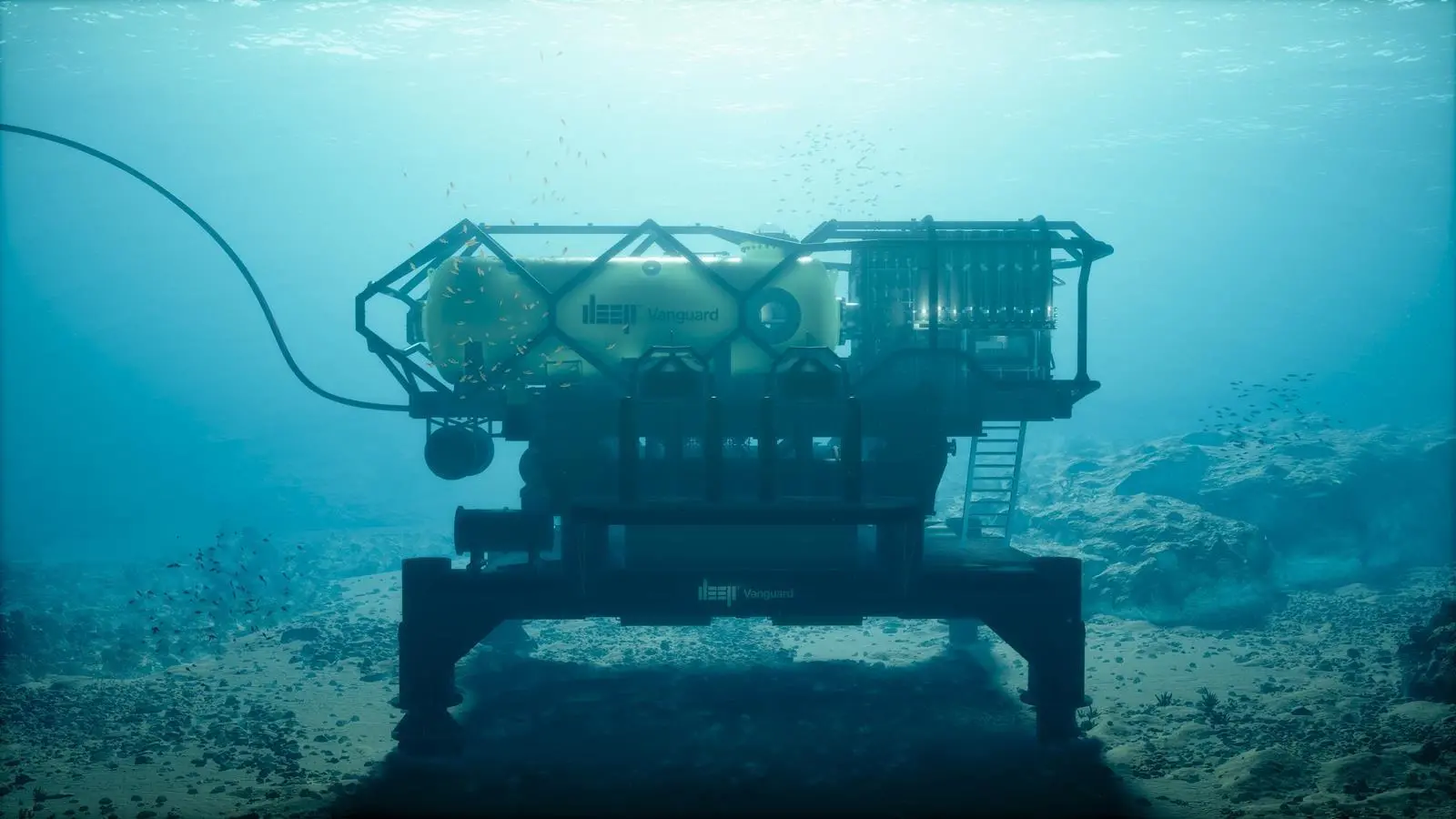
Unlike a submarine, it also does not have its own propulsion system, therefore does not travel. It is designed to sit permanently or semi-permanently on the seafloor, connected to an anchored foundation system.
Structurally, Vanguard is divided into two main sections: the wet chamber, which houses the moon pool and dive equipment, and the dry living quarters, the working, living and decompression area.
Although Vanguard normally operates at ambient pressure, meaning the crew experience the same pressure as the surrounding water depth, the living chamber can be sealed to enable decompression at the end of a mission.
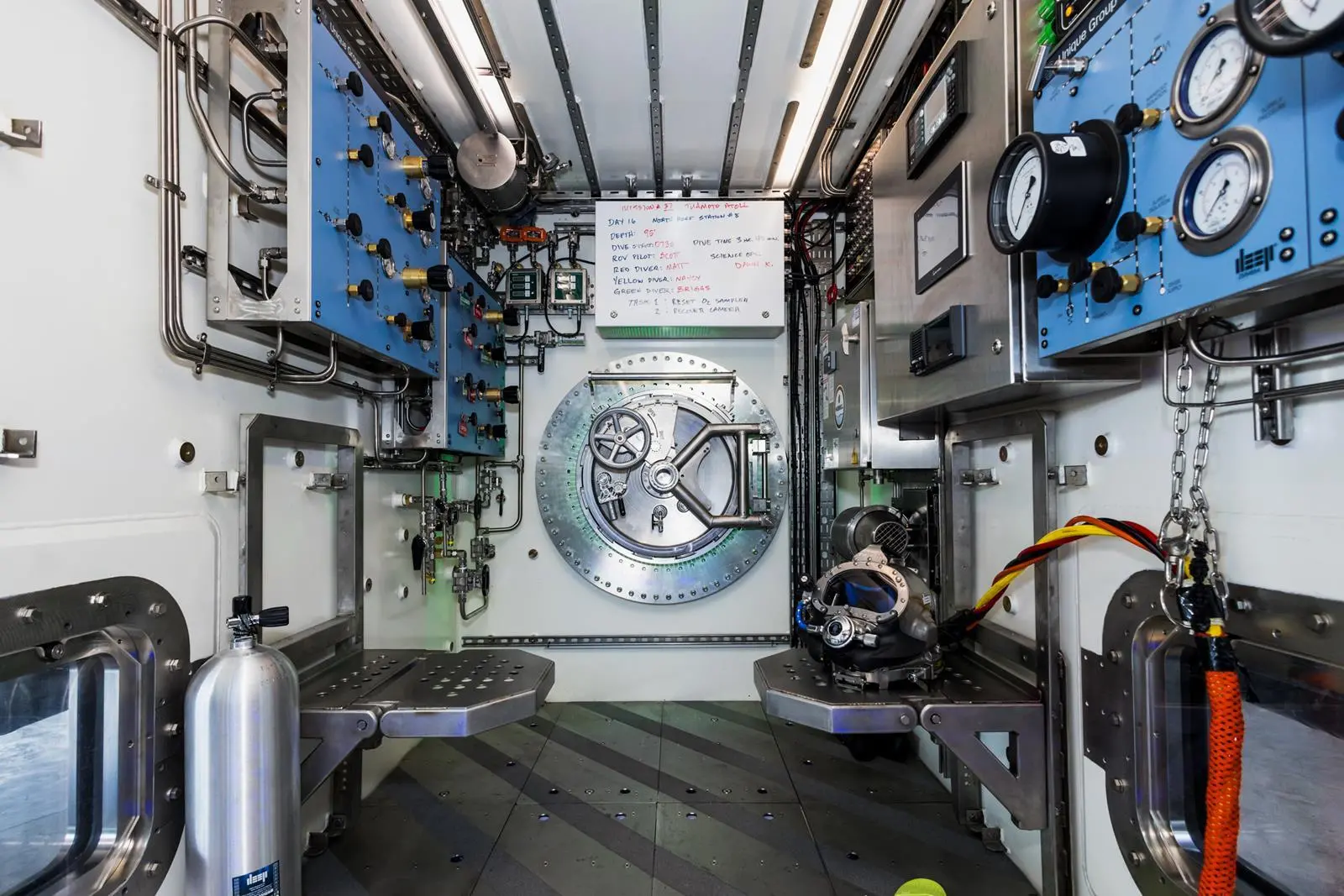
Air, electricity, and communications are supplied via an umbilical to a surface buoy, with 72 hours of back-up air stored in tanks on the exterior.
“If the breathing system failed, there is a back-up life support system,” Taylor says. “Seventy-two hours. And that’s the exactly the time needed to decompress.”
At Vanguard’s relatively shallow operating depth, crew members can breathe ordinary air, rather than specialist gas mixtures.
That matters because deeper saturation systems typically require heliox – a mixture of helium and oxygen – since standard air becomes dangerous under extreme pressure.
Helium breathing systems add major cost and complexity to commercial diving operations.
Space and military
The previous comparable installation at this location was Aquarius Reef Base, also in Florida, which was built nearly 40 years ago. It was affiliated with a South Florida university and used for science, advanced dive training, and also by NASA.
“Two of the crew on the latest Artemis mission trained using an underwater habitat to prepare for life not on this planet,” Taylor says. “It’s the best analogue we have on this planet, the best way to prepare for living in an extreme environment.”
Back on Earth, Tennessee Reef is a living reef, and its selection as a deployment site was deliberate.
“If you think of Vanguard being a platform which enables humans to spend longer time on task at depth, think about how you could accelerate something incredibly important for ocean health like restoring and saving our reef systems,” Taylor says.
“Our director of scientific research was an aquanaut and an astronaut candidate, but she’s also a world-class scientist in neuroscience. There is so much value in studying humans in an extreme environment, and that has a really long history of translating directly to how we treat clinical patients, especially in critical care or surgery.”
Military interest centres on advanced saturation diving capability.
“With the changing nature of the battlefield and the theatre of where the next wars will be fought, there is very high interest in Navy divers being able to dive deeper and for longer periods of time,” he says.
Steps to deployment
Vanguard was designed and initially assembled in the UK, with further work carried out in the United States. It has been tested in Louisiana and is currently on a barge in the Florida Keys.
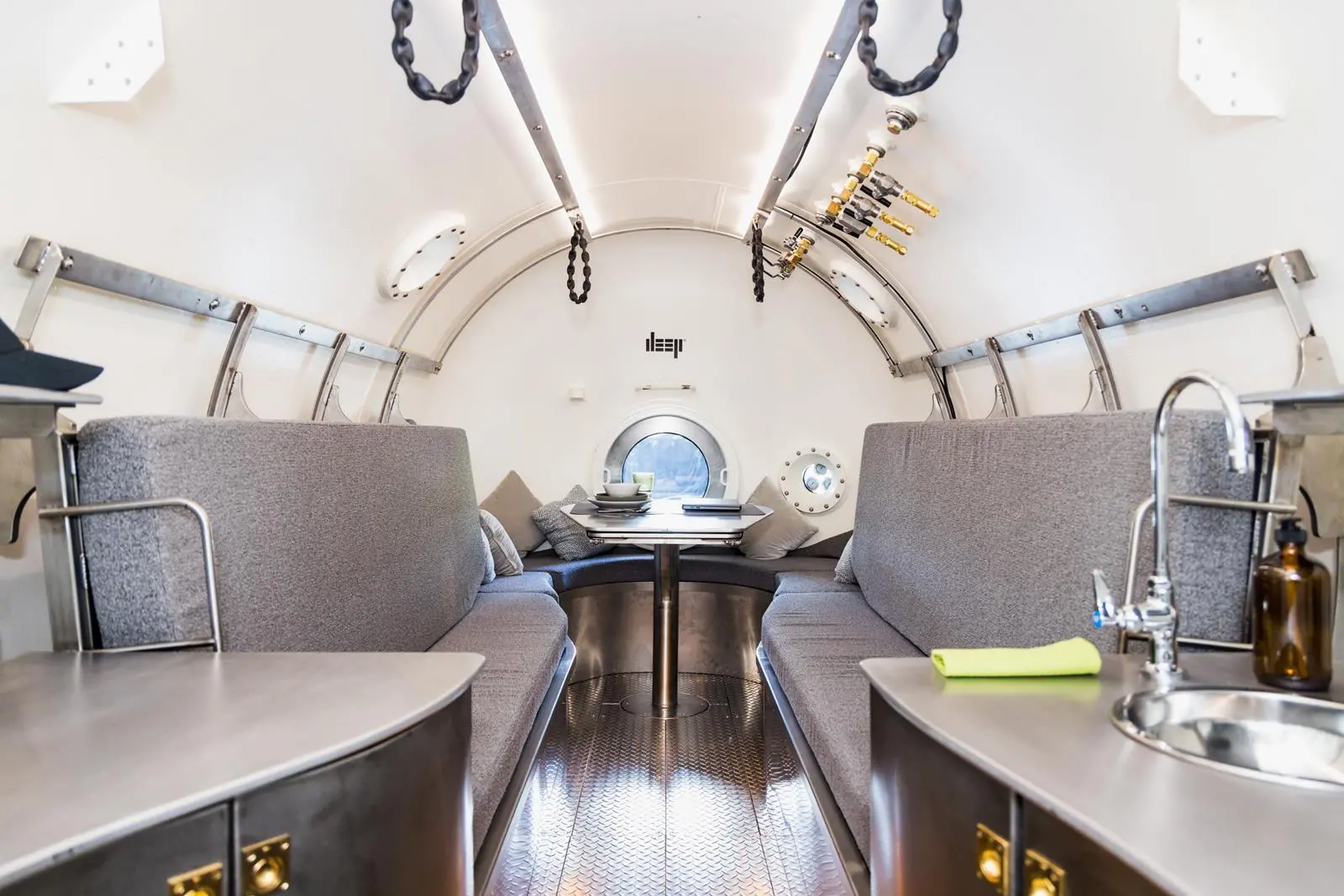
The foundation plate will be anchored to the seabed; the habitat itself is expected to follow within weeks.
Classification is being handled by DNV in stages, from factory acceptance through to a final site acceptance test once Vanguard is operational.
“We don’t want to just build something and tell people it’s safe,” Taylor says. “The best way I describe working with a classification society is: we’re not marking our own homework.
“What DEEP can’t do is change physics. The physics of underwater habitats exists and is proven. What we’ve been able to do is build a team of engineers that have experience in high-performance, high-consequence environments and apply that to operating underwater. It’s being able to do something really hard with an amazing team of multi-talented engineers – that’s the pretty special thing.”
DEEP’s ambition also goes beyond this single installation.
“We don’t just want to be a company that builds and operates one habitat,” Taylor says. “The real value is when we deploy two, three, four, five. The vision is when there’s one in every ocean.”
DEEP’s Vanguard will be featured in the FOS Future Lab at the Goodwood Festival of Speed in July, which will also feature astronaut Tim Peake.
Related Articles
 OTHER NEWS
 MARINE CIVILS
 MARINE CIVILS