![MaritimeJournal[Seawork]](https://www.maritimejournal.com/wp-content/uploads/2026/09/MaritimeJournalSeawork.svg)



Automating tug dispatch operations
US and Canadian technology companies have joined together to launch a set of integrated features designed to ensure towage operators ‘never miss another job’ in their port.
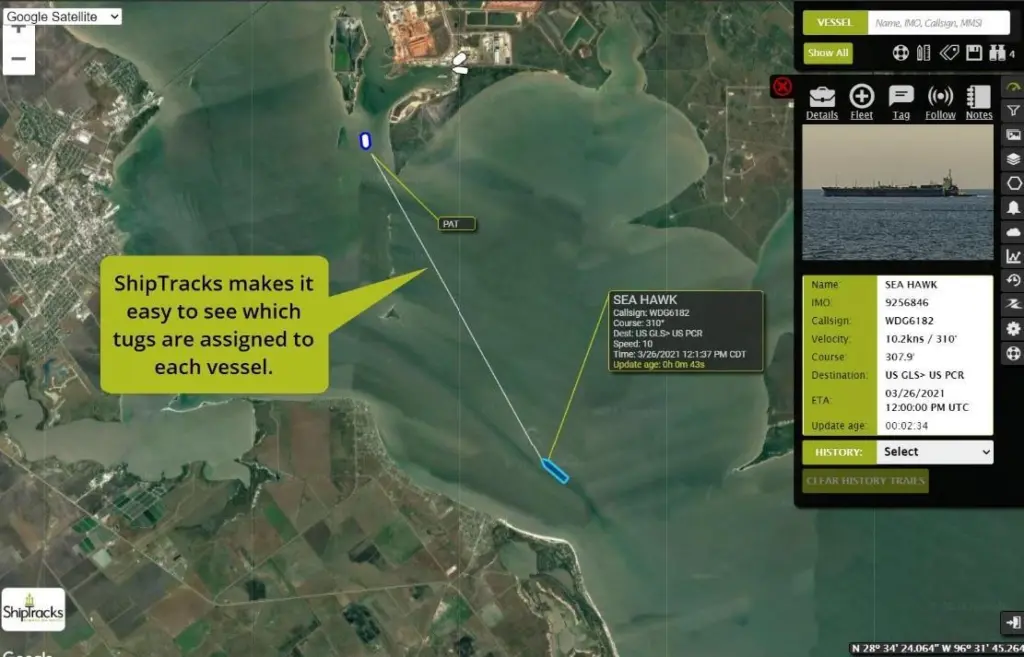
In ports with large numbers of ship arrivals, often with more than one competing towing service provider, coordinating the allocation of tugs is important both commercially and environmentally and with increasing sophistication of information technology Canadian software developer Helm Operations and US-based AIS services provider ShipTracks have introduced an integrated service aimed at streamlining and automating the creation of towage orders directly from the AIS system.
Previously, monitoring AIS information including ShipTrack’s system and tug dispatching systems such as Helm Connect Jobs operated largely independently but according to Helm ‘by integrating the systems, dispatchers can now not only receive automated notifications of vessels entering port, but also see immediately if their company has a contract with the vessel, if the towage work has been scheduled, and even automatically import the vessel and related job into the dispatch schedule all from the AIS screen.’
The developers describe turning the ‘situational awareness’ of AIS into ‘revenue awareness’ through the planning and tracking of operations and automating every potential tow job, Helm adding ‘By notifying companies when a vessel enters their region, displaying who the job belongs to and what its status is, then letting them enter orders directly into Helm Connect from the ShipTracks screen, we can make it so they never miss a job again.’
The system moves away from staff watching AIS screens, allowing automation of what was previously manual data entry tasks and integrating with dispatching systems providing information of towing tasks for review and approval by the dispatcher. Explaining the financial aspect, Paul Cyr from Helm Operations states: ‘Even better, we can improve the dispatcher’s cost awareness by letting them know if tugs are moving without assigned work or if vessels are going too fast while mobilising. This really makes it possible for dispatchers to reduce operational costs in ports.’
The partners describe this news as ‘just the starting point’ including ways to integrate Helm Connect and ShipTracks’ AIS technology and looking at expanding the integration of the various data sources even further with operational information including crew changes or planned maintenance. More announcements are expected throughout 2021.
By Peter Barker
Related Articles
 SPECIAL REPORTS
 TUGS & SALVAGE
 EQUIPMENT