![MaritimeJournal[Seawork]](https://www.maritimejournal.com/wp-content/uploads/2026/09/MaritimeJournalSeawork.svg)





Keeping the towing heritage alive
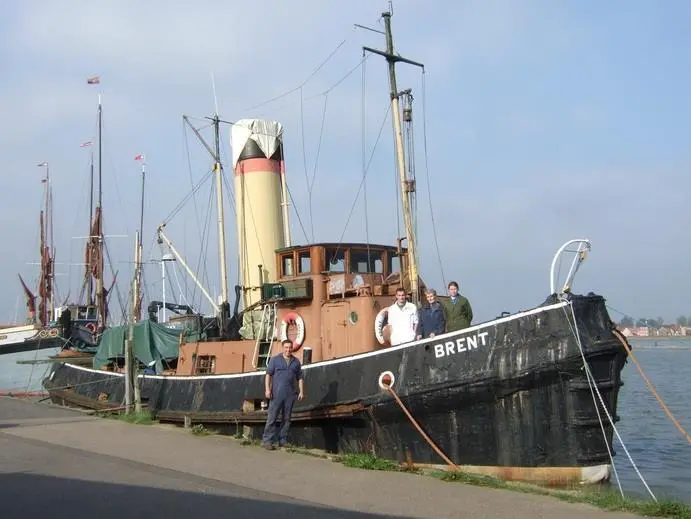
Efforts are underway to restore the historic British steam tug ‘Brent’ in time to attend the 75th D-Day Landings anniversary in 2019.
Our regular reports from the towing industry generally revolve around contemporary developments including new tug deliveries. Once the excitement dies down however and the tug comes to the end of its working life it usually ends its days at the breakers, it is after all surely just an asset of commercial value judged by its influence on a company’s balance sheet.
Some however have interesting histories becoming much-loved locally and attract the attention of the usually volunteer armies of enthusiasts dedicated to preserving the memory of what may be an important part of a country’s maritime heritage. A visit to Maasluis in the Netherlands illustrates the lengths for example the Dutch go to ensuring this important sector in its maritime history is not forgotten.
The town of Maldon in Essex on the UK’s east coast is home to a number of historic vessels, one of which is the steam tug Brent, one of the last surviving tugs built for the British admiralty at the end of world war two and a much-loved local landmark in Maldon for over 40 years.
It is now reported locally that the 60,000 residents of the town are being asked to donate just £1 each with a target of £60,000 to secure the vessel’s future and allow its participation in the D-Day commemorations next year.
Brent’s entry into service was just too late for the war effort and it was sold instead to Port of London Authority (PLA) where it served in the Thames dock system for the next 20 years. Upon retirement in 1970 it was PLA’s last steam-powered vessel left in service and is one of only three remaining of the 182 ‘Tid’ class tugs built for the admiralty using pioneering welded flat plate construction, mostly by women workers.
Rescued from the scrapyard, a Maldon family used it as a holiday tug-yacht for 40 years and it was donated to the Steam Tug Brent Trust in 2011. Brent has been on static display, but the trust has ambitions to see it sailing again hence the need for essential funding.
It is described as a ‘nationally important historic vessel’ and while being restored and operated by its volunteer crew it is hoped to provide training to apprentice heritage shipwrights, steam engineers and boiler makers. The ability to sail under its own power again would also provide the opportunity for additional income from trips for individuals and groups.

Related Articles
 SPECIAL REPORTS
 TUGS & SALVAGE
 EQUIPMENT