

Kotug launches dual-fuel escort tugs
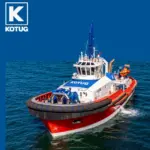
Kotug International has launched two large dual-fuel methanol escort tugs for operations in British Columbia, marking what it describes as the world’s first purpose-built vessels of their type.
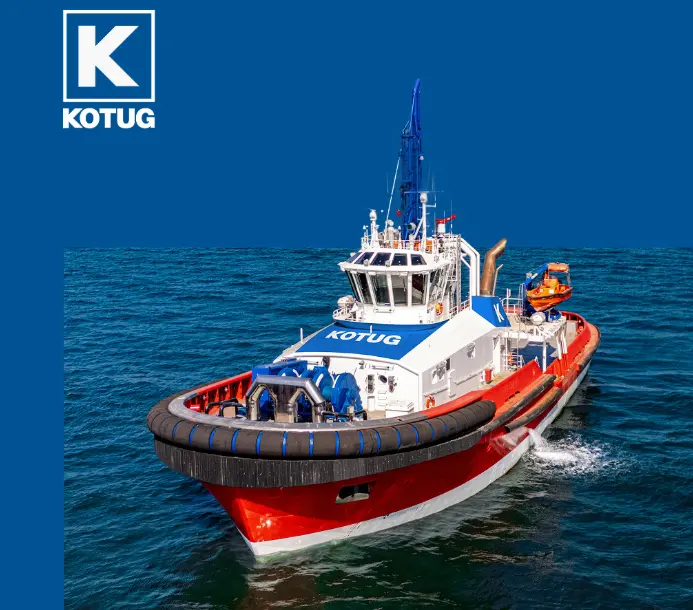
The 44-metre SD Aisemaht and SD Qwiy Aanitsa Sarah were designed by naval architects Robert Allan Ltd and built by Sanmar Shipyards for operations supporting the Trans Mountain project, a major Canadian pipeline project transporting crude oil to Pacific markets.
Each has a bollard pull of 115–120 tonnes and full escort notation for tanker operations.
The vessels are powered by dual-fuel engines capable of operating on diesel or methanol. When renewable methanol is used, the system is designed to deliver substantial reductions in CO₂ emissions.
The propulsion package complies with IMO Tier III requirements and incorporates advanced emissions controls, shaft alternators and energy management systems.
A mechanical cross-link system allows a single engine to drive both azimuth thrusters during transit, reducing fuel consumption and engine running hours during lower-load operations. The vessels also feature integrated onboard power generation architecture.
Kotug said the tugs were purpose built around alternative-fuel propulsion rather than converted from existing tonnage, with the design intended to combine high-performance escort capability with improved efficiency and flexibility for future environmental requirements.
The vessels also carry oil-spill response equipment, including skimmers and recovered-oil storage capacity, as well as dedicated firefighting systems. These capabilities are intended to enhance environmental response and standby readiness in the Salish Sea.
Advanced hull coatings have also been incorporated to reduce underwater radiated noise, with Kotug highlighting their potential contribution to protecting marine ecosystems and whale habitats along Canada’s West Coast.
The launch forms part of Kotug’s strategy to expand its use of alternative fuels while combining propulsion efficiency, emissions performance and operational capability.
The company described the project as a significant milestone in its sustainability programme.
Related Articles
 EQUIPMENT
 MARINE CONSTRUCTION
 FEATURES & VIDEOS