![MaritimeJournal[Seawork]](https://www.maritimejournal.com/wp-content/uploads/2026/09/MaritimeJournalSeawork.svg)


MAIB report on the tragic ‘Flying Phantom’ sinking
The UKs Marine Accident Investigation Branch (MAIB) report on its investigation into the loss of the tug Flying Phantom while towing the 76,596dwt bulk carrier Red Jasmine on the River Clyde on 19 December 2007, resulting in the loss of three of its crew, was published on 30 September. The extremely detailed Report No 17/2008 runs to over 60 pages and opens with a concise summary.
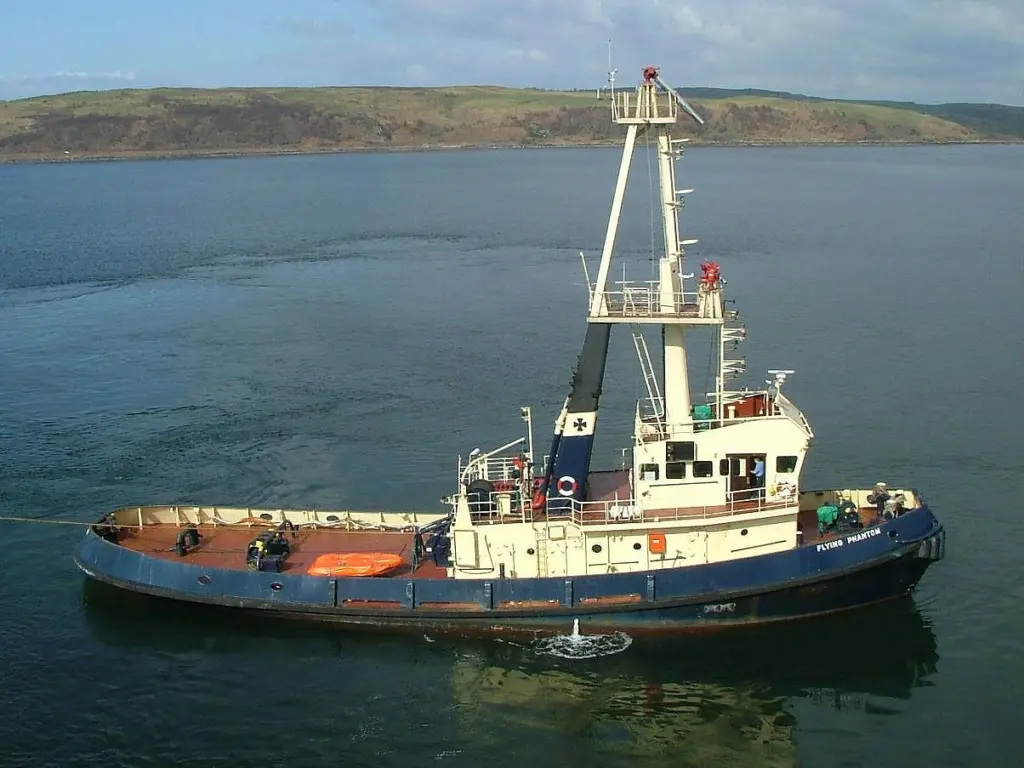
On 19 December 2007, the tug Flying Phantom was girted and sank, while acting as a bow tug. She was assisting the bulk carrier Red Jasmine during a transit of the River Clyde in thick fog. Three of the tug’s four crew were lost; only the mate managed to escape from the tug’s wheelhouse and was subsequently rescued.
After Flying Phantom’s tow line had parted during the capsize, the pilot on board Red Jasmine completed the transit to the berth safely, in the thick fog, with only a stern tug to assist him.
The investigation has identified a number of factors which contributed to the accident, including:
• The emergency release system for the towing winch on board Flying Phantom had operated, but not quickly enough to prevent the tug from capsizing.
• There were no defined operational limits or procedures for the tug operators when assisting/towing in restricted visibility.
• The routine observed by the tug’s crew prior to towing or entering fog was ineffective, resulting in the watertight engine room door being left open and the crew not being used in the most effective manner once the fog was encountered.
• The port risk assessment was poor, and the few control measures that had been put in place after a previous similar serious accident in thick fog proved ineffective.
• The port’s reliance on their ISO9001 quality management system audits to highlight safety concerns was fatally flawed.
• The lack of an individual to fulfill the role of designated person had resulted in major shortcomings in the ports safety management system being overlooked.
• UK ports appear to have been failing to learn lessons from accidents at other ports.
• The lack of an accepted international industry standard for tug towline emergency release systems.
Recommendations have been made to the port managers, Clydeport, to review and address their safety management system, specifically including the role of designated person. Lloyds Register has been recommended to take forward a proposal to the International Association of Classification Societies (IACS) to develop a standard for tug towline winch emergency release systems. Svitzer Marine Ltd has been recommended to derive suitable limits and necessary guidelines for operating in restricted visibility. Finally, the British Tugowners Association (BTA) has been recommended to highlight to its members the importance of tug crews’ emergency preparedness.
The capsize of tugs due to girting, at one time an all too frequent hazard in the towage business, is now, thankfully, extremely rare. This highly detailed report will make spine chilling reading for anyone associated with shiphandling operations. The report highlights not only a catalogue of unfortunate events that led to the tragic outcome but records in stark detail the lightning speed with which the girting occurred.
By Jack Gaston
Related Articles
 SPECIAL REPORTS
 TUGS & SALVAGE
 EQUIPMENT