![MaritimeJournal[Seawork]](https://www.maritimejournal.com/wp-content/uploads/2026/09/MaritimeJournalSeawork.svg)




Methanol fuel cell and biofuel tugs for Svitzer
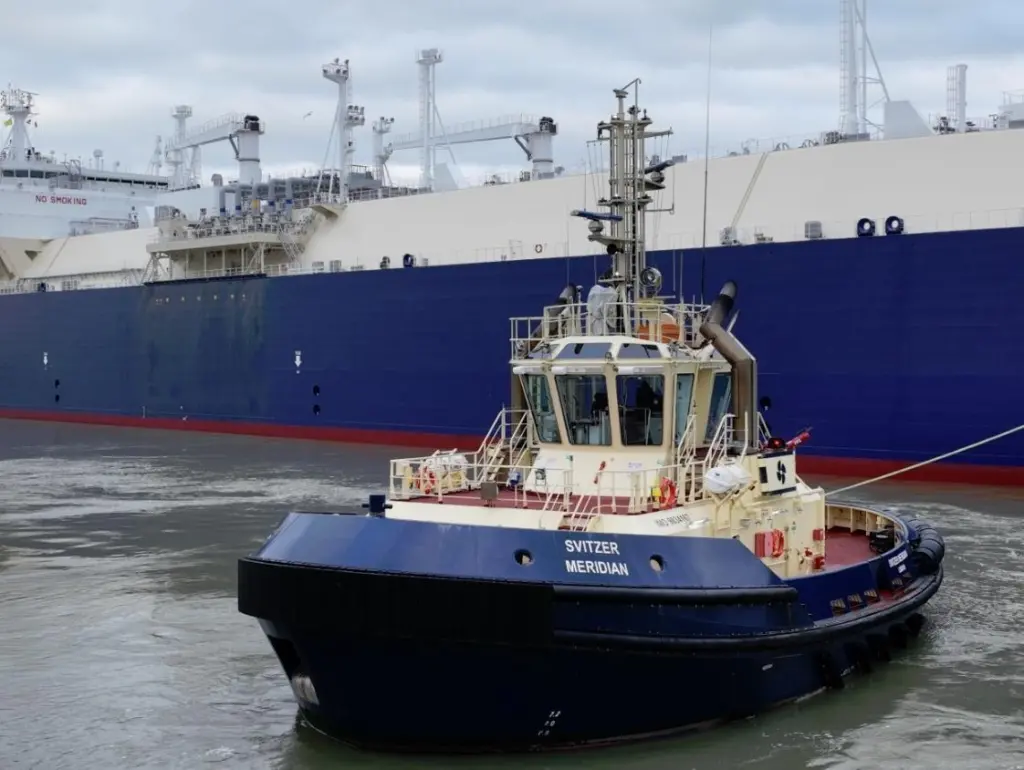
Svitzer Towage has announced what it states will be the world’s first methanol fuel cell tug and conversion of its London and Medway fleet to burn carbon neutral marine biofuel.
Reporting on the towing industry’s drive to create a cleaner image for what is by nature an activity demanding high power requirements relative to the size of the vessel is becoming a regular item in the Tugs & Towing column. A range of incentives exist to entice tug owners to develop environmentally friendly operations including: greater efficiencies; local and national regulatory pressure; demand from their ship owning clients and creating a cleaner image in the eyes of local communities who often live and work alongside these vital service providers.
Along with its shipping giant parent company A.P. Moller Maersk, Svitzer has signed an agreement with naval architect Robert Allan Ltd to design the world’s first fuel cell tug for harbour operations, running on green methanol. The project involves close cooperation between Svitzer and Maersk to jointly explore the combination of methanol fuel cells, batteries, storage/handling systems, electric drives and propulsion units as a carbon neutral alternative to conventional fossil-fueled arrangements.
The involvement of Maersk is reflective of the trend in shipping in general, including with container ships towards carbon neutral operations and Svitzer points out that fuel cells will be applicable as main propulsion power for tugs earlier than for larger vessels with build times for the former significantly less than for say a container vessel.
Ingrid Uppelschoten Snelderwaard, Svitzer global COO describes Maersk’s “decarbonisation journey” stating: “The objective is to extract and apply knowledge and operational experience of methanol feasibility from the near shore small scale tug onto larger ocean-going container vessels.”
The 80tbp newbuild escort tug will include a hybrid electrical propulsion system with fuel cells delivering a specific bollard pull using fuel cells alone with batteries providing additional power for the short but often frequent peaks that characterise towage. A feature is where the fuel cells will charge the batteries when the tug is berthed reducing the need for shoreside charging facilities. The tug will be a pilot design for future Svitzer newbuilds and its operation in Svitzer’s European region is planned by Q1 2024.
Svitzer has also announced that following a successful pilot, it is to convert its fleet of 10 shiphandling tugs operating in London and the Medway to be powered by marine biofuel. The company now offers a new towage solution to customers named Ecotow which it states will unlock about 90% CO2 reduction in Scope 3 emissions from its towage operations and provide the opportunity for global customers to facilitate fossil-fuelled towage elsewhere by calculating the emissions impact of towage operations for Ecotow customers and matching this impact with a volume of biofuel to be delivered to the London-based fleet.
Operational viability was confirmed by five tugs (initially on Svitzer Intrepid) running on hydrotreated vegetable oil (HVO) biofuel and serving the Isle of Grain LNG terminal on the Medway with all 10 Svitzer tugs in London running on HVO by January 2022. Lise Demant, Svitzer Europe MD states the use of HVO is: “A crucial first step in the roadmap towards a carbon neutral towage sector; a requirement increasingly being driven by customers’ demands.”
Built as the Innovation Damen’s first RSD 2513 (Reversed Stern Drive) tug is no stranger to MJ’s readership, your correspondent experiencing a day in the life of the 75tbp tug in Rotterdam in 2019 (see MJ June 2019). The final piece of news from Svitzer reports that Innovation has now become part of its Immingham-based operation following the end of a chartering agreement with Damen Marine Services and now bears the name Svitzer Eleanor. The naming theme follows that of other Svitzer tugs at Immingham, Svitzer Josephine, Svitzer Kathleen and Svitzer Laura; suffixes that have long historical connection with the region dating back to the days of Humber Tugs. It is named after Eleanor Wright, daughter of training master Sam Wright who has worked on board the tug since first chartered from Damen. Since first introduced in 2018, the RSD 2513 has been well received within the industry with around 30 examples listed as either delivered or allocated building slots in Damen’s various shipyards globally.

Related Articles
 SPECIAL REPORTS
 TUGS & SALVAGE
 EQUIPMENT