![MaritimeJournal[Seawork]](https://www.maritimejournal.com/wp-content/uploads/2026/09/MaritimeJournalSeawork.svg)


Methanol tug conversion for Port of Antwerp
Hot on the heels of acquiring three Tier III tugs, Port of Antwerp’s ‘greening the fleet’ programme will now see conversion of a tug to operate on methanol fuel.
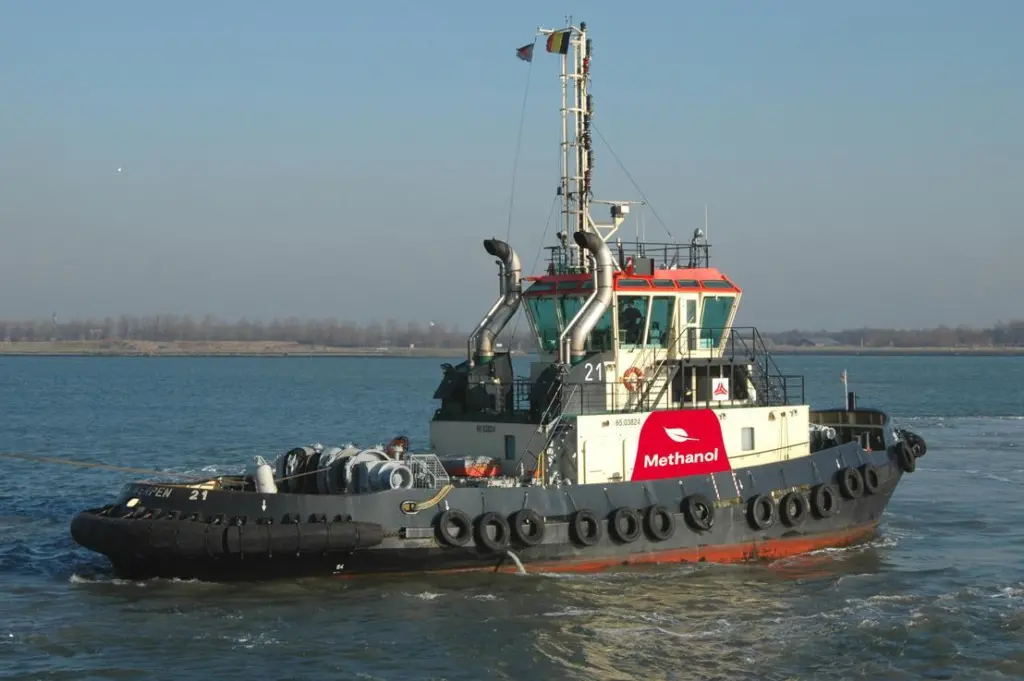
Antwerp’s ambitions to become a sustainable and CO2-neutral port is typified with its tug fleet which as well as the proposed ‘methatug’ includes the three recently acquired Damen RSD 2513 tugs 50, 51 and 52 and the ‘hydrotug’ hydrogen-powered tug project.
The project has had to navigate existing rules requiring the amendment of existing regulations. Rhine-based inland craft have to comply with Central Commission for Navigation on the Rhine regulations which had previously forbid use of methanol as a marine fuel. The ‘methatug’ therefore became part of the EU-funded Fastwater project aimed at demonstrating the feasibility of methanol as a sustainable marine fuel. To gain the necessary dispensation the plan was submitted to CESNI, the European committee that administers overall standards for inland navigation and after 18 months of detailed negotiations the project has been approved with the tug expected to be operational early in 2022.
Several European partners are involved and Port of Antwerp is supplying the vessel itself, photos indicating it to be the 2002-built tug 21. Belgian engineering company Multi carried out the feasibility study for the project while Swedish shipbuilder Scandinaos designed the vessel’s modifications. Anglo Belgian Corporation (ABC) is responsible for converting the engines and installing the methanol pipes and tanks and finally Schönau Germany-based Heinzmann GmbH is adapting the injectors.
The vessel being converted is second of a trio of similar tractor tugs delivered in 2002 to Port of Antwerp for operation within the enclosed dock system. The vessels were built by Ceske Lodenice – Usti nad Labem with final fitting out by Scheepvaart en Konstruktie Bedrijf (SKB) of Antwerp. The 30m long tug is powered by ABC 8MDZC main engines developing 3,890kW in total powering Voith Schneider cycloidal propellers providing a bollard pull of 55t.
CESNI secretariat, Benjamin Boyer said: “The CESNI secretariat is very enthusiastic about this retrofitted tugboat and is looking forward to learning from this experience. Indeed, it would be a major contribution to the ongoing regulatory work to allow methanol as fuel and then contribute to the energy transition of inland navigation.”
By Peter Barker

Related Articles
 SPECIAL REPORTS
 TUGS & SALVAGE
 EQUIPMENT