![MaritimeJournal[Seawork]](https://www.maritimejournal.com/wp-content/uploads/2026/09/MaritimeJournalSeawork.svg)


Report examines Canada’s tugs of opportunity
A Canadian research centre has examined the availability of tugs of opportunity on the Pacific seaboard and how they complement the country’s Emergency Towing Vessel (ETV) provision.
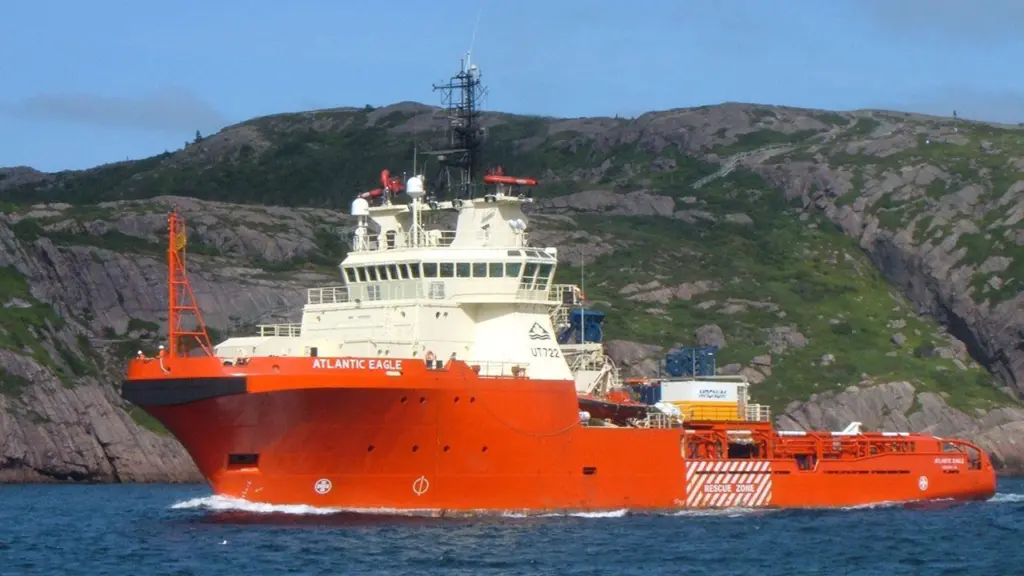
A number of coastal states vulnerable to the vagaries of the environment globally, maintain government-funded ETVs as part of their preparedness for casualties requiring professional towing and salvage services, particularly when circumstances dictate that a normal commercial response is unavailable for example when rapid intervention to prevent a vessel stranding or worse is required.
In times past, towage and salvage companies maintained fleets of strategically positioned salvage tugs waiting for the call to come in. Such dedicated provision is now largely a thing of the past and while professional salvage expertise (including salvage tugs) still exists, contractors now often look to engage tugs of opportunity in the region to carry out the rescue and/or salvage.
Whether or not the decline in salvage station tugs creates a gap in provision is debatable but some coastal states do now fund ETVs, the UK once had a fleet of four ETVs under commercial charter, now reduced to one covering Scottish waters. An example of the strategy was with the Dover Strait ETV. Ships disabled within the busy Traffic Separation Scheme could be towed clear of the lanes allowing repairs to be made at anchor in comparative safety or a commercial towing agreement established to reach a port of refuge, the goal being to minimise risk to the environment.
The availability (and suitability) of tugs of opportunity is therefore an important consideration when achieving the balance between state-funded and commercial provision and given the not insignificant cost to the public purse something that is closely examined.
Clean Seas Centre for Responsible Marine Shipping, an independent not-for-profit Canadian research centre has examined the combination of two Canadian Coast Guard-leased ETVs and the ad-hoc employment of commercial tugs to respond to ships requiring assistance in the Canadian Pacific region.
The report draws on two earlier associated reports, Emergency Towing Vessel Needs Assessment and Vessel Drift and Response Analysis for Canada’s Pacific Coast and examines the presence, availability and capabilities of ad-hoc tugs in the region. It demonstrates that while the tugs of opportunity system have been used successfully in the past, it provides an inadequate layer of protection for the size and type of ships transiting the region and should indeed be complemented with a dedicated capability.
The bulk of the report is a comprehensive and detailed analysis starting with an assessment of the type and size of ship that frequent the Canadian Pacific region and the calculated bollard pull required to assist each example in different weather conditions when they require a rescue tow.
Using AIS data from 2016, a detailed assessment is made of the availability, capability and distribution of tugs of opportunity at different times of the year and in various weather conditions.
The study identified 272 tugs, 85% of which had bollard pulls less than 70t. Tugs with bollard pulls greater than this are generally engaged in barge towing and must secure their tows and make the associated commercial arrangements if required for a rescue tow.
Three gaps in the current tugs of opportunity system were discovered. A gap in capability found there were no such tugs (in 2016) with sufficient towing capability to rescue: large and ultra-large container ships; LNG carriers along with passenger ships and bulk carriers, in winds greater than 33 knots. This gap is significantly filled by the availability of the UT722 design ETVs Atlantic Eagle and Atlantic Raven with bollard pulls of around 150t.
A gap of availability is where regular trading transit routes are in near-shore waters. The spatial disparity is exacerbated by these waters being less in need of a tug of opportunity system. Dependent on conditions, tugs can be between four and 48 hours away from a casualty in offshore waters.
Finally, a gap of understanding covers the factors not included in the study such as consideration of the effects of wind and drift on the distressed vessel, the time to agree a contract and establish an actual towing connection and the capacity of the tug and its crew to actually effect a rescue.
By Peter Barker
Related Articles
 SPECIAL REPORTS
 TUGS & SALVAGE
 EQUIPMENT