![MaritimeJournal[Seawork]](https://www.maritimejournal.com/wp-content/uploads/2026/09/MaritimeJournalSeawork.svg)



Rolls-Royce class approval for hybrid tug
Rolls-Royce has received Approval in Principle (AIP) from classification society ABS for its hybrid propulsion system for tractor tugs.
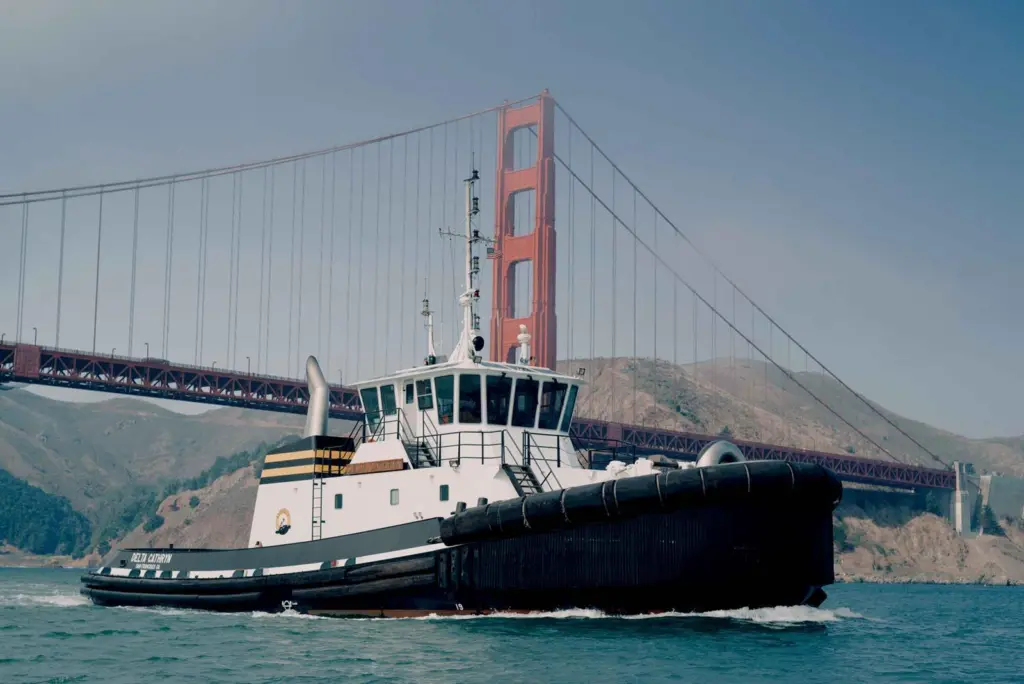
The increase in numbers of hybrid tugs is not a naturally-given fact of life where overnight, owners will recognise the economic and environmental benefits of such technologies and embark on mass fleet-renewal programmes. The capital cost of hybrid installations has to be weighed against pay-back times along with the regulatory environmental and societal pressures present (or not) at the particular location of their main areas of operation. The fluctuating cost of conventional fuels also affects the viability of such investments.
As energy storage and hybrid-associated equipment costs reduce and experience is accrued however the gap will no doubt continue to narrow and while the pace of progress may vary, what is a natural-given is that hybrid tugs are here to stay and the achievement of class approval such as this is but one development without which such advances cannot proceed. The AIP follows an evaluation of a hybrid tug, described as “unique” by Rolls-Royce, designed by Jensen Maritime and constructed by Nichols Brothers Boat Builders for Baydelta Maritime LLC with delivery due in February 2019.
The Rolls-Royce Hybrid Propulsion System consists of power take-in, electric motors and main propulsion engines connected to Rolls-Royce azimuth thrusters allowing the vessel to operate in either diesel-mechanical, diesel-electric or boost mode configuration. Rolls-Royce is supplying all electric motors, shaft generators and a power management and control system for the vessel. The hybrid arrangement will provide power to US255 azimuth thrusters with ducted fixed-pitch propellers optimising omni-directional thrust and manoeuvrability and improving crash-stop capability.
The hybrid system reduces the power requirement as Griff Lane, Rolls-Royce SVP Commercial Marine, Americas explains: “Typically, a tug the size of the Baydelta vessel would need a power output 2500kW. The hybrid arrangement allows operators to achieve the required bollard pull from a smaller engine. It provides greater operational flexibility which allows for the system to provide improved fuel efficiency, redundancy, and reduced emissions.”
ABS consider the system is, in principle, compliant with ABS Rules for Building and Classing Steel Vessels Under 90m (2018); ABS Advisory of Hybrid Electric Power Systems (2017) and ABS Guidance Notes on Review and Approval of Novel Concepts.
By Peter Barker

Related Articles
 SPECIAL REPORTS
 TUGS & SALVAGE
 EQUIPMENT