![MaritimeJournal[Seawork]](https://www.maritimejournal.com/wp-content/uploads/2026/09/MaritimeJournalSeawork.svg)


Sewol salvage details revealed
China’s state-owned Shanghai Salvage Co along with other South Korean companies have been engaged to raise the wreck of the ferry ‘Sewol’ which sank off Jindo Island in 2014 with the loss of over 300 lives.
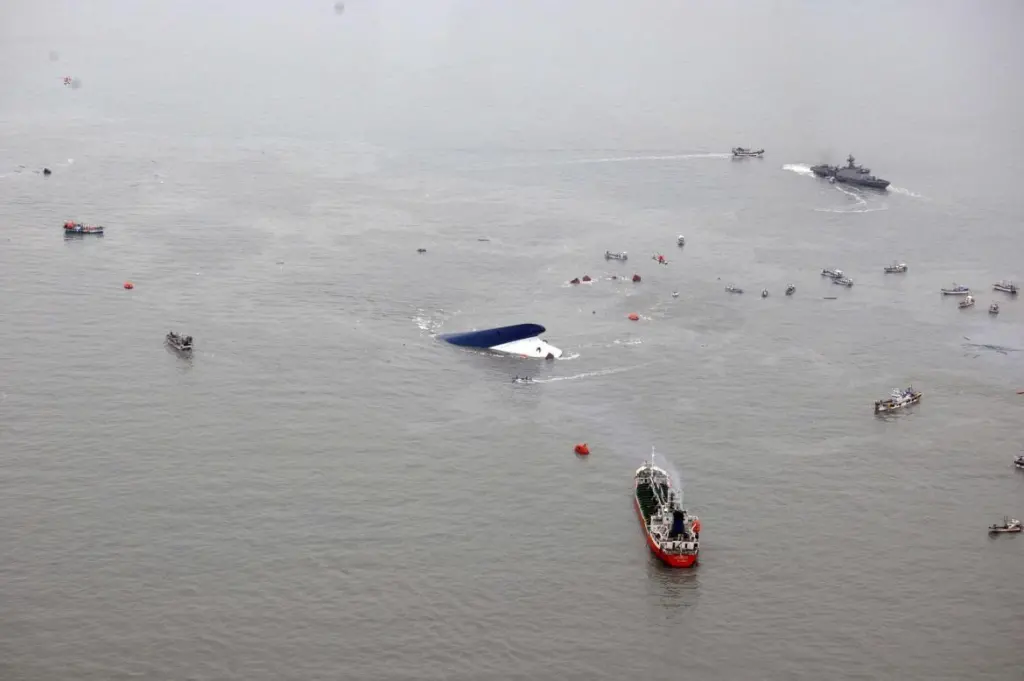
The tragic story of the loss of the roro passenger ferry Sewol on 16 April 2014 made world news. Three hundred and four of those on board were known to have lost their lives when the vessel sank with nine people still reported as missing. There has since been intense pressure from the victims’ families to raise the sunken ship, hopefully recover any more bodies and establish further what happened in the disaster.
South Korea’s Ministry of Oceans and Fisheries have now started work with the consortium led by Shanghai Salvage Co to raise the wreck in an operation reported to be worth $73m, awarded after the South Korean government opened an international bid for the project earlier this year. South Korean companies put in a lot of effort at the early stages but being generally small with little large scale equipment meant it would be difficult for them to complete the task on their own. The competitiveness and experience of Shanghai Salvage makes them suitable to provide the expertise and heavy equipment the salvage will need.
The wreck removal operation will involve two phases with completion expected by July 2016 and a break in activities over coming winter months should bad weather intervene. The first phase includes initial exploratory surveys involving divers and an ROV with an important priority for the relatives of those still missing, recovery of any human remains that are found in the Sewol. A net will be placed around the vessel to prevent the loss of bodies that could be released during the salvage process.
The importance of recovering any remaining bodies is demonstrated by the decision to raise the wreck in one piece. It is claimed this will be the first time a 6,700 ton ferry is raised in this way and it is feared that a more traditional method of cutting the wreck up into smaller pieces for lifting could affect the recovery of any human remains. The operation will also include measures to protect natural fishing resources in the area.
Shanghai Salvage are assembling a flotilla of floating cranes, barges, tugs and associated craft for the operation which will involve around 200 persons. Payment for the overall operation is reported to be over three phases, the first payment following completion of loss prevention and oil recovery work. Once the Sewol is raised and delivered to its designated location the second payment will be made with final payment made when the wreck is finally brought ashore for disposal.
By Peter Barker

Related Articles
 SPECIAL REPORTS
 TUGS & SALVAGE
 EQUIPMENT