![MaritimeJournal[Seawork]](https://www.maritimejournal.com/wp-content/uploads/2026/09/MaritimeJournalSeawork.svg)


‘Transocean Winner’ grounding investigation released
The UK Marine Accident Investigation Branch (MAIB) has published its report into the loss of tow and subsequent grounding of the semi-submersible rig ‘Transocean Winner’ in August 2016.
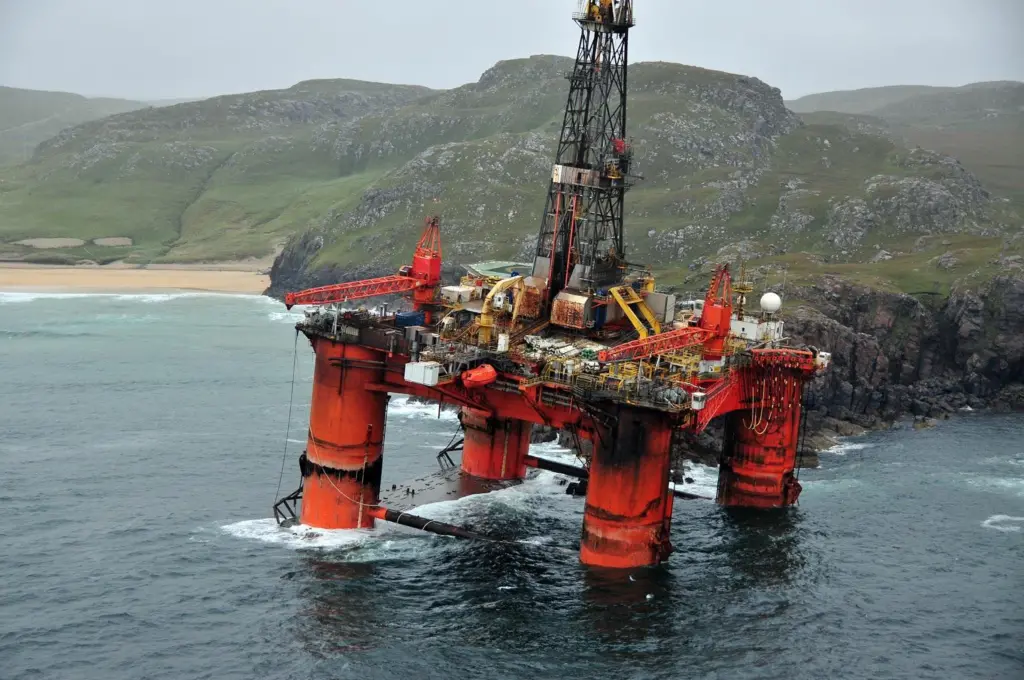
The unmanned Transocean Winner was under tow of the Dutch-flagged tug ALP Forward from Stavanger, Norway to Malta when it encountered unseasonably severe weather off Scotland’s north-west coast. The tow line parted and despite attempts to re-establish a connection the rig grounded on the north coast of the Isle of Lewis. It was subsequently salvaged and no one was injured during the incident.
The MAIB’s investigation follows its usual forensic examination of all aspects of the voyage and identifies a number of safety issues contributing to the accident with recommendations made to both the rig’s owner and the towing contractor.
MAIB states the rig grounded as the tug ‘was incapable of controlling the tow in the high winds and seas experienced.’ It suggests that had more tow line been deployed, it is likely the line would have suffered less damage from sudden loading and might not have failed. The guidance in the Towing Manual led the master to prioritise keeping the tow line clear of the seabed over provision of an adequate catenary.
Sections of the tow wire were analysed, the report stating it was in a generally poor condition, with partial disintegration of the core leading to significant loss of strength. It adds that improved guidance to tow masters on the importance of maintaining catenary and avoiding shock loading could have helped the tug’s master mitigate the effects the heavy weather had on the wire.
When the effect of the wind on the rig took control of the tug and tow, it was very likely that the rig would ground regardless of whether the tow line held or parted. Lack of windage information of the rig for the master is also identified as a safety issue. The report states that once the main tow line had parted, in the prevailing conditions there was nothing the tug’s master could do to resolve the situation.
Ineffective monitoring by experienced personnel ashore of the daily reports is identified and the timing of notifying UK Coastguard of the developing situation is explored. The ETV Herakles was despatched from its base in Kirkwall, Orkney but with a transit time of 12 hours. It was also the closest available large towage asset.
It could be argued that the ETV should have been tasked to follow areas of expected bad weather and the report states that even if Herakles had been on scene it is unlikely it would have been able to provide any practical assistance in maintaining control of the rig given the severe weather and nature of the emergency towage arrangements.
By Peter Barker
Related Articles
 SPECIAL REPORTS
 TUGS & SALVAGE
 EQUIPMENT