![MaritimeJournal[Seawork]](https://www.maritimejournal.com/wp-content/uploads/2026/09/MaritimeJournalSeawork.svg)


Under the bonnet of Fairplay’s new tractors
Propulsion and steering systems provider Schottel Group have revealed details of the hybrid propulsion system installed in two tractor tugs delivered recently by Astilleros Armon Shipyard to Fairplay Towage.
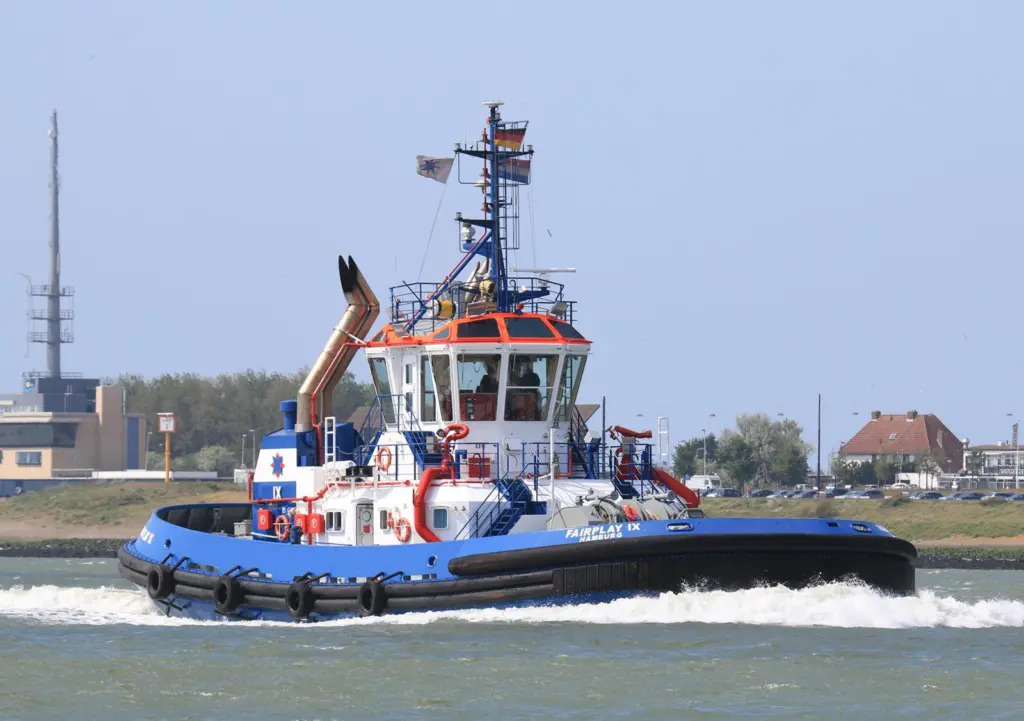
May 2015 MJ reported in general terms on the first of two new Fairplay tugs Fairplay IX and Fairplay XI both for use in Rotterdam. The appearance of powerful tractor tugs in the port are something of a change from the more usual make-up of ASD and Rotortugs and are similar to a series of fourteen (conventionally powered) examples delivered to Panama Canal Authority in 2013/14.
With both tugs now operational, further information is available on the Schottel Rudderpropeller SRP 4000s with hybrid gearboxes, two electric motors and integrated steering control system, suited for hybrid propulsion.
One of the drivers behind the trend towards hybrid tugs is the desire to achieve an optimal output across the whole range of power demands from standby periods with minimal power requirements to full-load towing conditions.
At part load, power is provided by two electric motors (600kW each) while at full-load the two MTU diesel engines (2,240kW each) are utilised. In the latter mode the electric motors can be added in to the propulsion mix to provide the maximum 90tbp and 13.5 knots for the 29m long tugs.
The Schottel hybrid propulsion concept is suitable for Rudderpropellers with power input ratings up to 4,200kW and provides a flexible combination of diesel mechanical and electric motor power through the hybrid gearbox. Power output of the electric motor is variable according to the applied diesel engine performance and rotational speed, this allows individual solutions to best match the requirements of individual vessels.
By providing the complete package of thruster, gearbox, electric motor and steering control system, Schottel state their customers can benefit from a one-stop-shop option for the hybrid propulsion installation. This reduces the involvement of third-party component suppliers and provides a single point of contact for the customer.
Looking at the system in general, hybrid drives reduce pollutant emissions and improve fuel consumption figures as operation of the electric motor reduces the operating hours of the diesel engine. This also increases the time between overhauls, reducing maintenance costs. Another feature is the inclusion of the steering control which is optimised for the flexible operation with two different motor types and integrated into the vessel’s control panel from the outset.
“It is a pleasure for us to see the two Fairplay vessels in operation. While we equipped quite a lot of tugs from the Fairplay fleet, these two are the first with our hybrid propulsion solution” explains Eric Steffens from Schottel: “We greatly enjoyed the co-operation with Astilleros Armon shipyard and Fairplay and are already looking forward to share future projects.”
By Peter Barker
Related Articles
 SPECIAL REPORTS
 TUGS & SALVAGE
 EQUIPMENT