![MaritimeJournal[Seawork]](https://www.maritimejournal.com/wp-content/uploads/2026/09/MaritimeJournalSeawork.svg)


Chartwell on its future vessel diversification strategy
Chartwell Marine is preparing for the next phase of offshore wind vessel demand as developers push projects further offshore and operators seek more capable crew transfer vessels.
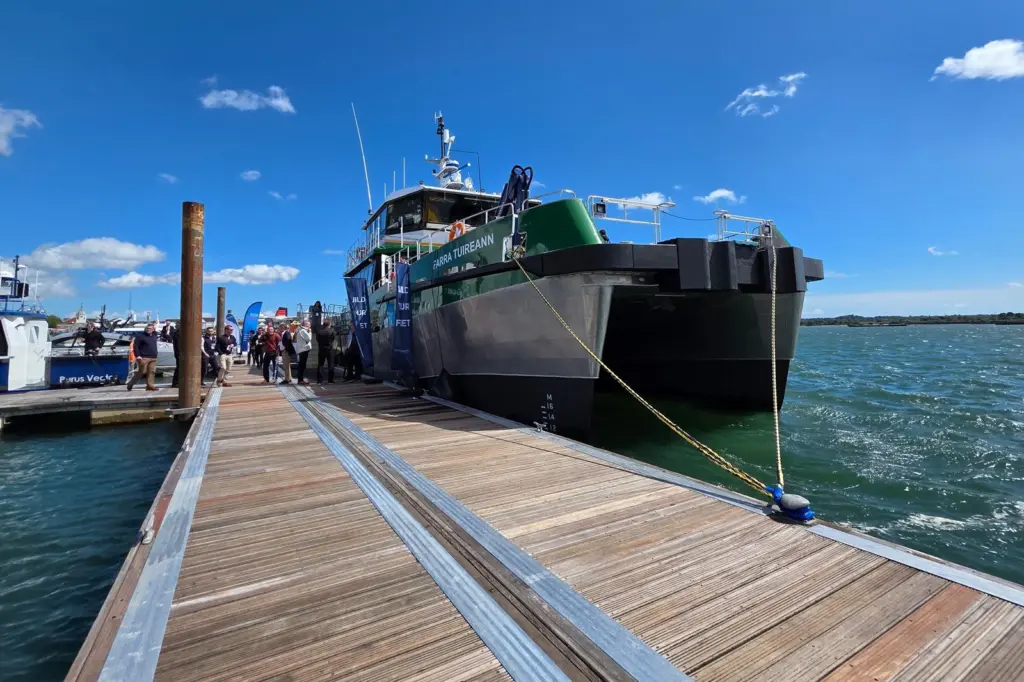
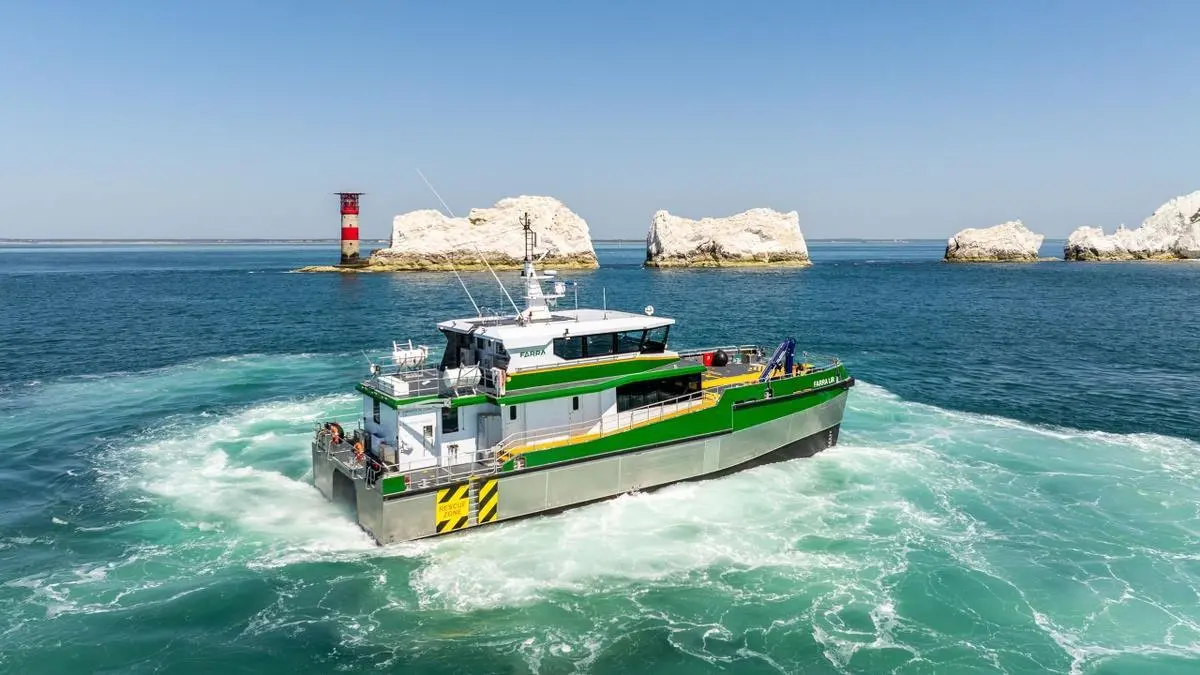
Speaking onboard the Chartwell designed CTV Farra Tuireann at Seawork 2026, Robin Saunders, senior designer and naval architect and Christophe Rident, senior naval architect, said the offshore wind market is entering a new period of fleet transformation shaped by changing operational profiles, alternative fuel discussions and growing pressure on vessel efficiency.
“We’re constantly trying to develop the best boats in both efficiency, comfort, transit and transfer,” says Saunders. “But fundamentally, they just need to work.”
Chartwell has built a strong position in the global crew transfer vessels market through its long-standing work supporting offshore wind construction, operations and maintenance activity.
Its portfolio includes the Ambitious, Brevity and Courageous class CTVs, which are operated by vessel owners across Europe and other international offshore wind markets.
Increased momentum
The company believes momentum has strengthened significantly following the UK’s AR7 leasing round, with vessel operators increasingly looking to secure tonnage quickly as offshore wind activity accelerates once again.
“With AR7, particularly focused on the European market, it’s continuing to be busy,” Saunders says. “One of the really important things now is having stock build programmes with yards and having assets ready to go.”
That readiness, he explained, is becoming increasingly valuable as offshore wind operators work against tight project schedules and rising pressure to mobilise vessels quickly.
“This boat that we’re on now is part of that stock build programme,” he says, referring to CTV Farra Tuireann. “Operators can access finance packages as well, which really supports the market.”
While the core CTV market remains strong, Saunders said vessel requirements are evolving as offshore wind farms move into deeper waters and harsher operating environments.
“The core CTV market around the 24m-30m mark is continuing to grow,” he says. “But as the wind farms are getting further and further offshore, larger tonnage is becoming more required for bigger sea states.”
Filling the gaps
That shift is creating a more complex balance between traditional crew transfer vessels and larger service operation vessels (SOVs), particularly as developers look for greater flexibility during maintenance campaigns.
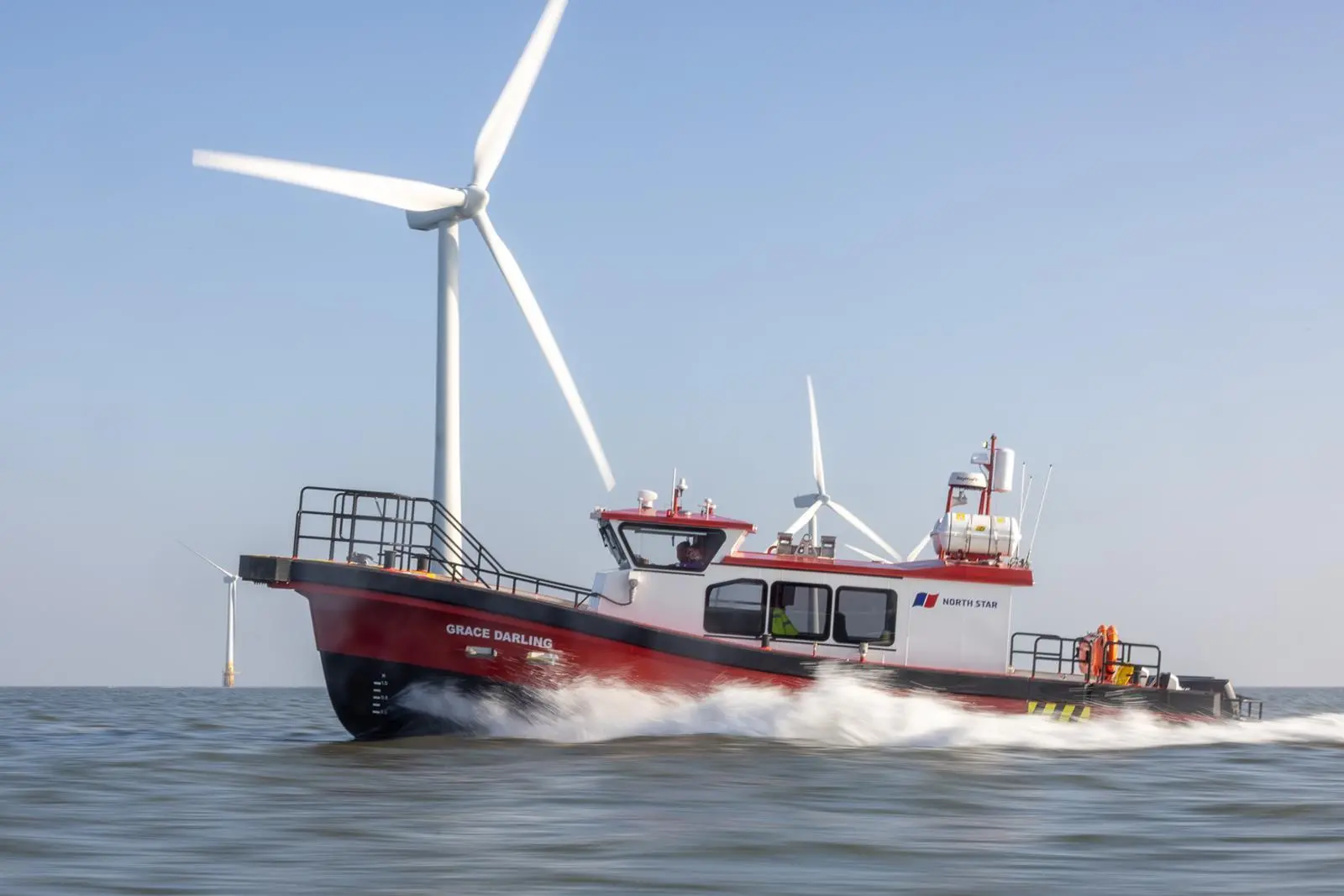
Chartwell has responded by developing daughter craft concepts intended to bridge the operational gap between conventional CTVs and larger offshore support vessels.
The company began investing in daughter craft research and development several years ago when the market was still largely unproven.
“Five years ago there wasn’t really a market,” Saunders says. “We realised there was a gap, so we invested our own R&D and developed both monohull and catamaran daughter craft around the 12m mark.”
Today, that early investment appears to be paying off. Saunders said ten of the catamaran daughter craft have now been built, with vessels operating in both the US and European offshore wind sectors.
The vessels have also evolved alongside changing emissions requirements and operational expectations.
“Some are in Tier III configuration and we’ve adapted to regulation changes as the market has evolved,” he says.
According to Chartwell, daughter craft are becoming increasingly attractive because they allow technicians to transfer between turbines without moving larger offshore support vessels around the field.
“It allows you to be servicing multiple turbines at once,” Saunders explains.
Rident says operators were initially cautious about the concept, but attitudes are changing as more vessels enter service and operational familiarity grows.
“It’s been hard work convincing SOV operators that these things are actually useful,” he says. “But now there’s more proof and more operators are becoming aware of how effective they are.”
The vessels are specifically engineered for offshore wind operations rather than adapted from conventional small workboats, he adds.
“These are tailored designs for the operations they do,” says Rident. “They’re not just small boats. We’ve designed them specifically for operational performance.”
Safety and turbine protection are also driving greater interest in daughter craft deployment strategies.
“If you hit a turbine hard with an SOV, you damage the turbine,” Rident says. “With a daughter craft, it’s a completely different operation.”
However, both naval architects acknowledged that adoption remains influenced by commercial realities. Daughter craft occupy valuable onboard space aboard larger vessels, reducing accommodation capacity and affecting earning potential for some operators.
“The biggest drawback is really the crewing requirements and the space they take up onboard,” Saunders explains. “Those are cabins that may not be earning money.”
Despite that, Chartwell believes the operational advantages increasingly outweigh those concerns as offshore wind projects continue to scale up.
Ferry focus
Alongside developments in the offshore wind sector, Chartwell is also expanding its work into the fast passenger ferry market, applying lessons learned from offshore vessel design to future low-emission commercial transport concepts.
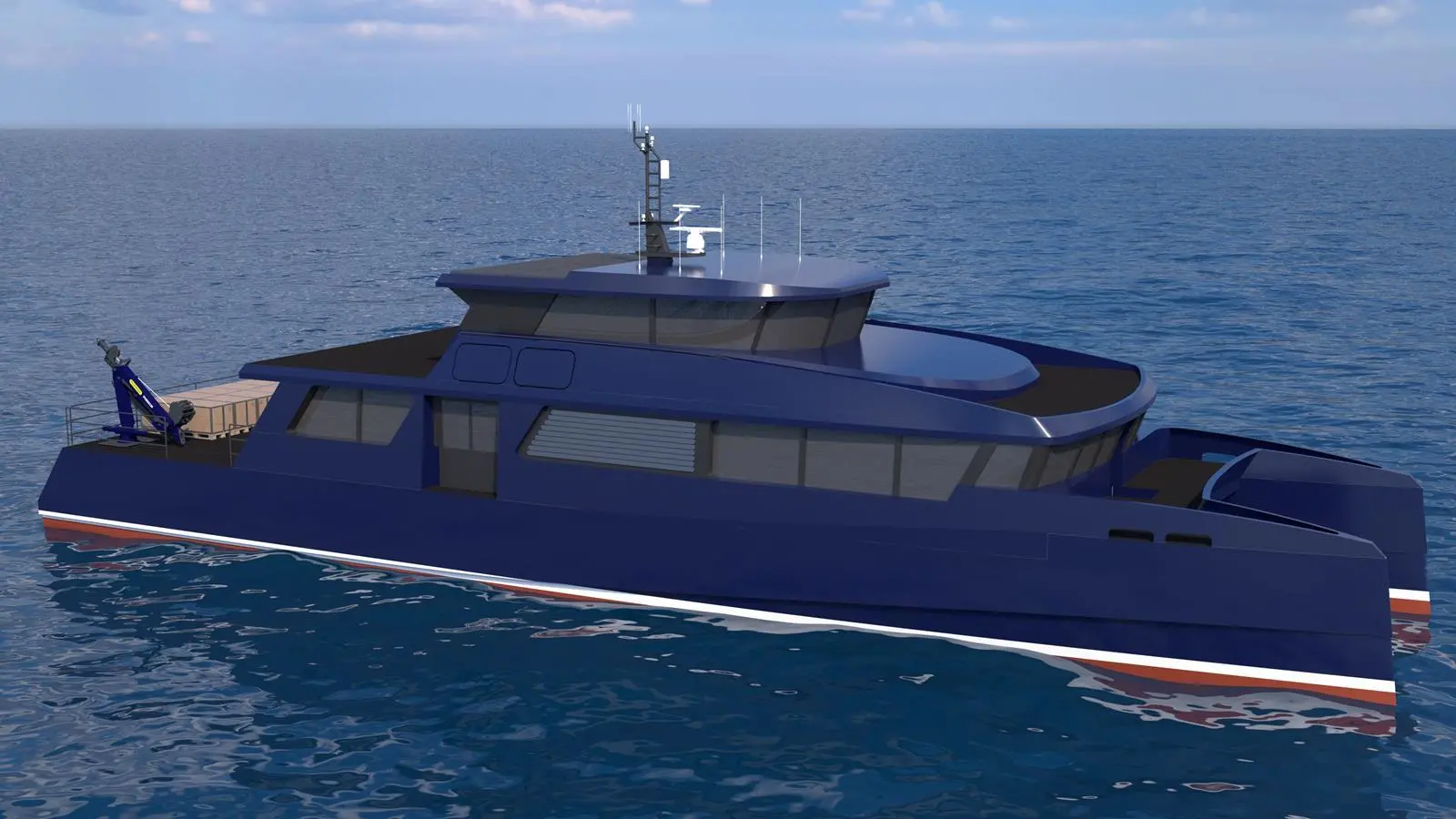
Rident, who is leading Chartwell’s expansion into the ferry sector, said electrification currently represents the most practical near-term pathway for fast ferry decarbonisation.
“The most sensible way forward at the moment is electrification,” he says.
Chartwell has invested heavily in developing a new low-wake ferry hullform specifically optimised for electric propulsion systems and lower operating speeds.
“We spent a lot of our own money developing a fast ferry hullform,” Rident explains. “It’s designed specifically to keep low wake and low weight because we see that as a key requirement for electric vessels operating in rivers, estuaries and nearshore areas.”
According to Rident, traditional fast ferry design assumptions are already changing as operators adapt to the realities of battery-powered propulsion systems.
“Traditionally fast ferries have operated above 30 knots because diesel power allowed it,” he says. “But fully electric ferries are now typically operating between 22 and 28 knots because more speed means more power and more batteries.”
Chartwell’s ferry development programme focuses on creating highly efficient hullforms that perform optimally within those operational parameters.
“We’ve designed a hullform that is highly efficient at that speed range,” Rident says. “It’s really tailored towards fast fully electric ferries.”
Future fuel focus
The company is also examining how future fuels including methanol could eventually support both ferry and offshore wind vessel operations.
Chartwell is currently involved in wider methanol research projects, including development work surrounding a 31m catamaran research vessel platform intended to help standardise future methanol integration systems.
“One of the main aims is to create a standard solution that can work across multiple vessel types,” Rident says. “If we can avoid reinventing the wheel every time, everybody benefits.”
Saunders adds that alternative fuel integration remains technically challenging for smaller offshore wind vessels because of fuel density limitations and operational demands.
“Diesel is still a fantastic energy-density fuel,” he says. “Methanol isn’t as good, hydrogen is even more difficult and batteries are heavy.”
Chartwell has previously explored electric CTV concepts through a refit project involving an ageing offshore wind vessel, replacing diesel propulsion systems with battery technology.
While technically successful, Saunders says the project highlighted the operational limitations currently facing fully electric crew transfer vessels.
“We can absolutely get an electric boat out to a wind farm and back,” he said. “The challenge is when you’re pushing onto turbines because that’s where a huge amount of the energy burn happens.”
As a result, the company believes offshore charging infrastructure will ultimately play a critical role in wider offshore wind vessel electrification.
“If you can implement offshore charging, suddenly your loiter time becomes a charging opportunity,” Saunders explains.
Despite rapid technological progress across vessel design and propulsion systems, both executives agreed that shoreside infrastructure and fuel availability remain the biggest barriers facing maritime decarbonisation.
“The biggest challenge for everybody is fuel supply infrastructure,” says Rident. “Diesel is still easy to get everywhere.”
He adds that while operators are increasingly open to alternative fuels and electrification, many remain constrained by infrastructure access, regulatory uncertainty and commercial pressures.
“You have to make it easy for operators,” he says. “It’s all very well building a vessel, but if you can’t operate it, it’s no good to anyone.”
For Chartwell, the focus now remains on balancing innovation with practical offshore performance as offshore wind vessel requirements continue to evolve.
“We can get carried away with future technologies,” Saunders says. “But at the end of the day, these boats need to work safely and reliably in real operating conditions.”
Related Articles
 OTHER NEWS
 ACCESSORIES & EQUIPMENT
 SPECIAL REPORTS