![MaritimeJournal[Seawork]](https://www.maritimejournal.com/wp-content/uploads/2026/09/MaritimeJournalSeawork.svg)






Chartwell targets a greener fast passenger ferry market
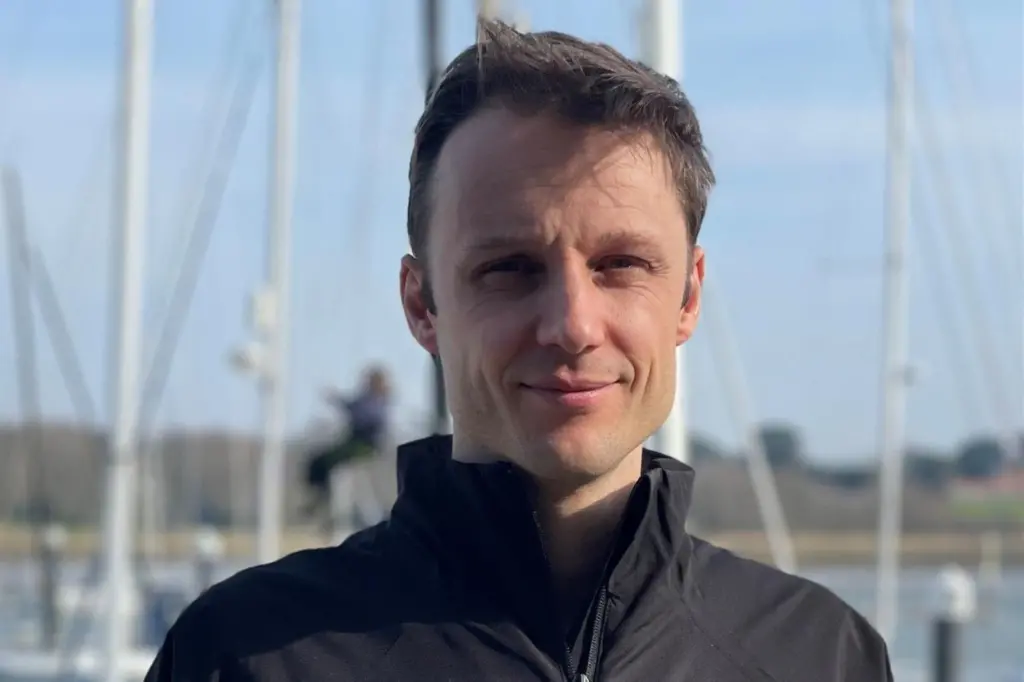
Experienced naval architect Christophe Rident has been hired to support Chartwell Marine’s ongoing decarbonisation plans for the fast passenger ferry market.
Traditionally powered by diesel, the company is exploring low-emission options as decarbonisation targets become more ambitious.
“As we venture into the fast ferry market, we’re aiming to shape a new operational paradigm centred on sleek design, compact size and electrification bolstered by proactive shoreside partners,” said Andy Page, managing director of Chartwell Marine.
That’s how we believe we can close the gap on traditional diesel-powered vessels. We’re delighted to welcome Christophe to the team to leverage his expertise and help us make fast ferries the next big hitter in decarbonisation.”
Opportunities abound
Chartwell has identified that there are still many challenges to be overcome in the sector to achive the most practical and cost-efficient routes to emissions reduction.
Firstly, with regards to speed. Full-electric fast ferries offer the biggest emissions reductions, but typically compromise on speed, currently reaching around 23 knots compared to the 38-40 knots achievable with diesel-powered fast ferries.
Battery capacity is also crucial in determining operational range without the need for recharging, a factor which directly affects speed. This principle applies to other alternative fuels — for example hydrogen and methanol — as their availability is limited.
Lastly, infrastructure. While vessels are the focus of electrification efforts for operators, success also hinges on addressing a range of interconnected adjacent factors, including shoreside charging points and grid issues. At the same time, high upfront battery and charging equipment costs have driven operators towards complex leasing options.
Mr Rident joins from BMT, where he played a key role in developing full-electric and hybrid fast ferry and commercial vessel solutions.
His responsibilities included managing projects from initial concept to completion, conducting trials and providing after-support. Additionally, he contributed to the design and construction of only the second and currently fastest EPA Tier-4 ferry in the US.
“While operators exhibit a strong interest in transitioning to full electric, the need to integrate with existing shoreside grid infrastructure, (which they usually do not own) often hinders progress,” he said.
“In many places worldwide, where fast ferries could benefit from robust local engineering industry; inadequate grid infrastructure combined with a lack of available space shoreside for fast-charging equipment pushes owners towards a hybrid solution to reduce reliance on electricity. At the same time, there is a hesitancy in the industry about embracing batteries as the sole source of power, as these are still often seen as a volatile and unreliable option.”
Related Articles
 OTHER NEWS
 ACCESSORIES & EQUIPMENT
 SPECIAL REPORTS