![MaritimeJournal[Seawork]](https://www.maritimejournal.com/wp-content/uploads/2026/09/MaritimeJournalSeawork.svg)


Consortium created with H&W passes PDR milestone
A consortium that originally included Harland & Wolff says the first milestone along its road to building Navy Fleet Support Ships has been passed.
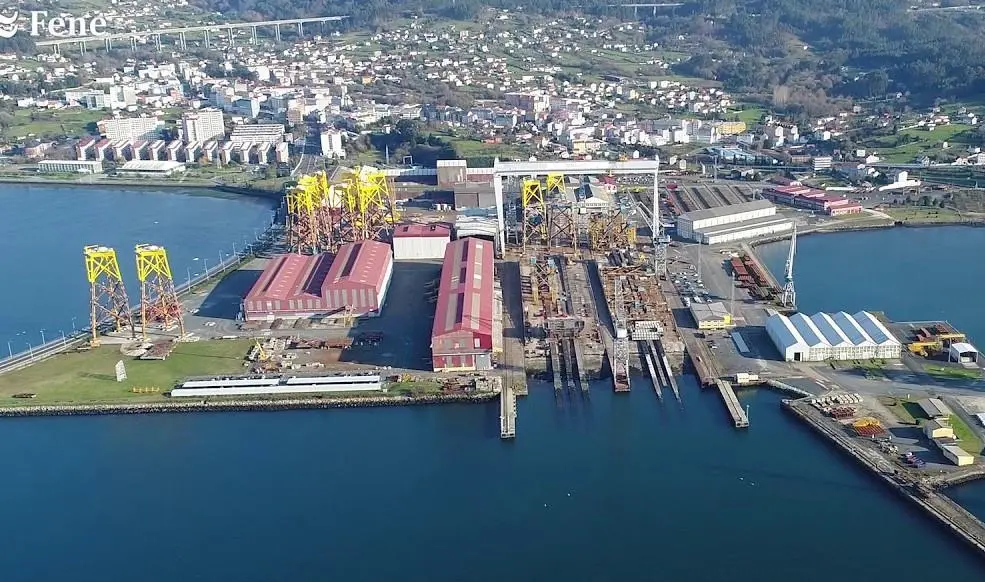
The £1.6 billion (€1.9 billion) programme was won in 2022 by the consortium ‘Team Resolute’ comprising BMT, Navantia and Titanic builder Harland & Wolff, which has since filed for bankruptcy.
Now BMT and Navantia say they have successfully completed a Preliminary Design Review (PDR), in working sessions with the UK Ministry of Defence.
“This milestone has confirmed the robustness and maturity of the design, marking the progression of the programme,” the press release said. “The FSS now enters a new phase, focused on detailed design and heading towards the start of construction in 2025, according to the schedule.”
‘No change in programme or team’
Team Resolute was created in 2021 to bid for the design and build of the vessels – primarily for the underway replenishment of dry stores for Royal Navy vessels – by the end of this decade.
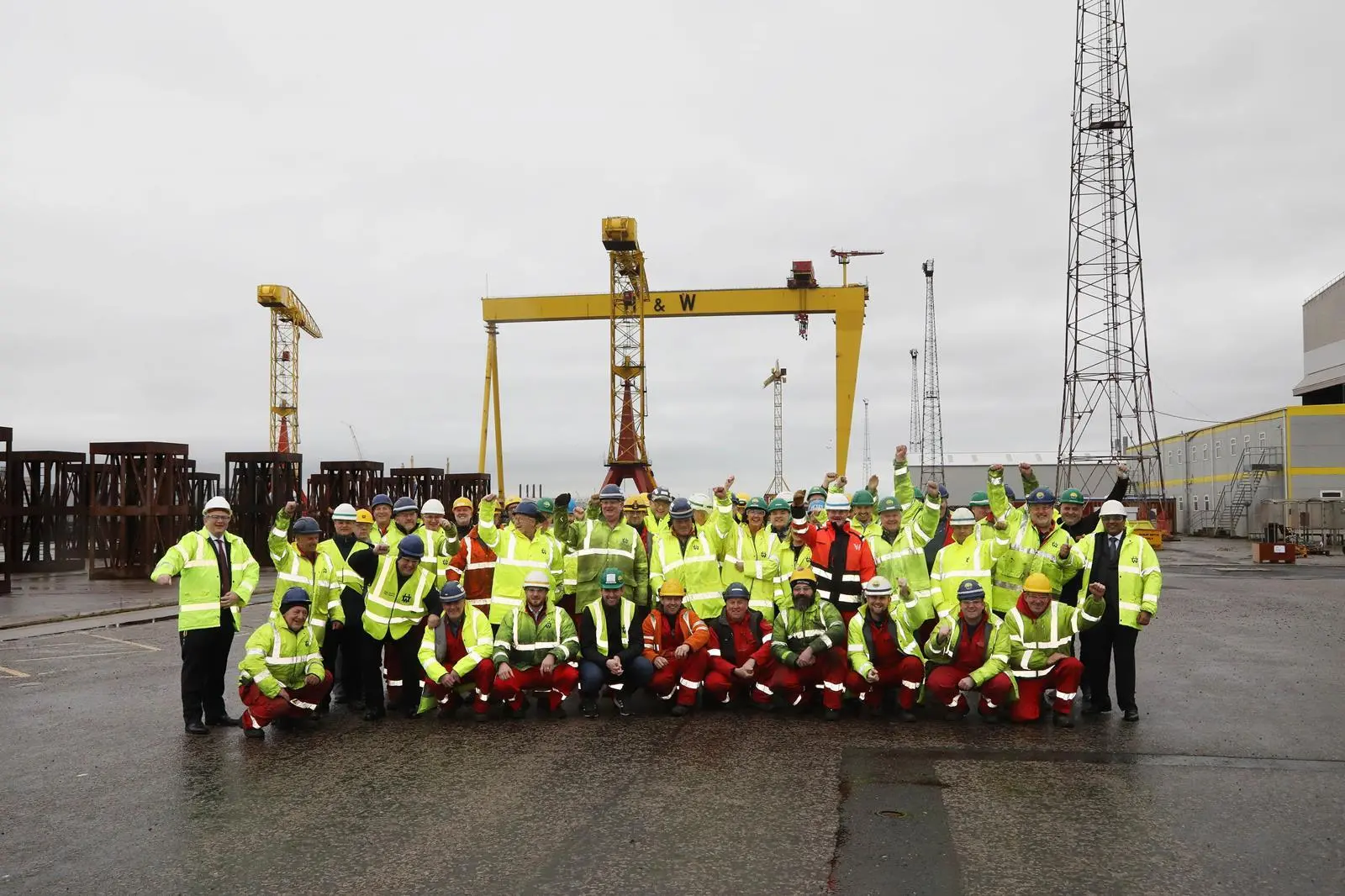
It laid out plans for BMT to design the vessels with Navantia assisting with technicalities, design and construction, and Harland & Wolff providing the facilities in which to build them.
No mention of Harland & Wolff was made in the recent press release, and in a coordinated response from BMT and Navantia, a spokesperson said: “We are not commenting on H&W corporate developments but I can clarify, on background, that the fact that H&W is not mentioned in the press release about the PDR does not imply any change in the programme or the team.
“The design-engineering phase is led by BMT with the support of Navantia UK (H&W is not involved in this phase). What you can see in the press release is the normal development of the programme.”
The success of the PDR follows media reports originating in London’s Daily Telegraph last week that claimed Navantia was in talks with Harland & Wolff, but Navantia and BMT did not confirm the report.
Just last month, September 2024, a press release from MAN Propulsion said that the majority of the hull blocks for the ships would be built at Harland & Wolff’s shipyards, ‘with the integration, test and trials and delivery taking place at the iconic Belfast facility’.
MAN Energy says it is contributing some key requirements of the ships, such as shock resistance, cyber security, Nuclear, Biological, Chemical, integrated logistic support, efficiency, low emissions and reliability.
“A further reduction of CO2 emissions by use of green methanol is a conceivable option through a later retrofit of the 32/44CR engines,” it says, specifying that it will provide twelve V32/44CR propulsion engines, six L32/44CR Generator Sets, MAN SCR (Selective Catalytic Reduction) for each engine and three twin-screw Alpha CP propellers and plant auxiliaries.
Related Articles
 OTHER NEWS
 ACCESSORIES & EQUIPMENT
 SPECIAL REPORTS