![MaritimeJournal[Seawork]](https://www.maritimejournal.com/wp-content/uploads/2026/09/MaritimeJournalSeawork.svg)


Damen-Alewijnse tug design boasts higher power
Alewijnse and Damen have joined forces to develop the largest tugs that Alewijnse has ever worked on.
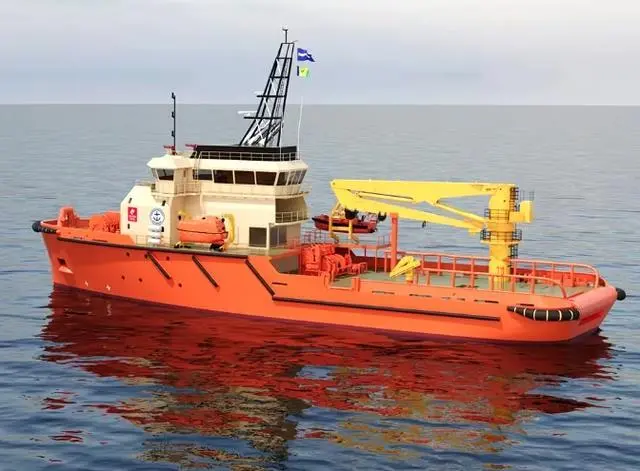
Two multi-purpose vessels will form a new class of offshore support tugs that it says reflects a shift towards greater power, manoeuvrability and electrification across the sector.
The vessels, measuring 67 metres in length with an 18-metre beam, are designed to deliver a bollard pull of 120 tonnes both ahead and astern, ranking them among the more powerful tugs on the market. They will combine towing, pushing and offshore support functions in a single platform.
Engineers say the deisgn reflects changing operational demands, particularly in offshore oil and gas fields, where vessels must perform multiple roles in challenging conditions.
Central to the concept is a propulsion and control system aimed at delivering both power and precision. The tugs will feature a multi-drive propulsion configuration integrated with dynamic positioning, allowing them to maintain position accurately in rough seas. This is intended to support operations such as tandem offloading, mooring line handling and remotely operated vehicle deployment.
According to the project leaders, manoeuvrability is a key focus. The ability to generate equal towing force in forward and reverse directions is expected to improve escort stability and operational flexibility.
“These vessels are designed to maintain performance fore and aft, which is increasingly important for complex offshore tasks,” said Dumitru Poperesniuc, an account manager at Alewijnse.
The propulsion architecture also incorporates electric elements, reflecting broader industry efforts to reduce emissions and fuel consumption. While not fully electric, the hybridised systems are intended to optimise energy use during different phases of operation, particularly low-load or standby conditions.
Alewijnse’s role
Alewijnse is responsible for integrating the electrical systems, including switchboards and power distribution, as well as commissioning onboard systems. The company has previously worked on various tug configurations, including azimuth stern drive and hybrid vessels.
“The integration of electrical and propulsion systems is becoming more complex as vessels take on more roles,” Poperesniuc said. “This requires a higher level of coordination between design and engineering teams.”
The vessels are expected to support a wide range of offshore activities, including cargo transfer, oil spill response and general supply operations. Their 250 square metres of deck space can accommodate equipment and cargo associated with these tasks.
Demand for high-capacity offshore support tugs has remained steady, particularly in regions such as the Middle East and the Americas. Similar vessels are reportedly on order at shipyards in China and Turkey, suggesting a broader trend toward multi-functional, high-powered designs.
Delivery of the two vessels is scheduled for the fourth quarter of 2027 and they are destined for the Gulf of Mexico.
As offshore projects move into deeper and more complex environments, the emphasis on power, control and efficiency in tug design is likely to continue shaping vessel development in the coming years.
Related Articles
 OTHER NEWS
 ACCESSORIES & EQUIPMENT
 SPECIAL REPORTS