![MaritimeJournal[Seawork]](https://www.maritimejournal.com/wp-content/uploads/2026/09/MaritimeJournalSeawork.svg)

Electric tug marks Southeast Asia first
Bureau Veritas has marked the delivery of Southeast Asia’s first fully electric tug, advancing marine electrification and regional decarbonisation efforts in the region.
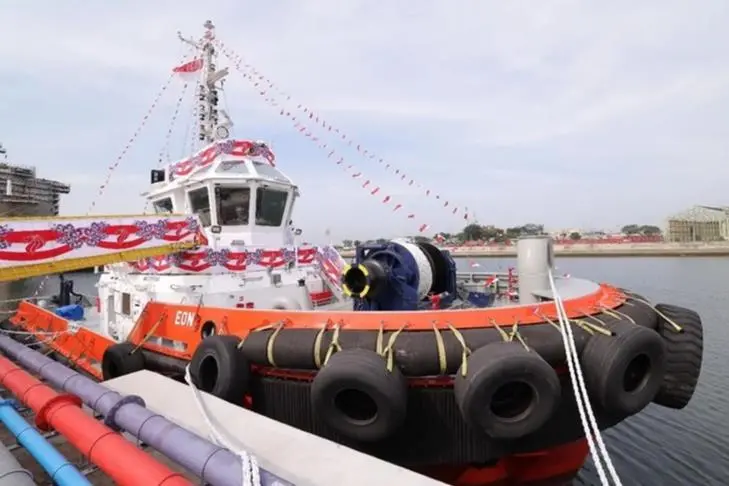
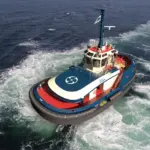
EON, built by PaxOcean for Kuok Maritime Group under the Coastal Sustainability Alliance, is classed by Bureau Veritas and assigned its ’Battery System notation’, reflecting a fully electric propulsion architecture designed for efficiency and operational performance.
“Bureau Veritas congratulates Kuok Maritime Group, PaxOcean and the Coastal Sustainability Alliance on this important achievement,” said Drago Pinteric, vice president, M&O South East Asia, Bureau Veritas.
”We remain committed to supporting the maritime industry in deploying clean technologies that will shape a more sustainable and resilient maritime future for Singapore and Southeast Asia.”
Integrated propulsion
The 29-metre vessel build features a 50-tonne bollard pull and an integrated electric propulsion system supplied by ABB, powered by a 3 MWh lithium titanate oxide battery pack.
EON’s battery system integrates ABB’s energy management and DC grid technologies, reducing energy conversion losses and optimising drivetrain efficiency while extending operational range per charge – key considerations in advancing marine electrification and sustainable vessel build strategies.
“Being involved from project development through delivery has been both technically rigorous and professionally meaningful. Watching the vessel transition from drawings and specifications to a fully commissioned electric tug alongside the quay underscores what disciplined engineering execution, strong project management and cross-functional collaboration can achieve,” said Yi Xin Ong, newbuild engineer at PaxOcean.
PaxOcean’s latest delivery signals the accelerated adoption of zero-emission harbour craft across Southeast Asia and an expanded order book for the vessel builder.
Last year, PaxOcean Group announced that it has been awarded a contract by DEME to construct a state-of-the-art Offshore Construction Vessel (OCV) at its Zhoushan shipyard in China. Delivery is scheduled for 2028.
It also signed contracts for two cutting-edge OCVs for an undisclosed European shipowner, with delivery scheduled for 2027.
Related Articles
 OTHER NEWS
 ACCESSORIES & EQUIPMENT
 SPECIAL REPORTS